Educating with AI: Shaping the Future Classroom at NTU College of Science's Learning Journey for Pre-University Educators
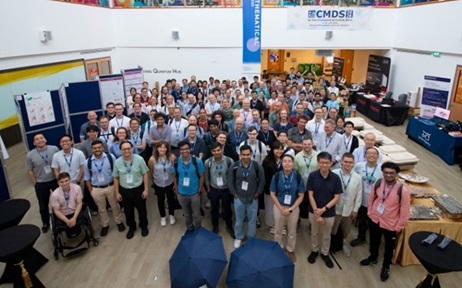
On 24 June 2026, NTU's Institute of Advanced Studies (IAS) welcomed 85 pre-university and secondary school educators from 28 junior colleges, polytechnics, and secondary schools to the 4th annual Learning Journey for Pre-University Educators. Held across the College of Science (CoS), the programme brought participants together for a day of insightful presentations, lively discussions, and immersive experiences hosted by the School of Physical and Mathematical Sciences (SPMS), the School of Chemistry, Chemical Engineering and Biotechnology (CCEB), the School of Biological Sciences (SBS), and the Asian School of the Environment (ASE). Centered on the theme Educating with AI: Shaping the Future Classroom, this year's Learning Journey examined the rapidly evolving role of artificial intelligence in education. Through expert perspectives and practical examples, participants explored how educators can harness AI responsibly to enrich teaching and learning while fostering critical thinking and academic integrity in the classroom.
The programme first began with Prof Sum Tze Chien, Director of IAS, whose opening speech set an important reminder to all educators that, no matter which school they represent, they all share one common goal, that is “to inspire curiosity, nurture critical thinking, and to prepare our students to thrive in a rapidly changing world”.
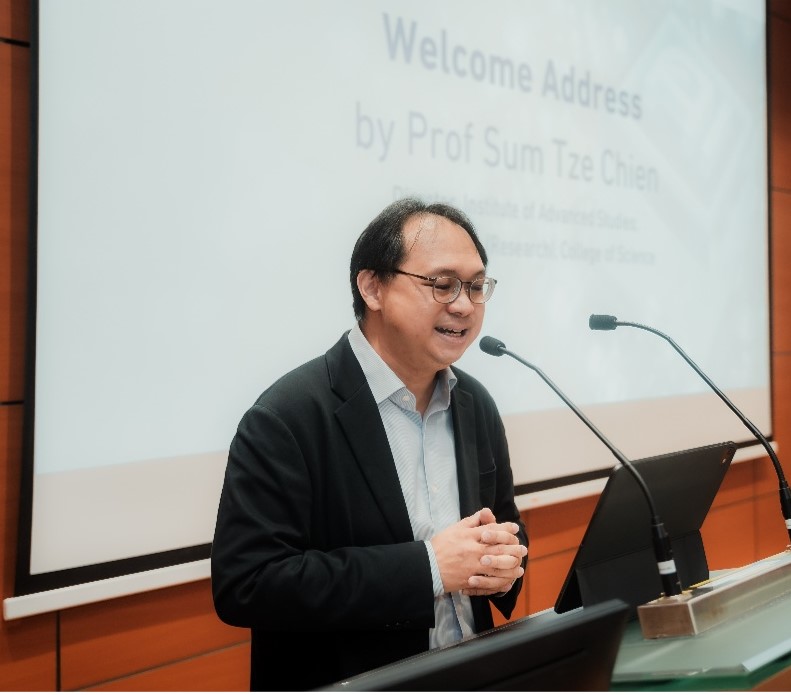 Prof Sum Tze Chien (Director, IAS) set the tone for the day, and united the educators in his welcome address.
Of course, AI has played a huge part in transforming our world, a fact which Dr Ho Shen Yong, Principal Lecturer of SPMS, hones in on in his introductory session on educating with AI. Here, he highlights NTU’s competency by sharing how the university has been consistently evolving their curriculum alongside the advancing technologies. Doing so will result in more confidently prepared graduates who are equipped with the AI skills that are highly demanded in the current labour market. In fact, he enthusiastically remarked that NTU has aimed to embed AI into 40% of its education in order to achieve this goal.
 Dr Ho Shen Yong presents on educating with AI.
Following this, professors from each the four NTU CoS schools then shared their various experiences with AI in learning and teaching.
From the School of Biological Sciences (SBS), Asst Prof Alexander Ludwig gave a brief overview of how interactive AI tools such as “Alphafold” has enhanced his students’ study of proteins and macromolecules through more critical predictions, and clearer data and image analysis. Assoc Prof Melissa Jane Fullwood explored how AI can improve the study of cancer through predicting the cancer’s regulatory architecture and therapeutically targeting it throughout its evolution. Next, Asst Prof Zeng Yiwen from the Asian School of the Environment (ASE) explored how AI can greatly aid in overcoming global ecological challenges, and acknowledged its limitations and improvements that can yield more accurate data. While Asst Prof Zeng encourages his students to use AI in their learning, he also advises them to interpret its outputs more cautiously and ensure results are sensible.
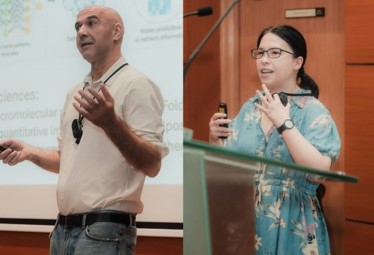 Asst Prof Alexander Ludwig (left) and Assoc Prof Melissa Jane Fullwood (right) from the School of Biological Sciences present on AI-Based Teaching Approaches in SBS.
Dr Koh Teck Seng from the School of Physical and Mathematical Sciences (SPMS) then shared both his own and his students’ reflections after he had conducted an AI-mandated physics project aimed to improve his students’ AI literacy. While he expressed his concerns with AI exploitations, he highlighted his students' concerns with the trust and ethical issues they had with AI. Ultimately, by considering both his personal and students’ views, he was encouraged to redesign future assessments in a way that AI use would be more purposefully incorporated and structurally constrained by the tasks set. Lastly, Dr Lu Yunpeng from the School of Chemistry, Chemical Engineering and Biotechnology (CCEB) emphasised the importance of integrating AI in R&D in chemistry. To support this endeavour, he introduced the CM4044-AI course curriculum which aims to boost students’ practical skills, critical thinking, career readiness, and confidence with AI. However, while the course focuses on leveraging AI, no prior coding or AI experience is needed so as to encourage more students to learn this essential skill with less pressure.
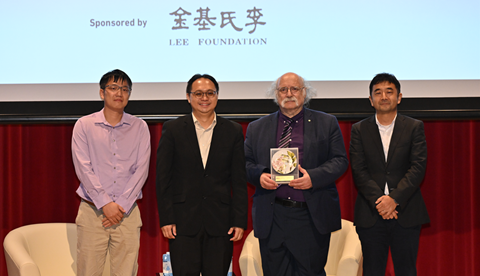
 From left to right: Asst Prof Zeng Yiwen (ASE), Dr Koh Teck Seng (SPMS), and Dr Lu Yunpeng (CCEB).
After a quick break, Ministry of Education (MOE) representatives, Mr Jason See, Chief Information Officer, and Mr Chia Hai Siang, Principal Specialist, joined the faculty professors in a panel session to address questions raised by the pre-university educators. In an age where students are ubiquitously using AI, there was hence a focus on addressing the rising fear towards the possible diminishing role that educators have in their students’ education, as more students turn to AI for consultations instead. Consequently, this led to further concerns of cognitive offloading and reduced critical thinking.
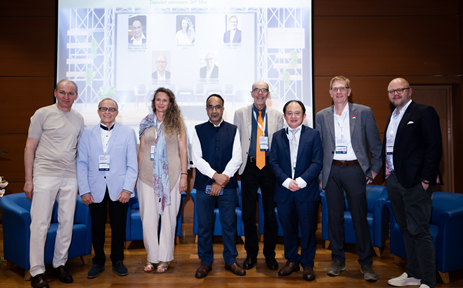
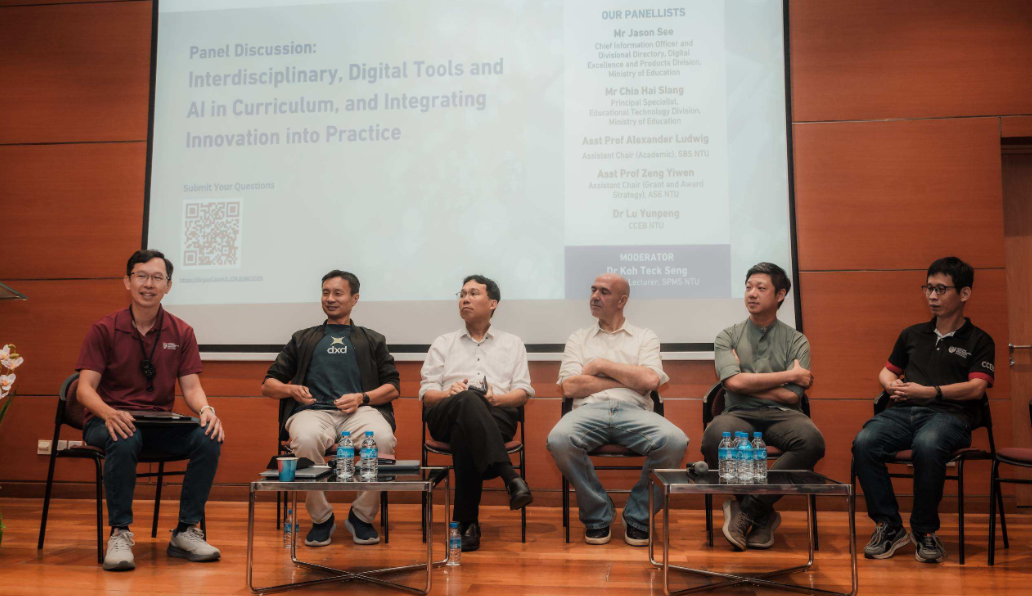 Panelists from left to right: Dr Koh Teck Seng (Moderator, SPMS), Mr Jason See and Mr Chia Hai Siang (MOE), Asst Prof Alexander Ludwig (SBS), Asst Prof Zeng Yiwen (ASE) and Dr Lu Yunpeng (CCEB).
The insightful discussion revealed that students now need educators more than ever. Not only are they essential as safeguards along AI, they are also able to evolve traditional assessments and test in a way that focus on defence and proof of technical theory, rather than the regurgitation of it. This way when students use AI, it is used to push their knowledge capacities as they tackle more challenging questions. Ultimately, the Q&A session left many educators more reassured and secured. There was a palpable air of optimism towards the opportunities AI can offer as long as they keep an open mind towards it.
Following a satisfying lunch break, Dr Ho Shen Yong returned to showcase various creative student-initiated projects under the “Making and Tinkering” programme. By integrating play and learning, students are able to design prototypes which would solve real world problems in areas including environmental sustainability and healthcare.
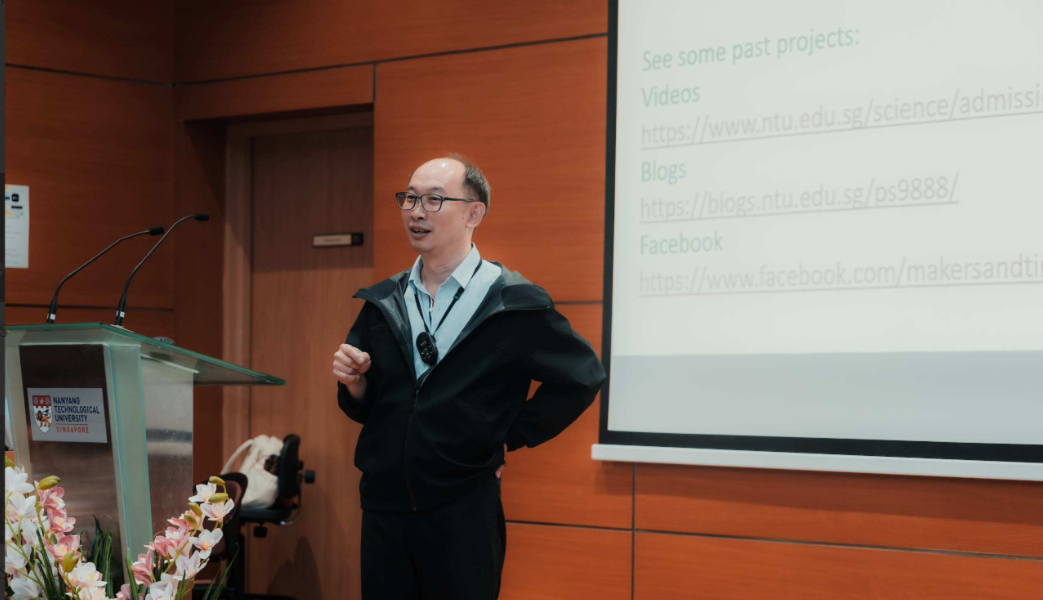 Dr Ho Shen Yong presents on the Making and Tinkering Programme, highlighting the programme's growth through the years, and some of the innovative projects from the students.
The afternoon's programme continued with guided tours of the laboratories across the four schools. Throughout these various tours led by both professors and students, pre-university educators were able to explore the different schools’ facilities and learn more about the innovative technologies housed within them.
Within the Asian School of the Environment (ASE), the educators visited the Coral Reef Geomorphology Lab where they keenly observed how coral reefs are stained with dye to determine their growth rate which will aid in better coral growth, and thus overall marine life in Singapore. Along with marine ecology, the school also deals with land and even space-related research. In the Centre of Geohazard Observations and Remote Sensing Labs, the educators were also shown how highly sensitive satellite sensors are sent to space in order to monitor natural disaster patterns, and map the damages done by them for quicker disaster relief response.
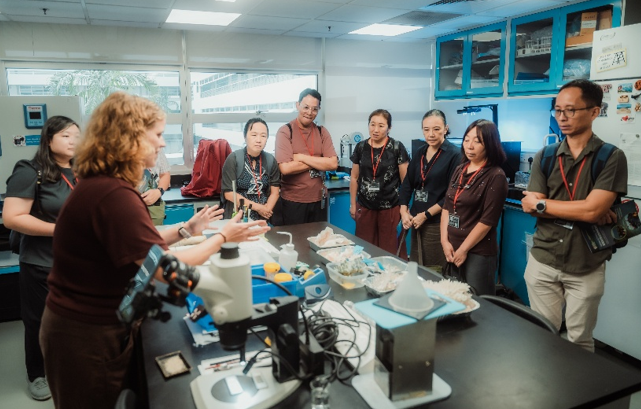 Educators visit ASE's Coral Reef Geomorphology Lab and viewed various kinds of dyed coral reefs.
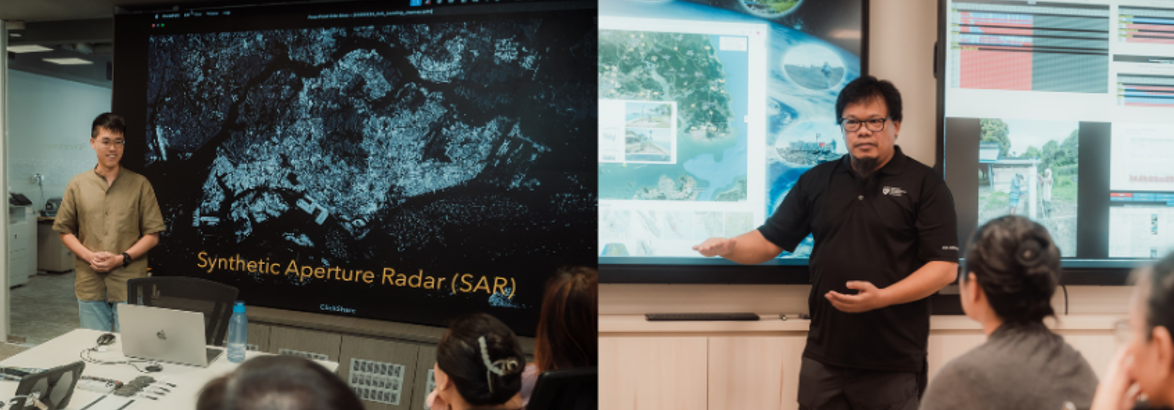 Lab showcases at conducted at the Centre of Geohazard Observations (Left) and Remote Sensing Lab (Right).
Next, the School of Biological Sciences (SBS) showcased the “Titan Krios 300 kV cryo-TEM” – a monolithic, cutting-edge device that is located in the school’s NISB Lab. This technology makes the study of protein structures more efficient through large scale automated data acquisition and analysis.
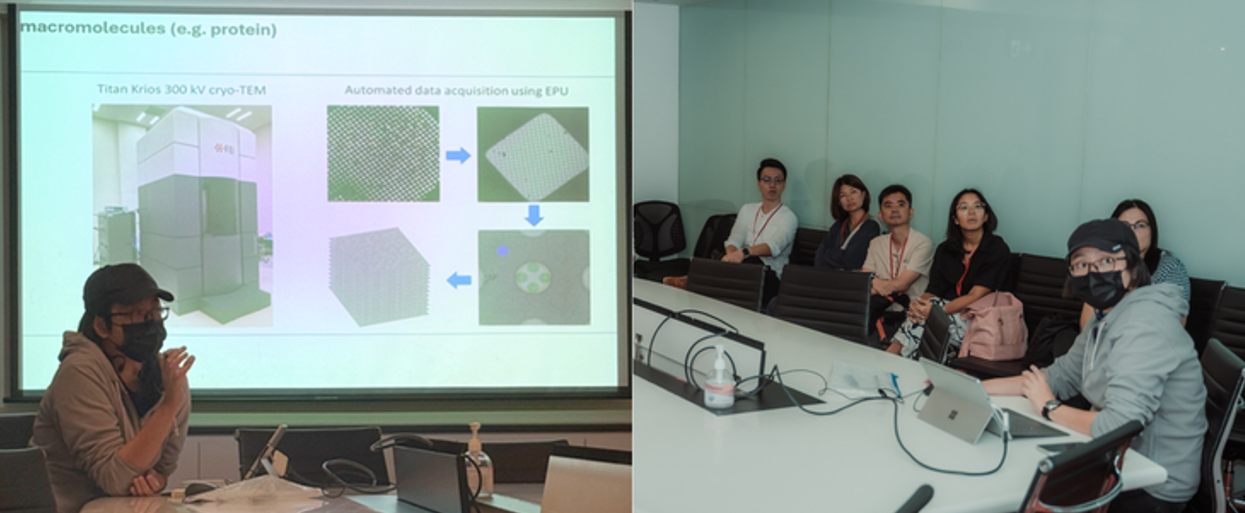 Educators being brought through the cutting-edge features of the Titan Krios 300 kV Cryo-TEM and its data-processing capabilities.
Through the corridors of the School of Chemistry, Chemical Engineering, and Biotechnology (CCEB), the educators were guided through various research and teaching labs where undergraduates conduct their experiments. The educators were even able to catch a glimpse of some on-going experiments happening live through the tour.
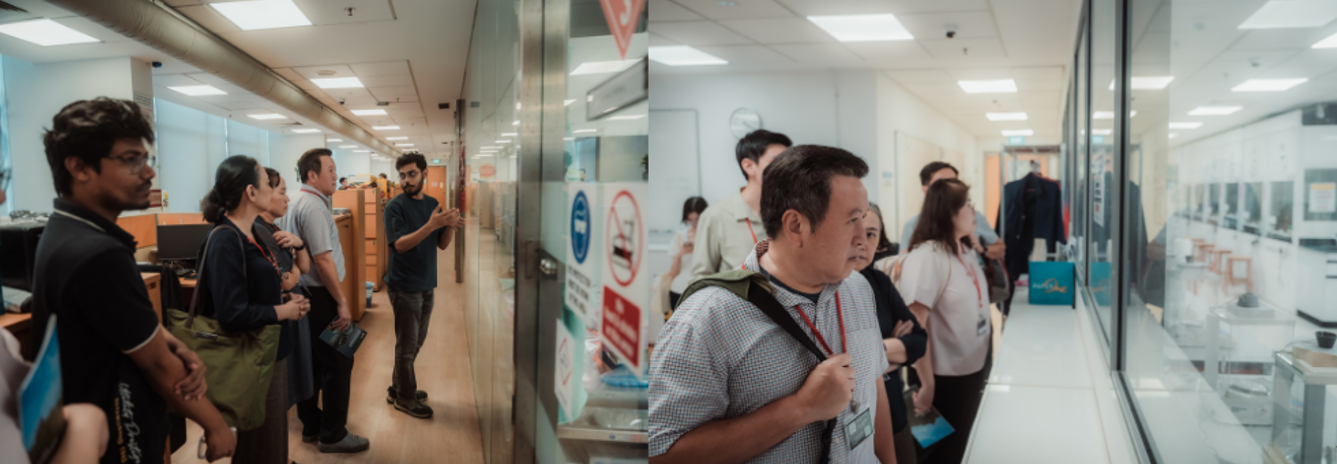 Educators explored CCEB laboratories and witnessed undergraduate research experiments being conducted firsthand.
In the School of Physical and Mathematical Sciences (SPMS), educators were guided through the Centre for Quantum Technologies (CQT) which houses highly precise gravimeter technologies which allow for both the coding and artificial creation of atoms. To aid in these processes, the school also utilises a large cooling fridge that acts both as a pressure and melting chamber for these atoms. Educators also entered the “Making and Tinkering” Lab that was presented to them earlier. This lab, filled with various advanced equipment such as a liquid resin printer for 3D printing and laser cutting tools, is a testament to the school’s effort to make their students’ projects come to life.
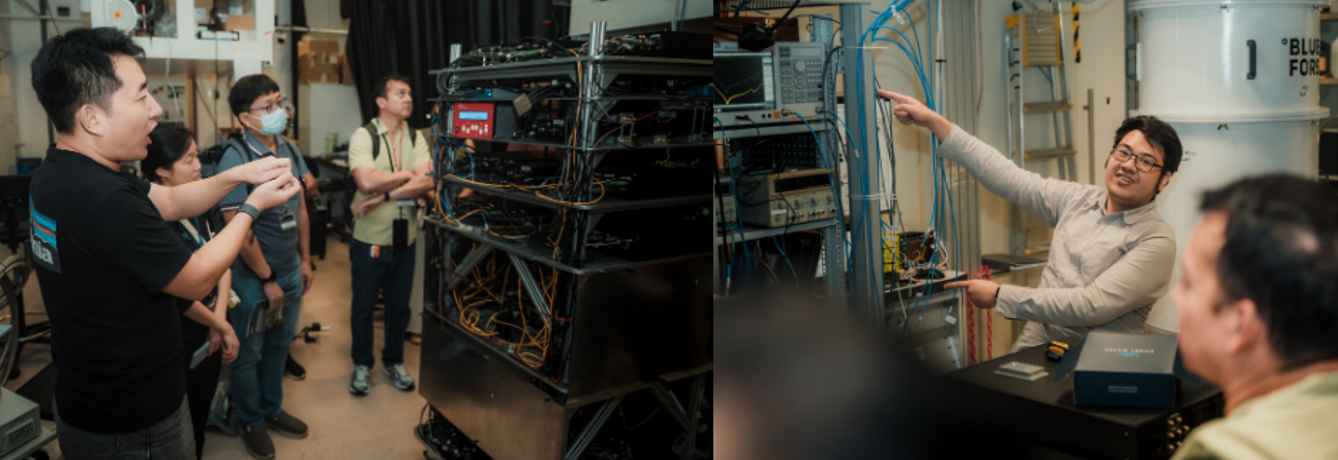 Educators were introduced to the gravimeter and cooling chamber used in the Centre for Quantum Technologies.
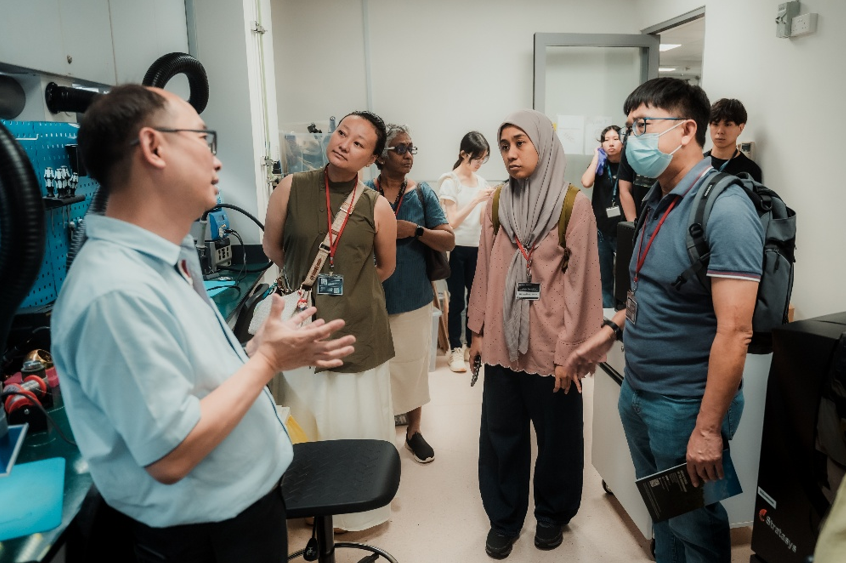 Dr Ho Shen Yong showcasing the various tools used to help students build their prototypes in
the Making and Tinkering Lab.
Thus, the guided lab tours brought the 2026 Learning Journey to NTU's College of Science to an inspiring close. Participants departed with fresh perspectives on how emerging technologies, particularly artificial intelligence, can enrich science education and foster greater curiosity among their students. As educators continue to embrace both hands-on scientific tools and AI-enabled approaches, they are well positioned to unlock new opportunities, drive meaningful innovation, and shape the future of science education for the next generation.
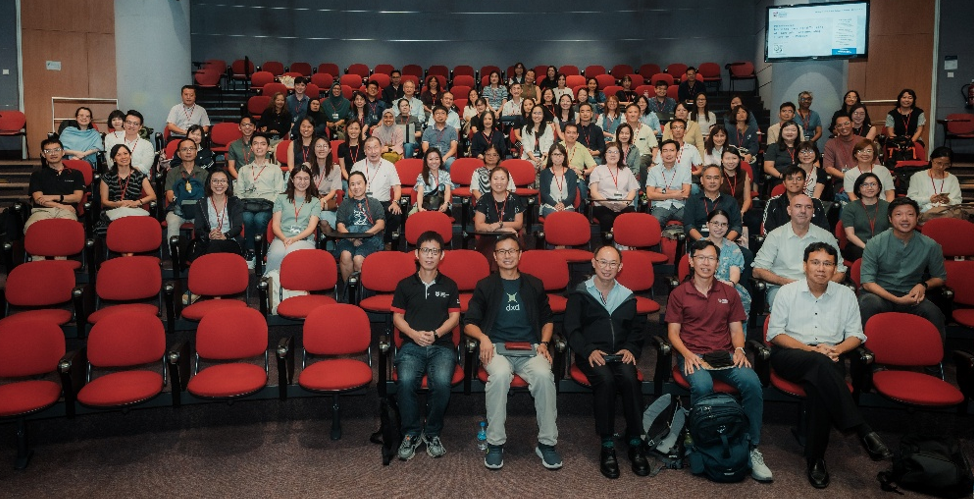
Some feedback from the educators:
“ASE's sharing of the AI tools (bird net) used to collect data from the environment was insightful. I also enjoyed SPMS's sharing of their experience of students using AI, and the pros and cons involved, which are helpful in letting us understand that these AI tools need to be balanced in terms of usage for assessment.”
“It was interesting to know the mini experiments different lecturers are doing with AI and how they are infusing it in their course. ”
“The presentations provided insightful information on how some modules are customised to incorporate the use of AI in the areas of coursework and assessment. ”
The SPMS presentation was very relatable and gave an idea about the execution of a doable activity."
"Very valuable insights from the Making and Tinkering Lab, particularly how undergraduate students can come up with new innovations, which have the potential to become useful inventions for society!"
Written by Lau Shi Ying Amberlyn | Undergraduate Student, English