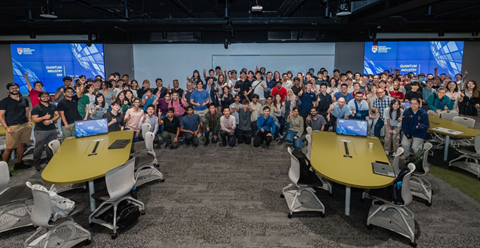
4th Annual Symposium on Mycobacteria: Translating Biology Into Cures
Dr Vikneswaran Mathiyazakan | Research Fellow, School of Biological Sciences, NTU
The increasing prevalence of Mycobacterial pulmonary infections has thrown a global spotlight on the genus. Mycobacteria can be classified into tuberculosis (TB) causing Mycobacterium tuberculosis (Mtb), leprotic mycobacteria, and non-tuberculous mycobacteria (NTM). The stagnant annual TB global incidence rate of approximately 10 million cases for the last decade, combined with approximately one quarter of the World’s population being infected with latent or “silent” Mtb, is a concerning public health conundrum. The poor prognosis of TB patients following co-infection with HIV and Covid-19 demands immediate attention and intervention. The global fight against Mtb has become more challenging with the increasing prevalence of NTM infections which have contributed further to the morbidity and mortality rates.
NTM are a major cause of pulmonary infection, particularly among patients with structural airway disorders including cystic fibrosis and bronchiectasis. Beyond pulmonary disease, they can cause lymphadenitis, skin and soft tissue infections, endocardial and other cardiac infections, bone and joint infections, and disseminated disease. Current treatment strategies require prolonged multidrug therapy, are frequently associated with substantial toxicity, often necessitate parenteral administration, and remain limited by relatively poor treatment outcomes. Both Mtb and NTM pose major challenges due to their intrinsic and acquired multidrug resistance. Consequently, there is an urgent need for more effective, well-tolerated, and orally available antibiotics specifically optimized for the treatment of TB and NTM infections.
The 4th Annual Symposium, Mycobacteria 2026: Translating Biology into Cures, was held on 25 to 26 May 2026 at Nanyang Technological University (NTU), Singapore, organised by the NRF Competitive Research Programme (CRP) grant winning consortium TELMabNet (Targeting Energy of Life for the Development of Drug Combination to Eradicate Antibiotic-tolerant Mycobacterium abscessus) led by Prof Gerhard Grüber, and supported by the IAS Frontiers Conference series. The symposium brought together leading researchers, clinicians, and industry experts working to combat TB and NTM diseases providing a vibrant platform for scientific exchange, collaboration, and the sharing of cutting-edge discoveries in mycobacterial biology, drug discovery, and translational medicine.
The two-day event featured internationally renowned speakers from academia, industry, and clinical research institutions across North America, Europe, Asia, Africa, and Australia. Through a series of keynote lectures, scientific presentations, poster sessions, and panel discussions, participants explored the latest advances in understanding mycobacterial pathogenesis and developing innovative therapeutic strategies against TB and NTM infections.
 A showcase of global expertise opens with welcome remarks from Prof Gerhard Grüber (SBS, NTU) [Top left]; Dr Eduard Ruge (Embassy of Germany in Singapore) [Top right]; and Prof Louis Phee (VP, Innovation and Entrepreneurship, NTU) [Bottom left]; followed by Day 1's opening keynote presentation by Prof Anil Koul (London School of Hygiene and Tropical Medicine) [Bottom right].
Day 1 Highlights: Advancing Drug Discovery and Understanding Mycobacterial Biology
The symposium opened with welcoming remarks from Dr Eduard Ruge, First Secretary and Head of the Science, Technology, and Education Department at the Embassy of Germany in Singapore. Dr Ruge highlighted the burden placed by mycobacterial diseases on the global healthcare system and underscored the strong ties between Singapore and Germany on the global fight against mycobacterial diseases. The opening remarks were followed by a welcome address from Prof Louis Phee, Vice President (Innovation & Entrepreneurship, NTU) who highlighted the importance of innovation in tackling the global health crisis and the commitment of NTU towards innovative drug discovery. Prof Gerhard Grüber (SBS, NTU and Lead Principal Investigator of TELMabNet) emphasised the importance of international collaboration in addressing the growing global burden of mycobacterial diseases and kickstarted the programme of the day.
The first day focused on fundamental biology and drug discovery, featuring keynote presentations from leading experts in the field. Prof Anil Koul (London School of Hygiene & Tropical Medicine, UK) delivered an opening keynote on innovation-driven TB drug discovery beyond bedaquiline, discussing lessons learned from the development of novel antimycobacterial agents and future opportunities for therapeutic intervention.
Scientific presentations throughout the day explored diverse aspects of mycobacterial physiology and metabolism. Speakers presented new insights into respiratory metabolism and oxidative phosphorylation, highlighting how vulnerabilities in bacterial energy generation pathways can be exploited for drug development. Additional presentations examined host–pathogen interactions, bacterial persistence, RNA biology, and iron transport systems that contribute to mycobacterial survival and virulence. Researchers also shared advances in high-throughput screening technologies and phenotypic drug discovery platforms that are accelerating the identification of new antimycobacterial compounds.
The day concluded with a lively poster session, where students and early-career researchers presented their latest findings. The poster session provided valuable opportunities for networking, mentorship, and scientific discussion, fostering new collaborations among participants from different institutions and disciplines.
a4a51d05-65ec-4f43-bf3f-8e049b2fc7f5.jpg?sfvrsn=b579da47_1 "IAS IG Square_old (1)") Dr Albert Y. H. Lim (Tan Tock Seng Hospital, Singapore) in discussion with Edward Lee from Kyberlife [Top left]; Dr Samsher Singh (Institute for Digital Molecular Analytics and Science, NTU) presenting his poster findings [Top right]; and participants exploring the latest innovations at our sponsors' booths, while delving into groundbreaking research findings at the lunch and poster sessions [Bottom].
Dr Albert Y. H. Lim (Tan Tock Seng Hospital, Singapore) in discussion with Edward Lee from Kyberlife [Top left]; Dr Samsher Singh (Institute for Digital Molecular Analytics and Science, NTU) presenting his poster findings [Top right]; and participants exploring the latest innovations at our sponsors' booths, while delving into groundbreaking research findings at the lunch and poster sessions [Bottom].
Day 2 Highlights: Translating Discoveries into Therapeutic Solutions
Several presentations explored the mechanisms underlying bacterial persistence and phenotypic heterogeneity, two major challenges that contribute to treatment failure and relapse. Researchers also discussed advances in understanding how mycobacteria adapt to hostile host environments and evade immune responses, providing new avenues for therapeutic development. The scientific programme concluded with a panel discussion featuring leaders from academia and the biotechnology sector. Panelists reflected on current challenges in mycobacterial drug discovery, including translating laboratory findings into clinical candidates, securing sustainable funding, and strengthening partnerships between academia, healthcare institutions, and industry. The discussion underscored the importance of interdisciplinary and international collaboration in accelerating the development of shorter, safer, and more effective treatments for mycobacterial diseases.
acb5afb9-3d5c-47cc-8806-107e0293ce73.jpg?sfvrsn=5fe6ab98_1 "IAS IG Square_old (2)") Prof Thomas Dick (Center for Discovery and Innovation, USA) [Left]; and Prof Gerhard Grüber (SBS, NTU) [Right]
Prof Thomas Dick (Center for Discovery and Innovation, USA) [Left]; and Prof Gerhard Grüber (SBS, NTU) [Right]
were among the speakers featured on Day 2, which highlighted innovative therapeutic strategies aimed at combating drug resistance and improving treatment outcomes for TB and NTM infections.
The second day focused on translating biological discoveries into clinical applications and next-generation therapies. A keynote lecture by Prof Thomas Dick (Center for Discovery and Innovation, USA) highlighted the development of next-generation rifamycins for mycobacterial lung disease, emphasising the need for more effective and patient-friendly treatment regimens. Subsequent presentations addressed emerging therapeutic approaches, including host-directed therapies, antimicrobial resistance, drug repurposing, and phage-based interventions. Speakers presented innovative strategies aimed at shortening treatment duration, overcoming drug resistance, and improving outcomes for patients with TB and NTM infections.
6c546af7-d0c2-43c1-ac5c-aa8c6ba341bf.jpg?sfvrsn=fcf5a072_1 "IAS IG Square_old (3)") Panelists from left to right: Dr Albert Y. H. Lim (Moderator), Dr Christine Roubert (Evotec), Prof Anil Koul (London School of Hygiene and Tropical Medicine, UK), Dr Florian Maurer (Basilea Pharmaceutica), Dr Daniel Ritz (BioVersys) and Dr Vladimir Marshansky (Neuro-Horizon Pharma Inc.).
Panelists from left to right: Dr Albert Y. H. Lim (Moderator), Dr Christine Roubert (Evotec), Prof Anil Koul (London School of Hygiene and Tropical Medicine, UK), Dr Florian Maurer (Basilea Pharmaceutica), Dr Daniel Ritz (BioVersys) and Dr Vladimir Marshansky (Neuro-Horizon Pharma Inc.).
The symposium ended with a closing address by Prof Christian Wolfrum (Deputy President and Provost, NTU), highlighting the rise in antimicrobial resistance and the importance of a strong global network in the fight against mycobacterial diseases. He further assured the commitment of NTU in the fight against TB and NTM through the strong antimicrobial discovery campaigns led by Prof Gerhard Grüber. Throughout the symposium, participants engaged in dynamic discussions that highlighted both the progress made and the challenges that remain in the fight against TB and NTM infections. The event successfully brought together experts across multiple disciplines from 28 countries, creating opportunities for knowledge exchange and fostering collaborations that will drive future innovations in the field.
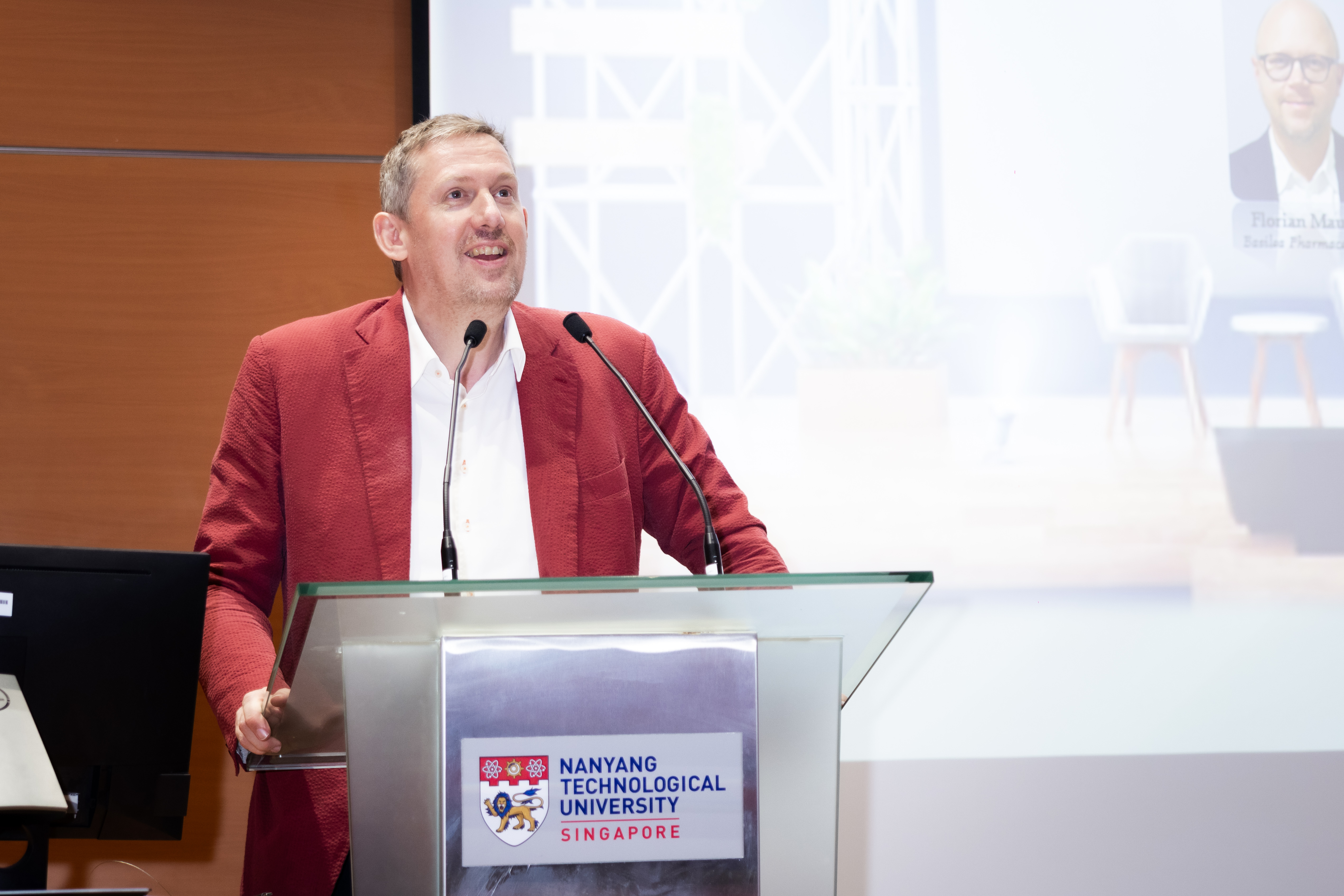 Prof Christian Wolfrum (Deputy President and Provost of NTU) delivered the closing remarks, emphasising the importance of global collaboration in combating TB and NTM diseases and reaffirming NTU’s commitment to antimicrobial research and discovery.
Some reflections on the Symposium:
“Thank you very much for organising such a wonderful conference with excellent selection of speakers and key opinion leaders. I enjoyed it very much and learned a lot including the gaps and challenges in NTM research and drug discovery.” - Dr R. K. Shandil (Director and Chief Scientific Officer, Foundation for Neglected Disease Research, Bangalore)
“It was a fantastic conference, and I very much enjoyed the two days. It was lovely to see and connect with the other participants and panelists. My sincere thanks to you and the team for the excellent organisation and warm hospitality throughout.” - Prof Anil Koul (London School of Hygiene and Tropical Medicine)
“The Mycobacteria symposium is one of my favourites. Great science, great people, lots of meaningful insights that will hopefully continue to make a real difference. A big thank you to Gerhard Grüber, Thomas Dick and Albert Lim for organising it once again. I hope this tradition will continue in 2028!” - Dr Florian Maurer (Head of Clinical Development, Basilea Pharmaceutica)
“It was a great pleasure and honour to contribute to this Symposium, which provided a stimulating atmosphere for discussing basic science, promising compounds, clinical trends, clinical trials and novel techniques. In an inspiring on-stage discussion, it defined current shortcomes in treatment of tuberculous and non-tuberculous mycobacterial infections and urgent needs to be addressed in near future.” - Prof Peter Sander (University of Zurich)
.tmb-listing.jpg?sfvrsn=192338ba_1)
-(9).tmb-listing.jpg?sfvrsn=22fb3ee8_1)
.tmb-listing.jpg?sfvrsn=c45c3c7e_2)