

Bachelor of Science (Maritime Studies)
Maritime trade is Singapore’s lifeline — powering the economy and connecting the nation to the world. As one of the world’s leading hub ports, Singapore holds an unrivalled position in seaborne trade.
At NTU-CEE, students immerse in the business and management of shipping — covering shipping economics, marine insurance, logistics, and next-generation maritime technologies — preparing to lead in Singapore’s dynamic maritime sector.
Industry-Endorsed Degree Programme
Our Bachelor of Science (Maritime Studies) programmes is strongly supported by the Maritime Port Authority of Singapore, Singapore Maritime Foundation and various industry partners.
Programmes Offered
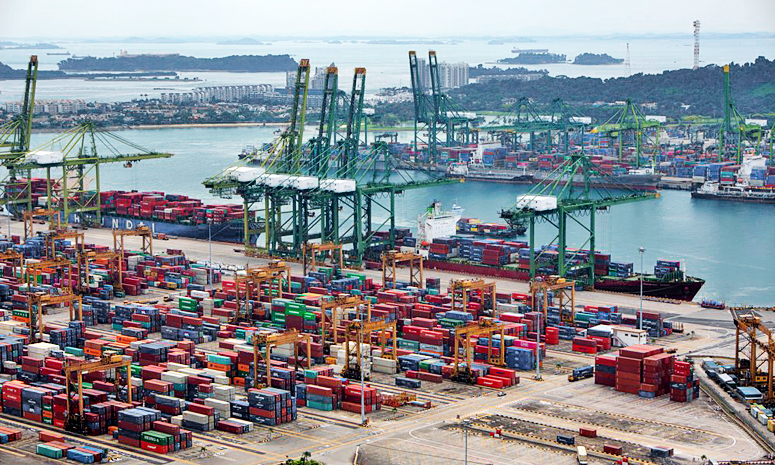
The 4-year direct honours Maritime Studies programme focuses primarily on the shipping business and management. The programme structure is flexible and broad-based, designed to equip our students to excel as professionals in shipping and maritime-related sectors.
Curriculum Structure with Professional Internship (PI)
| Academic Unit Requirement | |||
|---|---|---|---|
| Major Requirements (Core + Major PE) | 74 + 9 | ||
| Interdisciplinary Collaborative Core (ICC) – Common Core | 14 | ||
| Interdisciplinary Collaborative Core (ICC) – Professional Series | 16 | ||
Interdisciplinary Collaborative Core (ICC) – Care, Serve, Learn | 3 | ||
| Broadening and Deepening Electives (BDE) | 20 | ||
| Total | 136 | ||
Minor
Students can acquire multiple skills and broader knowledge beyond what their major discipline may provide, from minor programmes.
There are more than 45 minors available in NTU. Students will not be offered a minor in the same field as his major (single degree, double degree or double major programme). Students intending to pursue a minor are to indicate their intention and when they have fulfilled the minor requirements, they are to file for the award of the minor. The award of minor will be reflected in a graduate’s transcript but not his degree certificate. No additional certificate will be issued.
Specialisations
CEE offers 2 niche specialisations that enable Maritime Studies students to gain deeper expertise in their chosen field and enhance the value of their degree. Each specialisation is formally recognised on the academic transcript, giving graduates a competitive edge in their career pursuits and providing a strong foundation for further studies.
Choose from these Specialisations available to Maritime Studies students:


Bachelor of Science (Maritime Studies)
SkillsFuture Work-Study Degree Programme
Enhancing Students' Job-Readiness
The Committee on the Future Economy has recommended the introduction of new modalities of education and training at the Institutes of Higher Learning as there are tangible benefits for students to be exposed to on-the-job training (OJT). CoE's SkillsFuture Work-Study Degree (WSDeg) programmes are purposed to enhance students’ readiness for the workplace after graduation by integrating institution-based learning with structured OJT in partnership with employers. Students benefit from greater exposure to the professional work environment, allowing them to learn on the job, acquire and deepen jobskills, and cultivate an understanding of real-world practices through multiple internships, culminating in an industry-sponsored WSDeg Final Year Project (FYP).
Programme Structure
The WSDeg comprise approximately 54 weeks of OJT and industry-sponsored FYP integrated into the 4-year undergraduate curriculum. The OJT components include:
| Year 1 | Year 2 | Year 3 | Year 4 | ||||||||
| SEM 1 | SEM 2 | S-SEM | SEM 1 | SEM 2 | S-SEM | SEM 1 | SEM 2 | S-SEM | SEM 1 | WINTER | SEM 2 |
| CW | CW | N.A. | CW | CW | WORK TERM 1 |
WORK TERM 2 |
CW | WORK TERM 3 |
FYP + CW |
WORK TERM 4 |
FYP + CW |
| BLOCK 1 | BLOCK 2 | BLOCK 3 | |||||||||
| DISCOVERY / EXPLORATORY STAGE |
DEEPENING & ENHANCING WORK-READY SKILLSETS STAGE | ||||||||||
- Work Term 1: PA (10 weeks in Year 2 Special Semester from May to Jul; 5 AU)
- Work Term 2: PI (20 weeks in Year 3, Semester 2 from Jan to May; 10 AU)
- Work Term 3: PA (11 weeks in Year 3 Special Semester from May to Jul; 5 AU)
- Work Term 4: PA Winter (5 weeks in Year 4 Winter from Dec to Jan; 3 AU)
- WSDeg Final Year Project (FYP): (40 weeks in Year 4 Semester 1 & 2, minimum 8 hours/week; 8 AU)
Note:
- Block 1 & 2: These Discovery/Exploratory blocks allow students to develop foundational skillsets and fundamental industry insights before commitment to a focused job role/function. Students may choose to stay with the same company for both Work Term 1 and 2, or select a different company for each Work Term.
- Block 3: Students are expected to commit to one of the companies they have engaged with in earlier work terms (either Work Term 1 and/or 2).
- The AU for the 3 PA in Work Term 1, 3 and 4 will be drawn from students' Broadening & Deepening Electives (BDE). Interested students should plan their studies accordingly to free up 13 AU of BDE for the 3 PA.
How to Apply
In Year 2 Semester 1, students will receive an email invitation to apply.
Tuition Fees
The tuition fees for the WSDeg are pegged to the fees for the corresponding Bachelor of Engineering or Bachelor of Science programme.
Accelerated Bachelor Programme (ABP)
The Accelerated Bachelor Programme (ABP) is offered by invitation to eligible first-year students based on strong academic results.
Students who maintain strong academic performance may complete the programme in 3.5 years instead of the standard 4 years. Achieving early graduation requires careful curriculum mapping and timetable planning.
NTU-University Scholars Programme (NTU-USP)
The NTU–USP experience offers a vibrant student life. Our co-curricular enrichment activities include seminars by distinguished professors, professional development programmes, and NTU–USP scholar-led initiatives.
Second Majors
A Second Major programme provides students with a breadth of exposure and is also designed to offer greater depth of study in an additional discipline compared to a minor.
The award of a second major will be reflected in a graduate's transcript, but not the degree certificate. A separate certificate for the award of a second major will be issued.
Maritime Studies students can enhance their degree by choosing one of the following Second Majors:



Admission Requirements

In addition to NTU’s general admission criteria, applicants are expected to fulfil these minimum subject requirements.
| Institution | Requirements |
|---|---|
| Singapore Cambridge GCE 'A' Level | H1 Level pass in Mathematics, or 'O' Level/equivalent pass in Additional Mathematics |
| International Baccalaureate Diploma | Mathematics at Standard Level |
| NUS High School Diploma | Major CAP of 2.0 in Mathematics |
| International and Other Qualifications | Additional Mathematics at Junior High School Level* * Mathematics at Senior High School Level is only applicable to applicants who have not read Additional Mathematics at Junior High School Level |
| Polytechnic Diploma | Applicants with relevant diplomas from one of the local polytechnics may apply for admission. |
| Institution | Requirements |
|---|---|
| Singapore Cambridge GCE 'A' Level | H2 Level pass in Mathematics |
| International Baccalaureate Diploma | Mathematics at Standard Level |
| NUS High School Diploma | Major CAP of 2.0 in Mathematics |
| International and Other Qualifications | Mathematics at Senior High School Level |
| Polytechnic Diploma | Applicants with relevant diplomas from one of the local polytechnics may apply for admission. |
Eligibility
Singapore GCE ‘A’ Level, International Baccalaureate (IB) and NUS High School Diploma (NUSHS)
Students with outstanding Singapore GCE ‘A’ Level, International Baccalaureate (IB) and NUS High School Diploma results may be eligible for exemptions from the first-year Math course.
Polytechnic Qualifications
| S/N | Criteria |
|---|---|
| 1 | Up to 12 AUs for Major Core, including selected Major Prescribed Electives (MPE), subject to meeting programme-specific exemption criteria. |
| 2 | Up to 6 AUs of Broadening-Deepening Electives (BDEs). |
| 3 | An additional 12 AUs via the Advanced Placement Pathway (APP) with partner Polytechnics for NTU-registered courses taken during polytechnic studies and graded by NTU. |
Curriculum
Stay ahead of the curve with our industry-relevant and well-rounded curriculum.
Please select the programme to view its curriculum.

Course Content
All courses within NTU are designed using an outcomes-based teaching and learning (OBTL) approach, which begins by stating the desired outcomes.
Find out moreCareer Prospects

Commodity/Energy Trading
Centrica Energy Trading, Total Trading (Asia)

Commodity/Agribusiness/Food
Bunge Agribusiness Pte Ltd, Cargill International Trading Pte Ltd

Government Agencies/Classification Societies/Membership Organisations
Maritime and Port Authority of Singapore (MPA), Singapore Maritime Institute, American Bureau of Shipping, Lloyds Register, DNV GL, The Baltic Exchange (Asia) Pte Ltd

Marine Insurance/Finance/Investment
IMC Pan Asia Alliance Pte Ltd, Tokio Marine Asia Pte Ltd, UK P&I Club, Gard, North of England P&I Association, Richards Hogg Lindley, Shipowners' Club, Goldman Sachs

Shipbrokering
Arrow Asia Shipbrokers, Chembulk Maritime Singapore Pte Ltd

Shipping/Port
A.P. Moller - Maersk, BW Group, Bernhard Schulte Shipmanagement, Clarkson Asia Pte Ltd, Norden Shipping (Singapore) Pte Ltd, Pacific Carriers Limited, PSA Corporation Limited

Supply Chain/Logistics
Procter & Gamble, SH Cogent Logistics Pte Ltd, GSK Global Pte Ltd
Testimonals

The Maritime Studies programme gave me a broad and practical understanding of the maritime industry, including areas such as shipping and commodity trading. Insights and real-world experiences shared by industry-experienced professors provided a strong competitive edge that continues to support my professional work.
The programme’s flexible curriculum allowed me to explore beyond maritime studies. Taking foreign language and cultural intelligence modules enhanced my research capabilities and helped me thrive in a diverse, global work environment.
— Tan Xin Hui
BSc in Maritime Studies, Class of 2021

The Incoterms and Shipping terms (e.g., laytime and demurrage) that I learnt in NTU Maritime Studies have prepared me well in understanding the delivery terms for each shipment. I could also better position myself when coordinating with the ship master, as I have once personally experienced what work onboard the vessel is like during my internship. This rare opportunity to be on board was part of my internship programme that NTU partnered with the Maritime and Port Authority of Singapore, called the MPA Global Internship Award.
If you are curious about how shipping interconnects with the different parts of the world, come join NTU Maritime Studies and understand how shipping plays an important role in international trading.
— Cheryl Teng
BSc in Maritime Studies, Class of 2020

NTU Maritime Studies provided me with a strong understanding of the maritime industry, equipping me with essential shipping concepts and practical skills. Through interactive group work, discussions, and guidance from experienced professors, the programme helped bridge the gap between academic learning and industry practice.
For those considering this programme, it offers a gateway into a dynamic, global industry. Learning also extends beyond the classroom through seminars, discussions, and internships that support continuous personal and professional growth.
— Ng Sen Mian
BSc in Maritime Studies, Class of 2020

Maritime Studies offers a broad understanding of the shipping industry and its vital role in global transportation—from container shipping to dry and wet cargoes. It reveals how shipping underpins international trade and keeps the world moving.
The International Trading Programme (ITP) specialisation provided valuable exposure to commodity trading and industry practices, opening up an exciting and fulfilling career path that I look forward to pursuing for years to come.
— Lim Hong Yu
BSc in Maritime Studies, Class of 2019

NTU Maritime Studies offers broad exposure across the maritime industry — from maritime law and port planning to warehousing and distribution — equipping graduates with a strong foundation to pursue diverse career pathways.
Learning from experienced industry practitioners, students gain both theoretical knowledge and real-world insights, developing a comprehensive understanding of the maritime sector and its professional demands.
— Muhammad Nawazsher Khan
BSc in Maritime Studies, Class of 2019

NTU Maritime Studies gave me a strong foundation in port and shipping knowledge, providing a competitive edge and the confidence to contribute meaningfully and share insights with my peers in the industry.
Beyond technical knowledge, the programme instilled resilience and perseverance — reminding me that with dedication and passion, challenges can be overcome and goals achieved.
— Eugene Lim
BSc in Maritime Studies, Class of 2019

NTU Maritime Studies broadened my understanding of the integrated global supply chain and prepared me for real-world practice. After graduation, I joined a shipping company as a Management Trainee, where I applied my maritime knowledge while gaining hands-on insights into industry operations.
The strong foundation from the programme opened doors to wider supply chain roles and inspired me to further my studies with a part-time master’s in supply chain management—proof of how NTU Maritime Studies supports long-term career growth.
— Wang Wenxiu Charlotte
BSc in Maritime Studies, Class of 2016

NTU Maritime Studies gave me a deeper understanding of the maritime industry beyond what we see at the ports, helping me connect the roles of diverse stakeholders that keep the sector moving.
This holistic perspective opens the door to a wide range of opportunities across the global maritime industry, making the programme a strong launchpad for an international career.
— Debbie Leng
BSc in Maritime Studies, Class of 2015

The Maritime Studies programme offers a holistic understanding of the maritime industry, spanning economic, management, legal, technological, regulatory, and environmental perspectives.
This strong foundation equipped me to pursue further studies with confidence, and the knowledge gained continues to remain relevant and valuable in my research work.
— Yuen Kam Fai
BSc in Maritime Studies, Class of 2012

The broad Maritime Studies curriculum gave me a strong edge at work, equipping me with versatile skills — from oceanography and maritime technology to chartering and project management—that I apply daily to solve complex, real-world problems.
Shipping is rarely black and white, and the programme taught me to navigate uncertainty, weigh consequences, and think critically. More than a profession, Maritime Studies revealed shipping as a way of life.
— Su Weixiang
BSc in Maritime Studies, Class of 2011

NTU Maritime Studies’ strong industry focus gave me valuable insights even before entering the workforce. Learning directly from maritime practitioners, complemented by internships and an overseas exchange with industry visits, helped me transition smoothly into professional practice.
Beyond academics, the programme fostered lasting connections with coursemates now working across chartering, marine insurance, and ship operations. In a sector that is vital to Singapore’s economy and rich with opportunities, Maritime Studies offers an exciting and rewarding learning journey.
— Shen Wanling
BSc in Maritime Studies, Class of 2009

My time at NTU equipped me with a comprehensive understanding of the maritime industry — from finance and accounting to chartering, insurance, and maritime law. The curriculum offers a truly global perspective, reflecting the international nature of shipping.
Overseas exchange and a strong internship programme provided invaluable global exposure and industry experience, helping me secure my first job and build a strong foundation for career growth in this exciting and dynamic sector.
— Niu Wenjue
BSc in Maritime Studies, Class of 2008