
Bachelor of Engineering (Environmental Engineering)
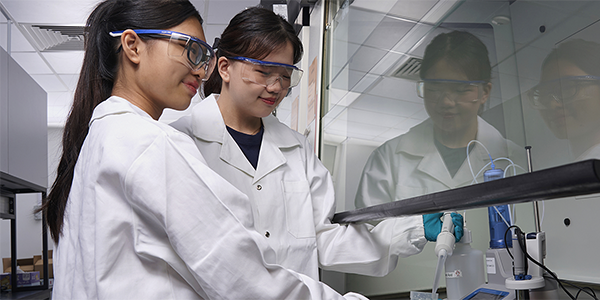
Environmental Engineers apply science and engineering principles to develop innovative solutions for today’s pressing environmental challenges. Their work contributes to sustainable development, safeguards human health, and protects the delicate balance of our natural ecosystems.
At NTU-CEE, you will develop the knowledge, skills, and networks to create a brighter, greener world — sustainable today and for generations to come.
Accreditation
Our Bachelor of Engineering (Civil Engineering) programmes are accredited by the Institution of Engineers Singapore (IES) through its Engineering Accreditation Board (EAB). IES is the Singapore signatory of the Washington Accord - an international agreement that evaluates the degree to which engineering academic programmes equip their graduates with the skills required for practising engineering at the professional level.
Programmes Offered

The 4-year direct honours Environmental Engineering programme provides a unique engineering education that prepares students to tackle complex environmental challenges, equipping them to deliver solutions that are both economically viable and environmentally sustainable.
The Environmental Engineering programme combines flexibility with academic rigour, offering students a broad-based education grounded in mathematics, science, and fundamental engineering principles, while providing a balanced mix of core courses in the environmental engineering discipline.
Curriculum Structure with Professional Internship (PI)
| Academic Unit Requirement | |||
|---|---|---|---|
| Major Requirements (Core + Major PE) | 80+ 3 | ||
| Interdisciplinary Collaborative Core (ICC) – Common Core | 14 | ||
| Interdisciplinary Collaborative Core (ICC) – Professional Series | 16 | ||
Interdisciplinary Collaborative Core (ICC) – Care, Serve, Learn | 3 | ||
| Broadening and Deepening Electives (BDE) | 20 | ||
| Total | 136 | ||
Minor
Students can acquire multiple skills and broader knowledge beyond what their major discipline may provide, from minor programmes.
There are more than 45 minors available in NTU. Students will not be offered a minor in the same field as his major (single degree, double degree or double major programme). Students intending to pursue a minor are to indicate their intention and when they have fulfilled the minor requirements, they are to file for the award of the minor. The award of minor will be reflected in a graduate’s transcript but not his degree certificate. No additional certificate will be issued.
Specialisations
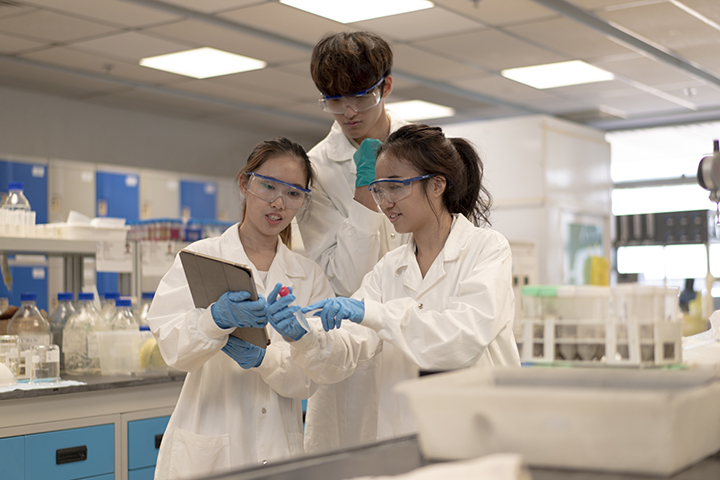
CEE offers 4 niche specialisations that enable Environmental Engineering students to gain deeper expertise in their chosen field and enhance the value of their degree. Each specialisation is formally recognised on the academic transcript, giving graduates a competitive edge in their career pursuits and providing a strong foundation for further studies.
Choose from these Specialisations available to Environmental Engineering students:




Bachelor of Engineering (Environmental Engineering)
SkillsFuture Work-Study Degree Programme
Enhancing Students' Job-Readiness
The Committee on the Future Economy has recommended the introduction of new modalities of education and training at the Institutes of Higher Learning as there are tangible benefits for students to be exposed to on-the-job training (OJT). CoE's SkillsFuture Work-Study Degree (WSDeg) programmes are purposed to enhance students’ readiness for the workplace after graduation by integrating institution-based learning with structured OJT in partnership with employers. Students benefit from greater exposure to the professional work environment, allowing them to learn on the job, acquire and deepen jobskills, and cultivate an understanding of real-world practices through multiple internships, culminating in an industry-sponsored WSDeg Final Year Project (FYP).
Programme Structure
The WSDeg comprise approximately 54 weeks of OJT and industry-sponsored FYP integrated into the 4-year undergraduate curriculum. The OJT components include:
| Year 1 | Year 2 | Year 3 | Year 4 | ||||||||
| SEM 1 | SEM 2 | S-SEM | SEM 1 | SEM 2 | S-SEM | SEM 1 | SEM 2 | S-SEM | SEM 1 | WINTER | SEM 2 |
| CW | CW | N.A. | CW | CW | WORK TERM 1 |
WORK TERM 2 |
CW | WORK TERM 3 |
FYP + CW |
WORK TERM 4 |
FYP + CW |
| BLOCK 1 | BLOCK 2 | BLOCK 3 | |||||||||
| DISCOVERY / EXPLORATORY STAGE |
DEEPENING & ENHANCING WORK-READY SKILLSETS STAGE | ||||||||||
- Work Term 1: PA (10 weeks in Year 2 Special Semester from May to Jul; 5 AU)
- Work Term 2: PI (20 weeks in Year 3, Semester 2 from Jan to May; 10 AU)
- Work Term 3: PA (11 weeks in Year 3 Special Semester from May to Jul; 5 AU)
- Work Term 4: PA Winter (5 weeks in Year 4 Winter from Dec to Jan; 3 AU)
- WSDeg Final Year Project (FYP): (40 weeks in Year 4 Semester 1 & 2, minimum 8 hours/week; 8 AU)
Note:
- Block 1 & 2: These Discovery/Exploratory blocks allow students to develop foundational skillsets and fundamental industry insights before commitment to a focused job role/function. Students may choose to stay with the same company for both Work Term 1 and 2, or select a different company for each Work Term.
- Block 3: Students are expected to commit to one of the companies they have engaged with in earlier work terms (either Work Term 1 and/or 2).
- The AU for the 3 PA in Work Term 1, 3 and 4 will be drawn from students' Broadening & Deepening Electives (BDE). Interested students should plan their studies accordingly to free up 13 AU of BDE for the 3 PA.
How to Apply
In Year 2 Semester 1, students will receive an email invitation to apply.
Tuition Fees
The tuition fees for the WSDeg are pegged to the fees for the corresponding Bachelor of Engineering or Bachelor of Science programme.
Accelerated Bachelor Programme (ABP)
The Accelerated Bachelor Programme (ABP) is offered by invitation to eligible first-year students based on strong academic results.
Students who maintain strong academic performance may complete the programme in 3.5 years instead of the standard 4 years. Achieving early graduation requires careful curriculum mapping and timetable planning.
NTU-University Scholars Programme (NTU-USP)
The NTU–USP experience offers a vibrant student life. Our co-curricular enrichment activities include seminars by distinguished professors, professional development programmes, and NTU–USP scholar-led initiatives.
Renaissance Engineering Programme (REP)
The Renaissance Engineering Programme (REP) is an integrated, rigorous, and fully residential programme with a curriculum that covers a broad spectrum of multidisciplinary subjects, bridging Engineering, Business, and the Liberal Arts, which includes Sciences, Mathematics, Engineering Technology Management, and interdisciplinary studies.
This programme includes a one-year overseas experience at a partnering university such as University of California, Berkeley, Imperial College London, University of British Columbia, University of Toronto or University of Waterloo with a Professional Attachment in Year 3, and it awards a dual-degree comprising Bachelor of Engineering Science degree (with specialisation in a chosen engineering discipline) and Master of Science in Technology Management in 4.5 years.
CN Yang Scholars Programme (CNYSP)
The CN Yang Scholars Programme (CNYSP) nurtures future leaders at the interface of science and engineering. It focuses on technological innovation and scientific communication and requires strong science and engineering training.
It features multidisciplinary courses in mathematics, research, making and tinkering, internship, and global learning, designed to prepare you to lead in the next phase of technological evolution.
Embark on this unique journey to truly embrace the spirit of innovation, persistence, and social capita so that you can make an impact in any of the diverse range of careers available to you in the future.
Second Majors
A Second Major programme provides students with a breadth of exposure and is also designed to offer greater depth of study in an additional discipline compared to a minor.
The award of a second major will be reflected in a graduate's transcript, but not the degree certificate. A separate certificate for the award of a second major will be issued.
Environmental Engineering students can enhance their degree by choosing one of the following Second Majors:







Bachelor of Engineering (Environmental Engineering) and Bachelor of Social Science (Economics)
Apply nowCurriculum Structure with Professional Internship (PI)
| Academic Unit Requirement | |||
|---|---|---|---|
| Major Requirements (Core + Major PE) | 101 + 36 | ||
| Interdisciplinary Collaborative Core (ICC) – Common Core | 14 | ||
| Interdisciplinary Collaborative Core (ICC) – Professional Series | 16 | ||
Interdisciplinary Collaborative Core (ICC) – Care, Serve, Learn | 3 | ||
| Broadening and Deepening Electives (BDE) | 2 | ||
| Total | 172 | ||
List of Economics Courses
| ECON Core | AU | Sem | Pre-requisite |
|---|---|---|---|
| HE1001 Microeconomics I | 3 | S1 | |
| HE1002 Macroeconomics I | 3 | S1 | |
| HE2001 Microeconomics II | 3 | S2 | HE1001 |
| HE2002 Macroeconomics II | 3 | S2 | HE1002 |
| HE2003 Econometrics I | 3 | S1 | MH1820 |
| HE3001 Microeconomics III | 3 | S1 | HE2001 |
| HE3002 Macroeconomics III | 3 | S1 | HE2002 |
| HE3003 Econometrics II | 3 | S2 | HE2003 |
| Total | 24 | ||
| ECON PEs | AU | Sem | |
| MH1820 Introduction to Probability and Statistical Methods | 3 | S2 | |
| Level 3xxx (6 courses) | 18 | S1 / S2 | |
| Level 4xxx (3 courses) | 12 | S1 / S2 | |
| Total | 33 |
Promotion
Promotion to the next year of study is based on the active semesters taken. Students must attain a minimum CGPA of 3.50 for each degree to stay on the programme. Those who fail to attain a CGPA of 3.50 in any of the degrees for two consecutive semesters will be required to drop out of the double degree programme.
GER Electives / Broadening and Deepening Electives
Students may read additional courses* outside their graduating requirements to broaden their knowledge. Such courses will be classified as GER-UE/BDE and included in the GPA for both the BEng and BA / BSocSci (Economics) degrees. These courses may also be used to fulfill the requirements of a minor.
* Courses must not be part of the normal curriculum of either degree.
Admission Requirements

In addition to NTU’s general admission criteria, applicants are expected to fulfil these minimum subject requirements.
| Institution | Requirements |
|---|---|
| Singapore Cambridge GCE 'A' Level | H2 Level pass in Mathematics, and H2 Level pass in Physics / Chemistry / Biology /Computing |
| International Baccalaureate Diploma | Mathematics at Higher Level, and Physics / Chemistry / Biology / Computer Science at Higher Level |
| NUS High School Diploma | Major CAP of 2.0 in Mathematics, and Major CAP of 2.0 in Physics / Chemistry / Biology |
| International and Other Qualifications | Mathematics at Senior High School Level, and Physics / Chemistry / Biology at Senior High School Level, and Physics at Junior High School Level* * Physics at Junior High School level is only applicable to applicants who have not read Physics at Senior High School Level. |
| Polytechnic Diploma | Applicants with relevant diplomas from one of the local polytechnics may apply for admission. |
Admission Enquiries
Contact Office of Admission
Eligibility
Singapore GCE ‘A’ Level, International Baccalaureate (IB) and NUS High School Diploma (NUSHS)
Students with outstanding Singapore GCE ‘A’ Level, International Baccalaureate (IB) and NUS High School Diploma (NUSHS) results may be eligible for exemptions for up to 3 selected first-year courses in the table below.
Courses Available for Exemption & Relevant A Level / IB / NUSHS Subject
| Course | Relevant A Level / IB / NUSHS Subject |
|---|---|
| CV1014 Introduction to Computational Thinking | Computing / Computer Science / Computing Studies |
| MH1810 Mathematics I | Mathematics |
| PH1011 Physics | Physics |
International Science Olympiad Medalists
Exemption / Credit Transfer For International Science Olympiad (ISO) Medalist (Gold, Silver or Bronze Medals only)
| S/N | ISO Competition | Exempted Course |
|---|---|---|
| 1 | International Mathematical Olympiad Competition (IMO) | MH1810 Mathematics I |
| 2 | International Physics Olympiad Competition (IPhO) | PH1011 Physics |
| 3 | International Olympiad in Informatics Competitions (IOI) / International Olympiad in Artificial Intelligence (IOAI) | CV1014 Introduction to Computational Thinking |
Polytechnic Qualifications
| S/N | Criteria |
|---|---|
| 1 | Up to 12 AUs for Major Core, including selected Major Prescribed Electives (MPE), subject to meeting programme-specific exemption criteria. |
| 2 | Up to 6 AUs of Broadening-Deepening Electives (BDEs). |
| 3 | An additional 12 AUs via the Advanced Placement Pathway (APP) with partner Polytechnics for NTU-registered courses taken during polytechnic studies and graded by NTU. |
How to Apply
Students who qualify for course exemptions will be notified by the school via email in mid to late July, and no separate application is required. The email will list the courses granted for exemption, and students may then inform the Undergraduate Office if they wish to accept or decline the exemptions.
Exemption Considerations
Students who are considering course exemptions must ensure that they are truly proficient in the courses to ensure no knowledge gap that may affect their learning in other courses.
Curriculum
Stay ahead of the curve with our industry-relevant and well-rounded curriculum.
Please select the programme to view its curriculum.

Course Content
All courses within NTU are designed using an outcomes-based teaching and learning (OBTL) approach, which begins by stating the desired outcomes.
Find out moreCareer Prospects

Air Quality & Water Solutions
Asia Pacific Air Quality Group Pte Ltd, Pan Asian Water Solutions Limited, AGV Environment Asia Pte Ltd

Construction
Koh Brothers Group, Expand Construction Pte Ltd, CPG Corporation and many more

Environmental Urban Solutions
National Environment Agency (NEA), Housing and Development Board (HDB), Urban Redevelopment Authority (URA), Sembcorp Industries Ltd, Eco-Wiz Group Pte Ltd

Engineering/Consultancy
Land Transport Authority (LTA), Tembusu Asia Consulting Pte Ltd, DHI Water & Environment (S) Pte Ltd, Tritech Group Limited, Surbana Jurong Pte Ltd

Food & Beverage
Greendot F&B Pte Ltd
Public Utilities
Public Utilities Board (PUB), National Environment Agency (NEA)

Real-estate Asset Management
Walton International Group (S) Pte Ltd
Testimonals
The Environmental Engineering programme gave me a strong foundation in environmental design, blending theory with hands-on projects and real-world case studies. Applying what I learned in practical settings deepened my understanding and contributed to my success in competitions.
Working closely with my coursemates fostered a strong sense of teamwork and shared achievement, while supportive and inspiring professors provided invaluable guidance, encouragement, and mentorship throughout my learning journey.
— Yeong Yoong Sze
B.Eng in Environmental Engineering, Class of 2024

Environmental Engineering is more relevant than ever, as the world confronts today’s environmental challenges while preparing sustainable solutions for the future. Studying this discipline equips students with the knowledge and purpose to make a real impact.
At NTU CEE, students learn from renowned professors who are leaders in areas such as membrane technology and green building materials. Their expertise and mentorship provide strong guidance for students to explore diverse interests and develop specialised expertise.
— Samuel See
B.Eng in Environmental Engineering, Class of 2022

Environmental Engineering empowers you to protect what we often take for granted—clean air, safe water, and a healthy environment. At NTU, the programme opens your eyes to the real impact engineers can make in solving today’s environmental challenges.
Through strong academic support and approachable professors, students are guided every step of the way. Beyond the classroom, opportunities such as overseas exchange, leadership programmes, and industry internships help broaden perspectives, build essential skills, and prepare you for a meaningful career.
— Eng Xue Er
B.Eng in Environmental Engineering, Class of 2020
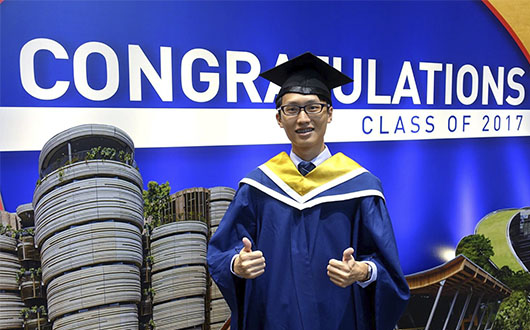
NTU CEE’s dynamic curriculum helps students uncover their potential while strengthening existing skills, empowering them with the confidence and capabilities to become future leaders in engineering.
My undergraduate experience was both enriching and vibrant, with opportunities to attend conferences, compete internationally, and represent NTU. The supportive environment fosters a healthy balance between academic excellence and student life, preparing graduates to pursue their aspirations in the engineering industry with confidence.
— Goh Jing Yaw
B.Eng in Environmental Engineering, Class of 2017