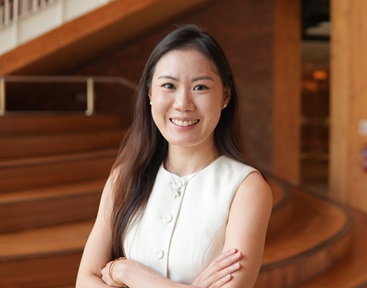
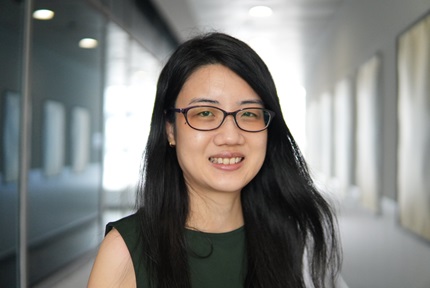
Dr. Li Chenyu was awarded the 2026 Women in Engineering, Science, and Technology (WiEST) Development Grant
Congratulations to Dr. Li Chenyu from School of Chemistry, Chemical Engineering and Biotechnology (CCEB), Nanyang Technological University for being awarded the 2026 WiEST Development Grant.
The grant from Women@NTU aims to support women engineers, scientists, and technologists embarking on their early careers and can be used for professional and personal development courses.
Dr. Li received her Ph. D. degree at NTU in 2025 and is currently a research fellow at Assistant Prof Qiao Yuan’s lab in CCEB. Chenyu is an intelligent, conscientious and highly motivated researcher, who pioneered the establishment and optimization of the core experimental protocols in the lab, including LC-MS/MS analytical workflows, immunological studies and animal models. Her efforts have expanded the technical scopes and research capacity of the lab, laying a strong foundation for subsequent projects. With a strong passion for research and an outstanding academic track record, Dr. Li shows maturity, clarity, and confidence in her scientific communication and presentations.
Driven by motivation and diligence, Dr. Li made a significant contribution to her field during her PhD journey. Her project focused on elucidating the structures and functions of gut microbiota-derived peptidoglycan fragments (PGNs) in hosts, which represent the central questions to understand the underlying mechanisms of PGNs in microbiota-host crosstalk. In the early phase, Dr. Li developed a novel targeted LC-MS method to quantify and identify natural PGNs in healthy host samples. The established platform provided the first systemic insights into PGN compositions in healthy human individuals and unveiled the unexpected abundance of PGN-derived saccharide moieties. These findings challenged the prevailing assumptions of the ubiquitous presence of canonical NOD-activating motifs dominating host-exposed PGNs. In the next phase, Dr. Li evaluated the immunological activities of these PGNs and made the unexpected and impactful discovery that the PGN-derived disaccharide GlcNAc-MurNAc exerts mild pro-inflammatory activity via TLR4 signaling with multiple evidence. She further revealed that administration of PGN disaccharides mitigated colon inflammation in a DSS-induced colitis mice model in a TLR4-dependent manner, underscoring the physiological relevance of these molecules in colonic disease progression. This finding challenged the prevailing paradigm in the field. Her work has changed the way we view bacterial PGNs in hosts. Dr. Li has presented her work in several international symposia, attracting growing interest in PGN profiling, systemic translocation and their potential pharmaceutical or clinical applications from the community.
In addition, Dr. Li has contributed to several other research projects in the lab and has co-authored multiple publications, including one that was featured in Nature Communications. As a postdoc, she is now leading multiple projects that build on her initial findings, with several manuscripts under preparation that are expected to result in high-impact publications.
Click below to read the full publication and related links.
Publication | ORCID | Lab Link