Lessons in Legacy: 25 Years of Pioneering Education & Research
Prof Mary Chan’s long service medal is a testament to her dedication to mentorship in science
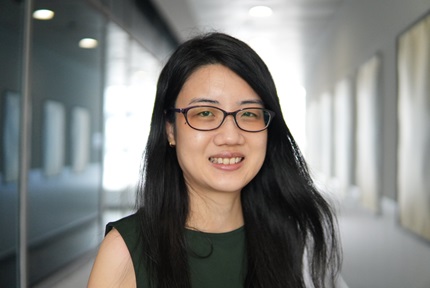
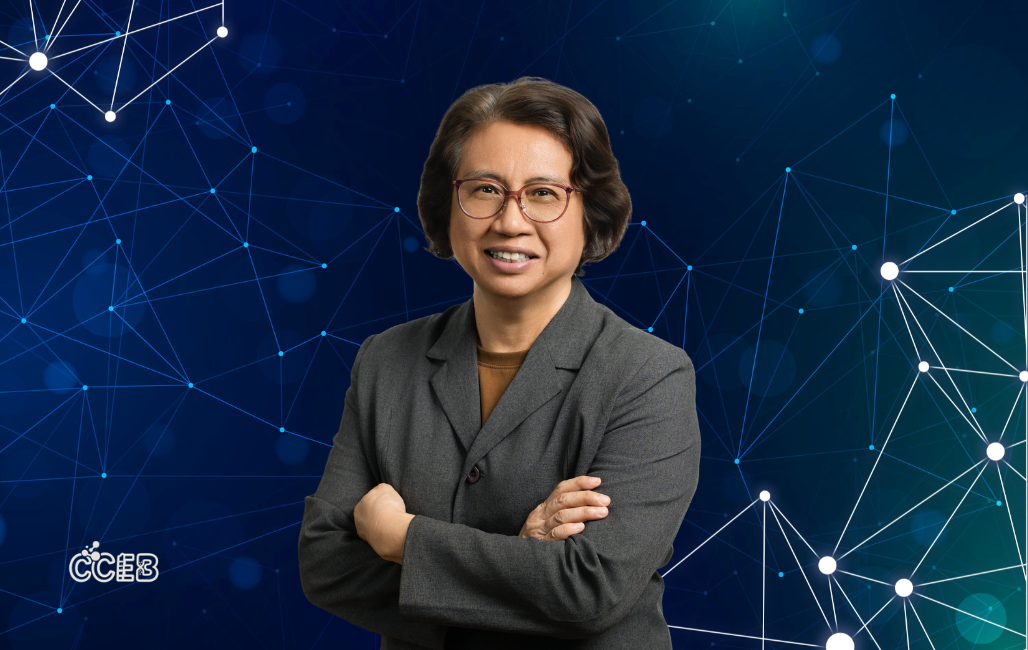 Prof Chan Bee Eng, Mary, Professor
Long Service Medal Recipient, 2026, Ministry of Education
School of Chemistry, Chemical Engineering and Biotechnology, NTU
In our fast-paced, rapidly evolving world, few can reflect on a professional legacy that transcends the test of time. For President’s Chair Professor Mary Chan, her title at the School of Chemistry, Chemical Engineering and Biotechnology (CCEB) is just a small reflection of the profound impact she has made over the last quarter-century in academia and research. On this National Day, Professor Chan was awarded the Long Service Medal. This prestigious state medal is awarded by the President of Singapore to individuals of irreproachable character who have dedicated at least 25 years of exemplary service to the nation’s education sector.
Laying the Foundation as a Young Scientist
Having joined the Ministry of Education (MOE) at the turn of the 21st century, Professor Chan was one of the founding pioneers of the Chemical and Biomolecular Engineering (CBE) degree program at Nanyang Technological University (NTU). A young scientist at the time, she recalls the excitement and satisfaction of laying the foundations for a transformative new educational pathway in Singapore. Before 2005, only the National University of Singapore (NUS) offered a chemical engineering degree; the visionary team at NTU was thrilled to offer students a progressive alternative that uniquely integrated biomolecular engineering.
Over the past two decades, this curriculum has evolved to keep pace with global advancements and shifting industrial demands. While the program’s early years were heavily anchored in petroleum engineering, today it stands as a modern powerhouse, focusing on green energy, sustainability, and biotechnology.
Reflecting on her own journey as a young scientist, Professor Chan highlights that the most important lesson she tries to impart to her students is to never lose courage and to persevere through setbacks.
“When young scientists enter the lab, it is common for them to take some time to come up to speed with technical skills or find a pathway forward,” she explains. “We often persevere with them, continuing their training despite initial setbacks. Very often, the students eventually find their way forward, and that is their true eureka moment. From then on, they know how to train themselves, acquire the necessary data, and find the solutions they need.”
Her ultimate goal for mentorship is resilience. “Ultimately, I want them to leave my lab knowing how to break down complex issues into manageable pieces and solve them on their own.”
This philosophy of unwavering resilience left a lasting mark on her graduates. Dr. Tan Chongyun, who completed her PhD in Professor Chan's lab last year, vividly recalls a moment when she was taught not to give up too quickly. During a challenging paper revision, the research team was initially told that detecting their transient, singlet lone-pair carbene using Electron Paramagnetic Resonance (EPR) spectroscopy—a method typically reserved for studying materials with unpaired electrons—was unrealistic.
“However, Prof. Mary encouraged us to keep searching and discussing the science,” Dr. Tan shares. “We eventually uncovered an older study describing a specialized probe to trap the carbene and generate a detectable EPR signal, which successfully solved our bottleneck. That experience taught me to dig deeply into the science and always find a way to turn the seemingly impossible into something possible.”
To young women aspiring to enter the often male-dominated corridors of STEM, Professor Chan imparts two crucial pieces of advice: let the quality of your science speak for itself and actively build a robust support system.
“My advice to young women is simple: when you enter fields like polymer chemistry and bioengineering, you may often find yourself as one of the few women in the room—or the only one at the leadership table. In those moments, remind yourself that your seat at that table is earned through your intellect, your capability, and your unique perspective, not your gender. Let the quality of your science speak for itself.” At the same time, she emphasizes the absolute necessity of building a robust support network, both professionally and personally. Knowing that no one reaches the highest echelons of academic or scientific leadership entirely on their own, she encourages aspiring female leaders to seek out strong mentors, foster deep collaborations, and cultivate a reliable support system at home. Finally, her closing reminder is a call to lift others up: once you reach the top, make a conscious effort to support those following in your footsteps.
Reflecting on the Journey: Walking the Talk
When asked about the most rewarding aspect of her 25-year legacy, Prof. Chan points not to her individual accolades, but to the people she has mentored. The source of her passion is watching her students transform into world-class scientists and engineers and co-creating groundbreaking technologies alongside her research team and collaborators.
“We have many global challenges today, like health and longevity," she shares. "I’ve often thought that it would be nice to apply our collective knowledge and skills to tackle these problems.”
This philosophy is the bedrock of her career. Prof. Chan emphasizes that science is never a solitary endeavor; it requires bringing together diverse expertise to solve society's most complex issues. By leading massive, multi-disciplinary teams and partnering with other Principal Investigators (PIs), she has spearheaded critical breakthroughs in combating Antimicrobial Resistance (AMR) and advancing RNA delivery. Her work in RNA gene therapy relies on non-viral delivery systems to safely carry therapeutic RNA directly into target cells, bypassing the safety limitations of traditional virus-based methods.
Beyond her high-level research, Prof. Chan holds a special place in her heart for undergraduate mentorship. She takes pride in guiding students from their foundational, generalist studies into highly skilled, specialized scientists—believing in the power of education to improve the livelihoods of the next generation.
Her colleague and long-time collaborator, Associate Professor Dang Thuy Tram reveals that Prof. Chan truly walks the talk: “Mary is an excellent scientist who consistently champions high-quality, impactful research and rigorous scientific training for her students. As a long-time collaborator, I have greatly valued her scientific insight, collegiality, and generosity. Beyond our scientific collaboration, I also deeply appreciate her warmth as a friend; we have shared memorable moments together, from hiking trips to celebrating her daughter’s wedding. She has been a wonderful mentor to young faculty, and I have personally benefited from her thoughtful advice on grant strategy and student supervision.”
True to her collaborative spirit, Prof. Chan's career has been defined by moments of scientific discovery. One "eureka" moment that stands out is when her international research team successfully engineered a new class of biodegradable, non-toxic antimicrobial polymers to combat dairy mastitis—a painful, global inflammatory disease in cattle udders that severely impacts the agricultural sector. By developing an innovative antibiotic alternative called “oligoimidazolium carbon acids,” her team unlocked a newly discovered mechanism to prevent infection safely and sustainably.
“What makes me proudest of this moment isn't just the science itself, but how we achieved it,” Prof. Chan reflects. “It was a true team effort, born from countless hours of collaboration in the lab alongside my PhD students and researchers. In fact, the students involved in this project have become greater experts in this area than I am; we now discuss science as equals, and often, they have far more to teach me than to learn from me. There is immense, profound satisfaction in that. It is equally rewarding to see my former students continue to partner with me, staying connected to push the boundaries of our research forward.”
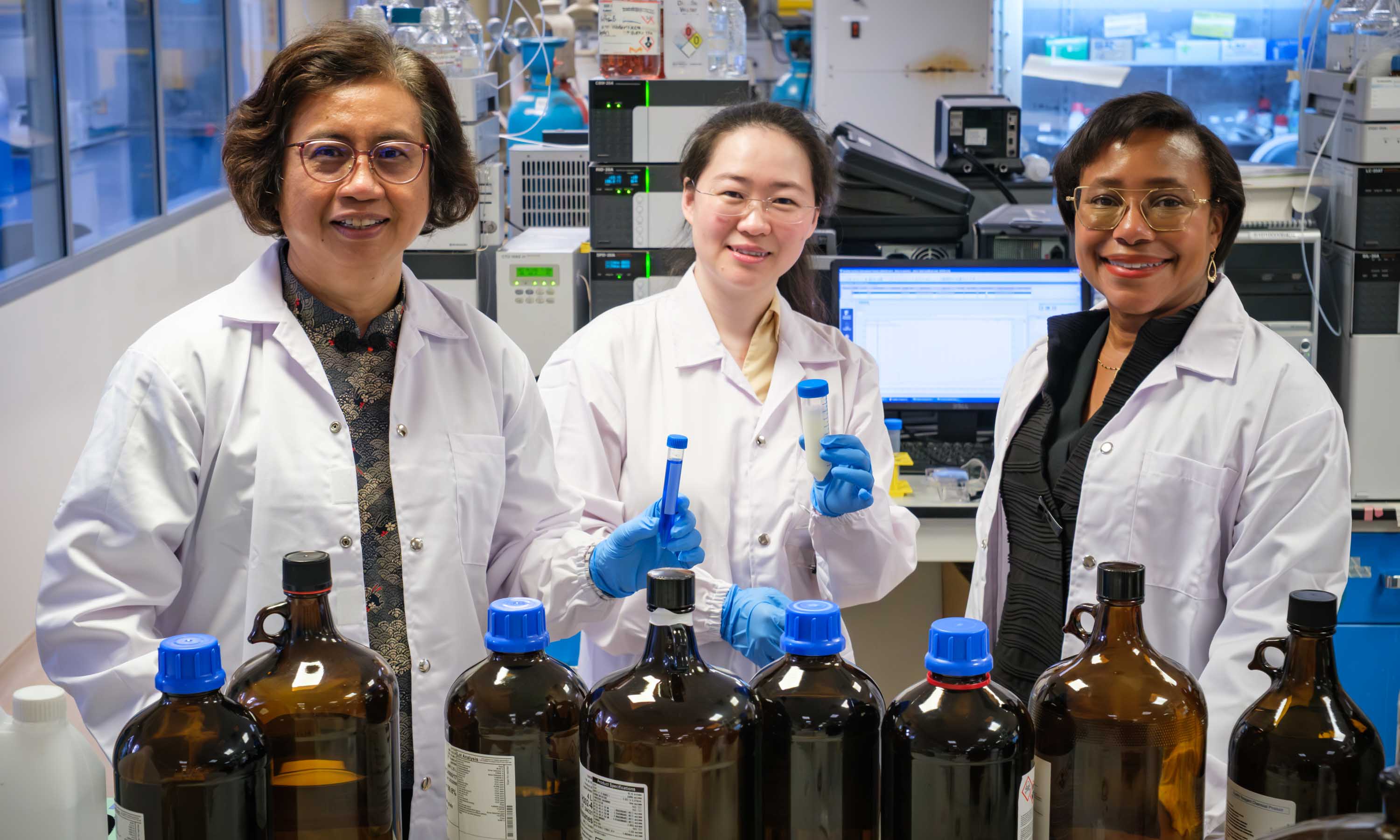 Image: (From left) Prof Mary Chan from Nanyang Technological University, Singapore, Dr Kaixi Zhang from the Singapore-MIT Alliance for Research and Technology, and Prof Paula Hammond from the Massachusetts Institute of Technology were involved in developing a safer and more sustainable antimicrobial compound (blue-dyed liquid in tube) to prevent infection in cow udders. The compound, which was applied to cow udders, also did not affect the quality of cows’ milk (white liquid in tube).
One of those key collaborators on the project, Dr. Kaixi Zhang, reflects deeply on her evolving relationship with Prof. Chan. Once an undergraduate at NTU's former School of Chemical and Biomedical Engineering (SCBE), Dr. Zhang was initially inspired by Prof. Chan’s unwavering dedication to teaching. That inspiration bloomed during her PhD journey under Prof. Chan's supervision, where Dr. Zhang admired her mentor's ability to conduct interdisciplinary research, apply chemical intuition to broad biological problems, and navigate emerging research with agility.
Today, their professional relationship has deepened into a strong peer collaboration. Prof. Chan continues to inspire Dr. Zhang with her translational mindset and unwavering focus on creating real-world impact through research.
“I am deeply grateful for her wholehearted support and the confidence she has in me to advance translational efforts that bring our scientific discoveries closer to real-world practice,” Dr. Zhang says.
The Road Ahead: What Keeps Her Going
Looking back on a quarter-century of pioneering achievements, Professor Mary Chan’s focus remains firmly fixed on the horizon. As President’s Chair, she is excited to watch the school become a premier global launchpad for deep-tech translation and bio-sustainability, while witnessing the next generation of researchers push the boundaries of what is possible.
“What keeps my passion fiercely alive is the belief that science can solve the most critical challenges we face,” Professor Chan shares. “It is incredibly rewarding to apply our knowledge to alleviate real-world suffering, whether that means curing human diseases or helping local dairy farmers protect their herds and livelihoods.”
For Professor Chan, the beauty of science lies in its endless capacity for discovery. “Every time we think we have mastered our research, a new frontier opens up,” she reflects. “We started by engineering simple polymers to kill pathogens, and today, we are using that exact same platform to pioneer safe RNA delivery systems for next-generation medicine.”
As she looks toward the future of the department she helped build, her optimism for the school’s trajectory is clear. “Our school is constantly renewing itself with new talent and fresh energy. I am excited to see CCEB scale up its infrastructure to take advanced molecular discoveries—from green plastics and synthetic biology therapeutics to advanced drug delivery mechanisms—and deploy them directly into global industrial supply chains.”
🎓 Find out more about CCEB's programmes here.
💬 Stay connected! Follow CCEB on LinkedIn, Instagram, and Facebook to keep up with our latest research highlights, student stories, and campus happenings.
Story by Sumita Thiagarajan, NTU CCEB