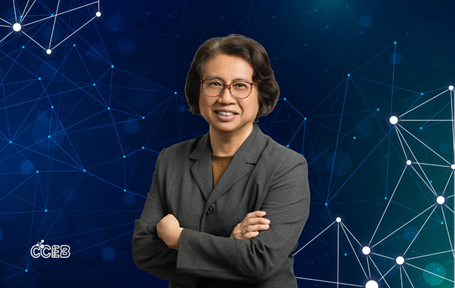
Assistant Professor Leow Wan Ru awarded AIChE SLS Outstanding Principal Investigator
The Nanyang Assistant Professor aims to utilize electrochemistry to rethink how chemicals are made
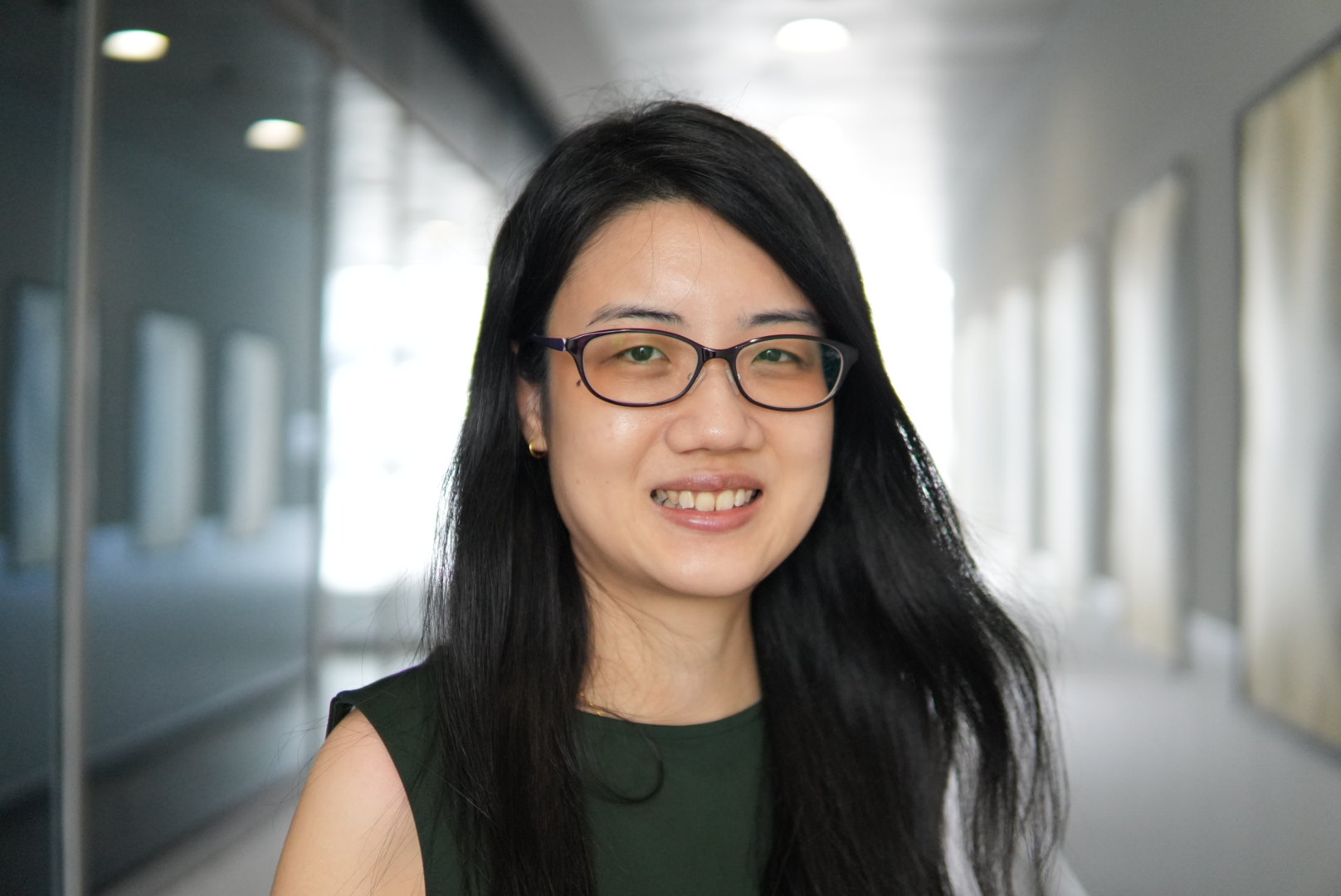 Nanyang Assistant Professor Leow Wan Ru
Outstanding Principal Investigator Award Recipient, American Institute of Chemical Engineers Singapore Local Section (AIChE SLS)
School of Chemistry, Chemical Engineering and Biotechnology, NTU
NTU CCEB Nanyang Assistant Professor Leow Wan Ru is no stranger to success and has a stellar track record, which includes being named MIT Technology Review Innovators Under 35. By developing a novel electrochemical refining method driven by renewable electricity at room temperature, she successfully eliminated the high carbon footprint traditionally associated with chemical manufacturing. Following her recent Outstanding Principal Investigator Award from AIChE SLS, we asked her to share her reflections on this achievement and how it inspires the future of her lab.
When you received news of the AIChE SLS Outstanding Principal Investigator Award, what was your immediate reaction? What does this recognition mean to you and your research group?
My immediate reaction was surprise, followed very quickly by gratitude. An award for a principal investigator may carry one person’s name, but the work behind it is inherently collective. Everything we have accomplished has depended on the creativity, persistence, and hard work of my students and researchers, as well as the support of collaborators and mentors. I therefore see this recognition as belonging to the group as much as to me. It is especially meaningful because it affirms not just what we have achieved, but the scientific direction and research culture that we have built together.
Outstanding PI awards are often given to those who bridge the gap between academic theory and real-world application. What is the core mission or the "why" that drives your team's research?
Our core question is simple: can we use electrochemistry to rethink how chemicals are made? Many important chemicals are still produced through processes that require high temperatures and pressures, fossil-derived reagents, or substantial energy inputs. Electrification offers an opportunity not simply to change the energy source, but to redesign the chemistry itself.
Our group therefore works at the intersection of fundamental electrochemistry and chemical engineering. We seek to understand how molecules react at electrified interfaces and use that understanding to develop processes that are selective, efficient, and ultimately scalable. For me, fundamental understanding and practical relevance are not competing objectives. The most interesting problems often lie precisely where the two meet.
Translating complex chemical engineering concepts into scalable industrial solutions is difficult. What has been the biggest challenge in moving your lab’s discoveries from flask to supply chain?
The biggest challenge is that an elegant laboratory reaction is still very far from a viable process. At larger scales, factors such as mass transport, stability, feedstock composition, product separation, and energy efficiency can become just as important as the catalyst itself.
This has shaped how we approach research. We increasingly consider scalability from the beginning, for example by operating at practically relevant reaction rates, testing more realistic feedstocks, and thinking about process integration. The most rewarding moments are when a fundamental mechanistic insight continues to guide performance under these more demanding conditions. That is when you begin to see how a scientific discovery might eventually become useful beyond the laboratory.
"Principal Investigator" is as much a leadership role as it is a scientific one. How would you describe your personal leadership style? How do you foster an environment of high performance, resilience, and curiosity in your lab?
I believe in setting high expectations while giving people substantial intellectual freedom. Students naturally need more guidance when they first join the group, but over time I want them to take ownership of their research, from deciding which questions matter to designing experiments and interpreting results critically.
I also want people in the group to feel comfortable challenging ideas, including mine. Science progresses by questioning assumptions. Experiments fail, hypotheses turn out to be wrong, and papers get rejected. These experiences are unavoidable. What matters is developing the resilience and judgment to learn from them and decide what to do next. Ultimately, my goal is not to train students to follow my scientific thinking, but to develop their own.
Many of your students and researchers will go on to become the next generation of academic and industrial leaders. What is the most important, non-technical skill you try to impart to them before they leave your lab?
Scientific judgment, particularly knowing what is worth working on. You can execute an experiment perfectly and obtain a convincing answer, but if the question itself is not important, its impact will always be limited.
I encourage my students to continually ask: Why does this problem matter? What would we learn if our hypothesis were correct? Is there a more incisive way to answer the question? Technical skills will inevitably evolve throughout a career. The ability to identify important problems, think independently, and make good decisions under uncertainty is much more enduring.
If you could go back in time and give one piece of advice to yourself when you were first starting out as a young PhD student, what would it be?
I would tell myself not to worry so much about whether every experiment succeeds. As a young PhD student, it is easy to equate experimental success with personal progress. When experiments repeatedly fail, you start wondering whether you are simply not good at research.
Over time, I learned that unexpected results are often where the most interesting science begins. They tell you that your understanding of the system is incomplete. Instead of simply asking, “Why didn't this work?”, I learned to ask, “What is this result telling me?” I would also tell my younger self to be patient. A research career is long, and the setbacks that seem enormous at the time often look very different in retrospect.
Chemical engineering and biotechnology are rapidly evolving to tackle global challenges like climate change, energy transition, and healthcare. What is the next frontier your lab is excited to conquer?
The next frontier for our group is moving beyond the design of individual electrocatalysts toward the design of complete electrochemical reaction environments and processes.
A catalyst does not operate in isolation. The electrolyte, interfacial environment, mass transport, reactor architecture, feedstock, and downstream processing can all determine what chemistry is possible. We want to understand and control these factors together, and use that knowledge to develop new approaches to sustainable chemical manufacturing.
Ultimately, I hope electrochemistry can become more than a way of replacing fossil-derived energy with renewable electricity. It can provide a fundamentally different toolbox for chemical synthesis, enabling transformations and integrated processes that are difficult to achieve through conventional chemistry.
🎓 Find out more about CCEB's programmes here.
💬 Stay connected! Follow CCEB on LinkedIn, Instagram, and Facebook to keep up with our latest research highlights, student stories, and campus happenings.
Story by Sumita Thiagarajan, NTU CCEB