New Book on Cultural Memory and Historical Imagination by Michael Walsh
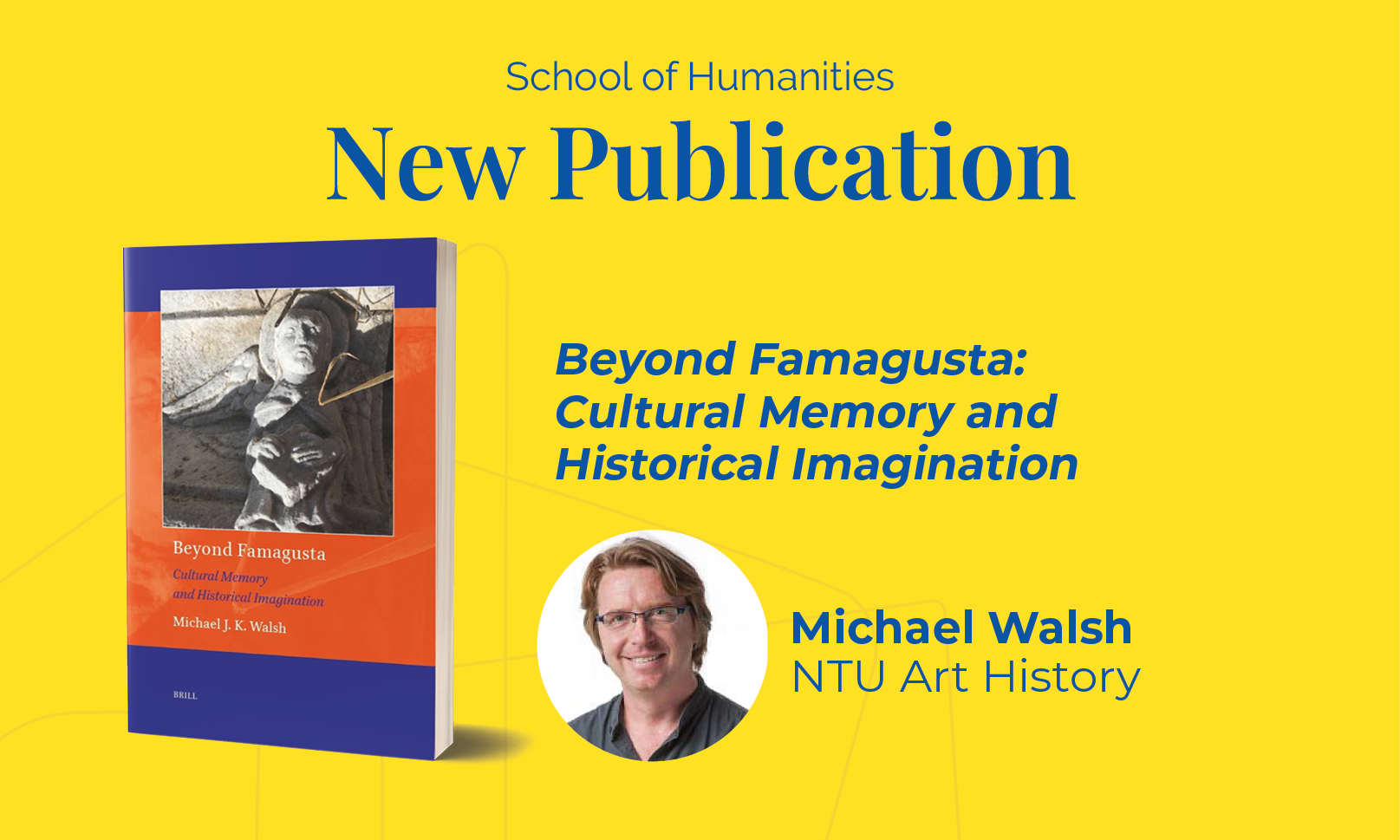
Famagusta has witnessed the rise and fall of empires and dynasties which have left in their wake a rich storytelling legacy. This was a city of extremes, and so while there was certainly political influence, artistic creativity, wealth and piety, there was simultaneously fear, corruption, treachery and war. After the great siege of 1571, Shakespeare strategically situated Othello in this martyred ‘seaport in Cyprus’, while operas and ballets about the triumph and tragedy of Medieval, Renaissance and Ottoman Famagusta created a European fantasy of an imagined past. Centuries later, while exiles languished in the open prison of abandoned Famagusta, French and British scholars got to work re-creating sympathetic national historical narratives and imperialists imagined and planned for alternative futures. Early photographers revelled in the desolate calm of the 19th century, film-makers documented Famagusta’s turbulent 20th century, and today digital modellers contemplate ingenious ways to re-tell the story of its majestic monuments. This book examines the complex cultural memory and historical imagination associated with the ever-enigmatic, and timeless, Famagusta.
The research that led to this book has been provided by two MOE-ACRF Tier 1 grants, an MAR, and several external grants from the World Monuments Fund. The book covers 23 years of scholarly engagement in Famagusta and has taken 5 years to write.
Michael J. K. Walsh, D. Phil. (2001) University of York, is Professor of Cultural Studies and Digital Humanities at Nanyang Technological University Singapore. This is his sixth book on Famagusta, including Famagusta Maritima: Mariners, Merchants and Mercenaries (Brill, 2019).
Purchase the book at https://brill.com/display/title/56336?srsltid=AfmBOorqGcwvwD29mrRSP2anS-eSRSG0HDzvww5d4wn0nlcCTHYVU3Xr