
Mooktie’s Story: A Micro-History of Disability in the Early Twentieth Century
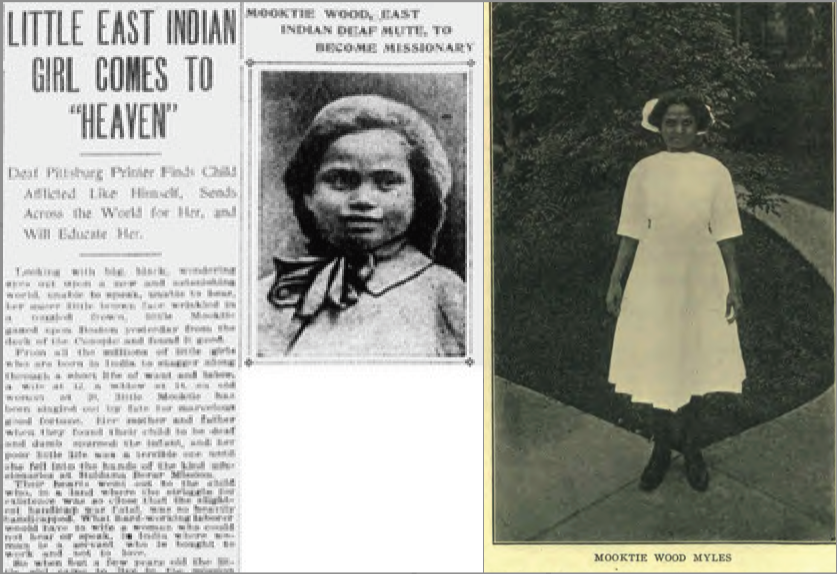
In 1905, a “deaf Hindoo maiden” named Mooktie Wood arrived in Boston on board the Canopic, accompanied by missionaries. Immigration authorities detained Mooktie as she had been resident in a missionary institution subsequent to being abandoned in the wake of the devastating famine of 1899-1900 in the Central Provinces. Her story caused something of a minor furor in newspapers across the US, leading to her release. Mooktie’s story, her early life in India, her abandonment during the famine of 1900, her brief stay in a mission school run by pentecostal American missionaries, her subsequent migration to the US, to be educated in a school for the deaf, and her eventual death are the subject of this paper. Taking a microhistorical approach, this talk will reconstruct Mooktie’s short life and death, situated against wider histories of deafness, race, colonialism, eugenics, and immigration.
Aparna Nair is a historian of disability, medicine and public health. She is currently Assistant Professor at the University of Toronto-Scarborough’s Department of Healthy and Society. She works on disability histories of South Asia, the histories of vaccination and quarantine, the histories of service animals, and other disability technologies. Her first book, Fungible Bodies is forthcoming with the University of Illinois Press’ Disability Histories series.