_mobile.png?sfvrsn=4e3a9f29_0)
For more information about this programme, please contact:
NTU PACE
Email: ask.microcredentials@ntu.edu.sg
FlexiMasters in Materials Science and Engineering
The FlexiMasters in Materials Science and Engineering allows learners to gain advanced knowledge in materials science and engineering. Designed for professionals in engineering, manufacturing, quality control, failure analysis, and research and development (R&D), this programme delivers industry-relevant skills to help learners stay ahead in a competitive field. Learners will learn at their own pace with asynchronous e-learning, including high-quality, pre-recorded lectures. This programme offers a strong foundation in the latest materials innovations, preparing learners for roles in materials science, chemical development, industrial innovation, advanced manufacturing, materials processing and biomaterials industries.
The FlexiMasters in Materials Science and Engineering is mapped to the Master of Science (MSc) in Materials Science and Engineering from NTU's School of Materials Science and Engineering (MSE).
By the end of this programme, learners will be able to:
- Develop the skills to analyse inorganic compounds, predict material properties, and design new materials with specific properties.
- Gain valuable insights into the structure–property–function relationship of organic materials, enhancing their ability to evaluate and suggest new materials or production methods.
- Develop essential skills to drive materials and device innovation.
- Gain practical skills applicable in materials selection, process design and optimisation, product development and procurement.
- Develop the skills to choose the right techniques for different materials, conduct failure analysis, and support material investigations.
- Gain insights into the interdisciplinary nature of biomaterials, key concepts, the evolution of materials in medicine, and important ethical considerations.
- The programme consists of six courses worth a total of 15 Academic Units (AUs).
- Assessment(s) will be conducted during every course and learners will be graded based on their performance in the assessment(s).
- As the micro-credential courses are only offered in this FlexiMasters in Materials Science and Engineering programme, learners are required to enrol into this programme and complete all required courses within this programme.
- While no pre-requisite is needed to enrol in the individual courses, learners without qualifications in materials science and engineering or closely related fields may find the course contents challenging.
- Mode of class delivery: Asynchronous E-Learning
Upon successful completion, the following qualifications will be awarded:
- A Graduate Certificate will be awarded to learners attaining 9 AUs, with a minimum Grade Point of 2.5 (which is equivalent to a letter grade of C+) achieved for each course.
- A FlexiMasters will be awarded to learners attaining 15 AUs, and achieving a minimum Grade Point of 2.5 (which is equivalent to a letter grade of C+) for each course.
Pathway to the Master's programme:
Credits earned are valid for 5 years for transfer of credits to the MSc in Materials Science and Engineering. The minimum Grade Point eligible for transfer of credits to the MSc in Materials Science and Engineering is 2.5 (which is equivalent to a letter grade of C+). Transfer of credits is by application and the application will be assessed and approved by the University in accordance with University Credits Transfer and Course Exemption Policy.
To meet the requirement of Skills and Workforce Development Agency (SWDA), assessment(s) will be conducted during every course.
The assessment(s) include:
1. Inorganic Materials
- Quizzes
2. Organic Materials
- Quizzes
- Assignments
3. Properties of Materials
- Quizzes
- Assignment
4. Processing of Organic Materials
- Assignments
- Quiz
5. Physical Analysis of Materials
- Quizzes
- Project
6. Biomaterials
- Quizzes
Suitable for professionals working in Engineering, Quality Control, Failure Analysis, Manufacturing and Research and Development (R&D).
As the micro-credential courses are only offered in this FlexiMasters in Materials Science and Engineering programme, learners are required to enrol into this programme and complete all required courses within this programme.
Note: Shortlisting will be conducted.
| Course title | Objective |
|---|---|
Inorganic Materials (3 AU) | This course introduces learners to the fundamentals of atomic reactivity, stability, and properties. Learners will develop the skills to analyse inorganic compounds, predict material properties, and design new materials with specific properties. The course equips learners to understand and manage material development processes, including the creation of catalysts and innovative products. With practical and theoretical insights, learners will be prepared to apply their knowledge in material property tuning and process optimisation. Suitable for learners from various scientific backgrounds, this course supports career pathways in materials science, chemical development, and industrial innovation. At the end of the course, learners will be able to:
|
 Organic Materials (3 AU) | This course introduces learners to organic materials, including structural, electronic, and optical materials used across various industries. Learners will explore different types of functional organic materials, their applications, and key techniques for material characterisation. The course covers how material properties are influenced by synthesis and processing methods. Learners will gain valuable insights into the structure–property–function relationship of organic materials, enhancing their ability to evaluate and suggest new materials or production methods. Ideal for those looking to understand current industry practices and innovate with advanced materials in sectors such as electronics, photonics, and materials science. At the end of the course, learners will be able to:
|
 Properties of Materials (2 AU) | This course introduces learners to the fundamental physical and functional properties of materials and their relevance to modern technologies such as energy conversion, sensing, communications, and artificial intelligence. Learners will explore how material properties influence new material design, device applications, and system integration. The course covers key concepts in mechanical, thermal, optical, magnetic, and electronic properties, along with hands-on exposure to material testing and characterisation techniques. Ideal for learners aiming to innovate in areas like sustainable energy, optical communications, and advanced manufacturing, this course equips learners with essential skills to drive materials and device innovation. At the end of the course, learners will be able to:
|
 Processing of Organic Materials (3 AU) | This course introduces learners to the processing and processability of polymers, focusing on how polymer properties impact product performance. Learners will explore the role of additives such as fillers and stabilisers, and how these influence the characteristics of polymer materials. The course equips learners with the knowledge to link material properties to manufacturing methods, enabling them to design, select, and customise polymers for various applications. Learners will gain practical skills applicable in materials selection, process design and optimisation, product development, and procurement—making it ideal for those interested in modern materials and polymer manufacturing technologies. At the end of the course, learners will be able to:
|
Physical Analysis of Materials (2 AU) | This course introduces learners to Thermal and Surface Analysis techniques used to evaluate material properties. Learners will explore how thermal analysis helps assess material behaviour under temperature changes and understand key surface characterisation methods such as X-ray Photoelectron Spectroscopy (XPS) and Auger Spectroscopy. The course covers procedures, data interpretation, and practical industry applications. Learners will develop the skills to choose the right techniques for different materials, conduct failure analysis, and support material investigations. These competencies also enable learners to contribute to research and development (R&D) planning and advise on equipment needs in their organisations. At the end of the course, learners will be able to:
|
Biomaterials (2 AU) | This course introduces learners to biomaterials and their vital role in healthcare and biomedical applications. Learners will explore the interdisciplinary nature of biomaterials, key concepts, the evolution of materials in medicine, and important ethical considerations. The course also covers material interactions within the body and highlights key uses of metals and ceramics in medical devices and treatments. With the growing demand for biomedical expertise, learners will gain valuable knowledge and skills relevant to careers in the healthcare and medical technology sectors. At the end of the course, learners will be able to:
|



Venue: NTU Main Campus, NTU e-Learning platform
| COURSE TITLE | CLASS SCHEDULE AY2026/27 | REGISTRATION CLOSING DATE |
| Inorganic Materials | Semesters 1 and 2 Register interest for next intake | - |
| Organic Materials | Semester 1 Register interest for next intake | - |
| Properties of Materials | Semesters 1 and 2 Register interest for next intake | - |
| Processing of Organic Materials | Semester 2 Register interest for next intake | - |
| Physical Analysis of Materials | Semesters 1 and 2 Register interest for next intake | - |
| Biomaterials | Semester 1 Register interest for next intake | - |
Listed courses are:
- Credit-bearing and stackable to Graduate Certificate in Materials Science and Engineering (9 AU), FlexiMasters in Materials Science and Engineering (15 AU) and MSc in Materials Science and Engineering (30 AU).
Note: NTU reserves the right to change the date, venue, and mode of delivery due to unforeseen circumstances.
 | These courses are part of:
Learners will receive their Statement of Accomplishment (for a grade of D and above) or Certificate of Participation for each course—dependent upon their assessment performance. |
| Courses | Course Fee payable before funding | Course Fee payable after SWDA funding, if eligible under various schemes | ||
| ¹ SCs and PRs | ² SCs aged 40 and above | ³ Enhanced Training Support for SMEs (ETSS) | ||
| Up to 70% funding | Up to 90% funding | |||
| Biomaterials | S$3,665.67 | S$1,099.70 | S$427.10 | S$427.10 |
| Inorganic Materials | S$5,499.05 | S$1,649.72 | S$640.72 | S$640.72 |
| Organic Materials | S$5,499.05 | S$1,649.72 | S$640.72 | S$640.72 |
| Properties of Materials | S$3,665.67 | S$1,099.70 | S$427.10 | S$427.10 |
| Physical Analysis of Materials | S$3,665.67 | S$1,099.70 | S$427.10 | S$427.10 |
| Processing of Organic Materials | S$5,499.05 | S$1,649.72 | S$640.72 | S$640.72 |
| Total Programme Fee | S$27,494.16 | S$8,248.26 | S$3,203.46 | S$3,203.46 |
- Fees listed above are inclusive of 9% GST.
Funding Requirements
1 Eligible Singapore Citizens (SCs) aged 39 years and below, and Permanent Residents (PRs), must record at least 75% training attendance and pass all associated assessments to be eligible for funding of up to 70% of the course fee. Learners will have to bear the full course fees upon failure to meet either one of the requirements.
2 Mid-career Enhanced Subsidy (MCES) - SCs aged 40 and above must record at least 75% training attendance and pass all associated assessments to be eligible for funding of up to 90% of the course fee. Learners will have to bear the full course fees upon failure to meet either one of the requirements.
3 Enhanced Training Support for SMEs (ETSS) - Small and Medium Enterprise (SME)-sponsored learners must be SCs or PRs and not a full-time national serviceman. SMEs must be: (1) Registered or incorporated in Singapore; with (2) Employment size of not more than 200 or with annual sales turnover of not more than $100 million. Courses will also have to be fully paid for by the employer.
Note: Learners must comply with all applicable and prevailing regulations, terms and conditions set by SWDA.
Other Funding Support
- NTU/NIE alumni may utilise their $1,600 Alumni Course Credits for each course. Click here for more information.
- Learners can utilise their SkillsFuture Credits for these courses.
- Singaporeans aged 40 years and above are able to use their SkillsFuture Credit (Mid-Career) top-up of $4,000 to offset out-of-pocket course fees for these courses.
Course Withdrawal and Refund Policy
Refunds requested prior to course commencement date may be subjected to an administrative fee and the deduction of any non-refundable pre-paid amounts. No refunds will be granted upon course commencement.
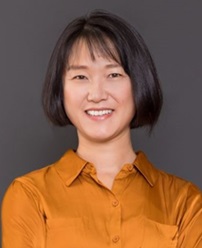
Dr. Xiaolei Feng | Dr. Xiaolei Feng is trained as a condensed matter physicist, having graduated with a bachelor’s degree and PhD from the department of Physics of Jilin University, China. She undertook a 2nd PhD at the department of Earth sciences at University of Cambridge to broaden her understanding of the physics of materials to encompass naturally-occurring materials’ behaviour in the environment. She worked as a postdoctoral research fellow at the research institute “High Pressure Science and Technology Advanced Research (HPSTAR)” in Shanghai and Beijing, China. She also worked as associate professor at the Institute for Disaster Management and Reconstruction, Sichuan University, China before she joined the School of Materials Science and Engineering (MSE), NTU in 2022. Dr. Feng has a general interest in understanding the structure and property relationship of solid materials, and how these relate to the underlying mechanism by computational simulations. She uses quantum mechanical (so-called “ab initio”) methods to determine the electronic structure of solids, having applied these methods to a very wide range of materials, ranging from super-hard solids to high-temperature superconductors. An underlying link between almost all of the studies that she has carried out is that they explore the role of pressure in modifying and controlling materials’ solid-state structure and properties. |
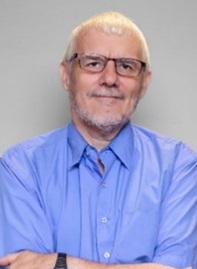 Assoc Prof Andrew Grimsdale Assoc Prof Andrew GrimsdaleInstructor for: Organic Materials | Assoc Prof Andrew Grimsdale joined the School of Materials Science and Engineering (MSE), NTU in November 2006. He received his Bachelors, Master and PhD degrees in Chemistry from the University of Auckland, New Zealand in 1983, 1984, and 1990 respectively. His research interests include the synthesis of conjugated molecules and polymers for electronic applications, and supramolecular assembly of organic materials. He has done significant research work in his research areas and published over 160 top quality international journal papers which have received over 15,000 citations (h-index >50). He has often been a referee and reviewer for a number of premier journals, including Journal of the American Chemical Society, Macromolecules, Chemistry of Materials, Journal of Organic Chemistry, Journal of Physical Chemistry, Organic Letters, Angewandte Chemie, Advanced Materials, and Advanced Functional Materials. He is on the editorial panel for Scientific Reports, and has acted as an external referee for PhD theses from foreign universities, of grant proposals for bodies such as the CERG grants committee, Hong Kong and the European Research Council, and as a judge of student projects for the Singapore Science and Engineering Fair. Assoc Prof Grimsdale is a member of the Royal Australian Chemistry Institute. |
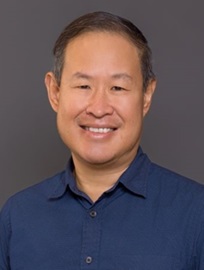 Dr. Alfred Tok Dr. Alfred TokInstructor for: Properties of Materials | Dr. Alfred Tok is a Passionate Academic & Chartered Materials Engineer (UK) with 24 years of experience in teaching and research at the School of Materials Science and Engineering (MSE), NTU. He is also Fellow of the Institute of Materials, Mining & Metallurgy (UK). He has teaching experience in diverse courses like engineering ethics, advanced engineering mathematics, inorganic materials, manufacturing and failure analysis, etc. He has won 3 prestigious teaching awards at NTU and is recognized as World Top 2% Scientist by Stanford University in the last 2 years. Prior to NTU, he was a Mechanical Engineer at ST Aerospace Engineering. |
 Prof Hu Xiao Prof Hu XiaoInstructor for: Processing of Organic Materials | Prof Hu Xiao obtained PhD degrees from the Materials Science Centre, University of Manchester in the United Kingdom in 1990 respectively. He worked as an SERC (UK) postdoctoral associate at Manchester University from December 1990, before joining the Nanyang Technological University (NTU) in April 1992 as a founding faculty member of the Materials Science & Engineering program. He served as Director of Graduate Programs in the School and as its inaugural Head of Division of Materials Technology. He is now a full professor in the School of Materials Science and Engineering, NTU. He is an established materials scientist and served as the past president of the Pacific Polymer Federation (PPF) (2018 and 2019), and is serving president of the Federation of Asian Polymer Societies (FAPS) (2025 and 2026). |
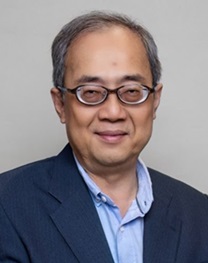 Dr. Oh Joo Tien Dr. Oh Joo TienInstructor for: Physical Analysis of Materials | Dr. Oh Joo Tien is an Associate Professor in the School of Materials Science and Engineering, NTU. His research expertise is in metallurgy and characterization of materials. Prior to joining NTU, Dr. Oh has worked in industries as a metallurgist for about 8 years. His industrial experience has helped him to develop the course, Physical Analysis of Materials. Dr. Oh is a graduate in Materials Engineering and a Chartered Engineer registered with the Engineering Council, UK. |
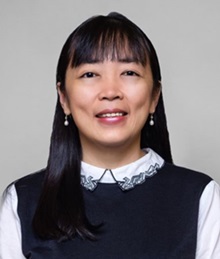 Dr. Luciana Lisa Lao Dr. Luciana Lisa LaoInstructor for: Biomaterials | Dr. Luciana Lisa Lao graduated from the School of Materials Engineering, Nanyang Technological University (NTU) with B. Eng (First Class Honours) in 2003. Upon graduation, she continued with a PhD study in NTU and investigated in-vitro drug release kinetics from several biodegradable polymers and their blends. In 2008, she joined the Université de Strasbourg, France as a postdoctoral fellow and worked on constitutional dynamic chemistry. In 2010, she returned to NTU, Singapore for a short postdoctoral stint. In 2011, she decided to follow her strong passion for teaching in an institute of higher education and joined Ngee Ann Polytechnic, Singapore as a lecturer. Finally, in 2016, she re-joined the School of Materials Science and Engineering (MSE), NTU as a faculty member on a teaching track. She served as the Assistant Chair (Academic) in MSE, NTU from 2019 to 2022. In 2022, she was appointed the Director for Pedagogy and Learning at MSE, NTU. |