
For more information about this programme, please contact:
NTU PACE
Email: ask.microcredentials@ntu.edu.sg
FlexiMasters in Data Science Fundamentals
This FlexiMasters in Data Science Fundamentals is suitable for learners with a STEM background who want to learn about data driven approach to problem solving that involves the process of collecting, managing, analysing, explaining and visualising data and result analysis. Upon completion of the courses, learners will have a strong understanding of the fundamental concepts and techniques that are used in the field of data science.
Learners who meet the minimum requirements will be able to pursue their Master of Science (MSc) in Data Science from NTU's College of Computing and Data Science (CCDS), to professionally upskill in support of their career advancement.
- Develop a data science mindset to solve complex problems using data driven approaches.
- Build strong foundations in data systems and effective data management practices.
- Gain hands-on understanding of machine learning techniques and real world applications.
- Apply core data science and machine learning competencies through Industry relevant courses methodologies.
- Solve real world data problems and applications using practice oriented analytical approaches.
- The programme consists of five courses worth a total of 15 Academic Units (AUs).
- Assessment(s) will be conducted during every course and learners will be graded based on their performance in the assessment(s).
- As the micro-credential courses are only offered in this FlexiMasters in Data Science Fundamentals programme, learners are required to enrol into this programme and complete all required courses within this programme.
- Learners need to complete the courses (1) Machine Learning: Methodologies and Applications and (2) Data Systems before applying for the Data Preparation course.
- Mode of class delivery: Classroom
Upon successful completion, the following qualifications will be awarded:
- A Graduate Certificate will be awarded to learners attaining 6 AUs, with a minimum Grade Point of 2.5 (which is equivalent to a letter grade of C+) achieved for each course.
- A FlexiMasters will be awarded to learners attaining 15 AUs, and achieving a minimum Grade Point of 2.5 (which is equivalent to a letter grade of C+) for each course.
Pathway to the Master's programme:
Credits earned are valid for 5 years for transfer of credits to the MSc in Data Science. The minimum Grade Point eligible for transfer of credits to the MSc in Data Science is 2.5 (which is equivalent to a letter grade of C+). Transfer of credits is by application and the application will be assessed and approved by the University in accordance with University Credits Transfer and Course Exemption Policy.
To meet the requirement of Skills and Workforce Development Agency (SWDA), assessment(s) will be conducted during every course.
The assessment(s) include:
1. Data Science Thinking
- Quizzes
- Project
2. Machine Learning: Methodologies and Applications
- Assignment
- Project
- Quiz
3. Data Systems
- Project
- Quizes
4. Data Preparation
- Project and Presentation
- Quizzes
5. Data Visualisation
- Project and Presentation
- Quizzes
This course is suitable for learners working in industries that are currently employing or intending to deploy data science techniques to improve their work processes. Prior knowledge in STEM field will be an advantage.
As the micro-credential courses are only offered in this FlexiMasters in Data Science Fundamentals programme, learners are required to enrol into this programme and complete all required courses within this programme.
Note: Shortlisting will be conducted.
| Course title | Objective |
|---|---|
Data Science Thinking | This course introduces the foundations of data science and its dynamic ecosystem allowing learners to explore core concepts, ethical frameworks, and market mechanisms that shape data-driven environments. Integrating insights from personality and social psychology to interpret human behaviour, these perspectives will also be applied to data science challenges. Emphasis is placed on responsible decision making and understanding economic principles such as demand, supply, and price adjustments within data ecosystems. By the end of the course, learners will be equipped to design high level, practical solutions to real world data science problems, combining technical knowledge with behavioural and ethical considerations. At the end of the course, learners will be able to:
|
.png?sfvrsn=e5999599_1) Machine Learning Methodologies and Applications | This course is designed to provide a comprehensive overview of core machine learning techniques, including supervised, unsupervised, and reinforcement learning. The curriculum blends theoretical grounding with hands-on learning, enabling learners to structure machine learning problems, apply and compare models, and interpret results using industry standard Python libraries such as SciKit Learn and SciPy. Emphasising the integration of theoretical constructs with applied problem solving, learners will be encouraged to justify model choices, analyse trade‑offs, and extract robust insights in real world contexts. With the growing demand for practical machine learning expertise in the technology and data science sectors, this course is highly relevant for those seeking to upskill or transit into these industries. At the end of the course, learners will be able to:
|
.png?sfvrsn=8f6cba7a_1) Data Systems | This course introduces the essential role of data systems in data science, focusing on how structured data supports analytics and decision making. Learners will gain practical skills in designing relational data models and applying relational algebra to organise and query data effectively. The course emphasises hands-on experience with Structured Query Language (SQL) for data extraction and manipulation, enabling learners to work confidently with real world datasets. Additionally, learners will explore how transactions are managed in data systems, ensuring data integrity and consistency. By the end of the course, learners will be equipped to design, query, and manage robust data systems for data driven solutions. At the end of the course, learners will be able to:
|
.png?sfvrsn=c29119c2_1) Data Preparation | This course equips learners with essential skills for data preparation, a critical step in data science workflows. Learners will explore techniques for data discovery, validation, and cleaning to ensure accuracy and reliability. The course also covers methods for structuring, enriching, and filtering data, enabling learners to transform raw datasets into actionable insights. Through practical exercises, learners will apply these techniques to real world data science problems, gaining hands on experience in preparing data for analysis and modelling. By the end of the course, learners will be able to design and implement robust data preparation strategies that enhance the quality and effectiveness of data driven solutions. At the end of the course, learners will be able to:
|
.png?sfvrsn=a4ca0d9a_1) Data Visualisation | This course offers a rigorous and systematic exploration of data visualisation as a powerful tool for analytical insight and data informed decision making. Blending theory with hands-on practice, it equips learners to design effective visual solutions tailored to diverse datasets and communication goals. Learners will apply principles from perceptual psychology, cognitive load theory, and visual analytics to critically select, justify, and implement appropriate visual encodings and interactive techniques. Through iterative design, critique, and application, learners will develop visualisations that support pattern discovery, comparison, uncertainty assessment, and decision making in real world, data driven contexts. The course is well suited for data professionals seeking to strengthen analytical storytelling and exploratory data analysis skills across domains such as data science, finance, healthcare, marketing, and technology. At the end of the course, learners will be able to:
|
4d985e86-2369-4a84-8c25-4c0c114918fa.png?sfvrsn=57bf7bb3_1)
Venue: NTU Main Campus
| COURSE TITLE | CLASS SCHEDULE AY2026/27 |
| Data Science Thinking | Semesters 1 & 2 |
| Machine Learning: Methodologies and Applications | Semesters 1 & 2 |
Data Systems | Semesters 1 & 2 |
| Data Preparation* | Semesters 1 & 2 |
| Data Visualisation | Semesters 1 & 2 |
*Learners need to complete the courses (1) Machine Learning: Methodologies and Applications and (2) Data Systems before applying for the Data Preparation course.
Listed courses are:
- Credit-bearing and stackable to Graduate Certificate in Data Science Fundamentals (6 AU), FlexiMasters in Data Science Fundamentals (15 AU) and MSc in Data Science (30 AU).
Note: NTU reserves the right to change the date, venue, and mode of delivery due to unforeseen circumstances.
.png?sfvrsn=57f66513_1) | These courses are part of:
Learners will receive their Statement of Accomplishment (for a grade of D and above) or Certificate of Participation for each course—dependent upon their assessment performance. |
| Courses | Course Fee payable before funding | Course Fee payable after SWDA funding, if eligible under various schemes | ||
| ¹ SCs and PRs | ² SCs aged 40 and above | ³ Enhanced Training Support for SMEs (ETSS) | ||
| Up to 70% funding | Up to 90% funding | |||
| Data Science Thinking | S$6,322.00 | S$1,896.60 | S$736.60 | S$736.60 |
| Machine Learning: Methodologies and Applications | S$6,322.00 | S$1,896.60 | S$736.60 | S$736.60 |
| Data Systems | S$6,322.00 | S$1,896.60 | S$736.60 | S$736.60 |
| Data Preparation | S$6,322.00 | S$1,896.60 | S$736.60 | S$736.60 |
| Data Visualisation | S$6,322.00 | S$1,896.60 | S$736.60 | S$736.60 |
| Total Programme Fee | S$31,610.00 | S$9,483.00 | S$3,683.00 | S$3,683.00 |
- Fees listed above are inclusive of 9% GST.
Funding Requirements
1 Eligible Singapore Citizens (SCs) aged 39 years and below, and Permanent Residents (PRs), must record at least 75% training attendance and pass all associated assessments to be eligible for funding of up to 70% of the course fee. Learners will have to bear the full course fees upon failure to meet either one of the requirements.
2 Mid-career Enhanced Subsidy (MCES) - SCs aged 40 and above must record at least 75% training attendance and pass all associated assessments to be eligible for funding of up to 90% of the course fee. Learners will have to bear the full course fees upon failure to meet either one of the requirements.
3 Enhanced Training Support for SMEs (ETSS) - Small and Medium Enterprise (SME)-sponsored learners must be SCs or PRs and not a full-time national serviceman. SMEs must be: (1) Registered or incorporated in Singapore; with (2) Employment size of not more than 200 or with annual sales turnover of not more than $100 million. Courses will also have to be fully paid for by the employer.
Note: Learners must comply with all applicable and prevailing regulations, terms and conditions set by SWDA.
Other Funding Support
- NTU/NIE alumni may utilise their $1,600 Alumni Course Credits for each course. Click here for more information.
- Learners can utilise their SkillsFuture Credits for these courses.
- Singaporeans aged 40 years and above are able to use their SkillsFuture Credit (Mid-Career) top-up of $4,000 to offset out-of-pocket course fees for these courses.
Course Withdrawal and Refund Policy
Refunds requested prior to course commencement date may be subjected to an administrative fee and the deduction of any non-refundable pre-paid amounts. No refunds will be granted upon course commencement.
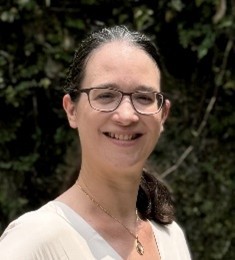 Assoc Prof Melanie Herschel | Assoc Prof Melanie Herschel is an Associate Professor at the College of Computing and Data Science (CCDS), NTU. Before joining the College of Computing and Data Science at Nanyang Technological University in 2024, she was a Professor for Data Engineering at the University of Stuttgart and an Associate Professor and INRIA team member at the University Paris Saclay, France. She obtained her doctorate from Humboldt-University Berlin, Germany. Her research interest is in the data management areas of data integration, data quality, data provenance, and data analytics that aspires to get data in shape for a large variety of applications in an effective, resource efficient, user-friendly, and responsible way.
|
 Assoc Prof Sourav S Bhowmick Assoc Prof Sourav S BhowmickInstructor for: Data Science Thinking, Data Preparation | Assoc Prof Sourav S Bhowmick is an Associate Professor at the College of Computing and Data Science (CCDS), NTU. He leads the Data Management Research Group at NTU (DANTE). He is also the Research Group Lead of Data Management & Analytics Group in College of Computing & Data Science (CCDS). He was inducted into Distinguished Members of the ACM in 2020 for "outstanding scientific contributions to computing". His core research expertise is in data management, human-data interaction, and data analytics.
|
 Prof Zhang Hanwang Prof Zhang HanwangInstructor for: Machine Learning Methodologies and Applications | Prof Zhang Hanwang is a faculty at the College of Computing and Data Science (CCDS), NTU. He has received the B.Eng (Hons.) degree in computer science from Zhejiang University, Hangzhou, China, in 2009, and the Ph.D. degree in computer science from the National University of Singapore in 2014. He was a research scientist at the Department of Computer Science, Columbia University, USA and a senior research fellow at the School of Computing, National University of Singapore, Singapore. His research interests include computer vision, multimedia, and social media. |
 Assoc Prof Long Cheng Assoc Prof Long ChengInstructor for: Data Systems | Assoc Prof Long Cheng is a Nanyang Associate Professor at the College of Computing & Data Science (CCDS), Nanyang Technological University. He received his PhD degree from the Hong Kong University of Science and Technology, Hong Kong. From 2016 to 2018, he was a lecturer at Queen's University Belfast, UK. He has research interests broadly in data management and data mining, such as high dimensional vector data management, spatial data management with machine learning based techniques, spatial data mining in the urban domain, and graph data mining. |
 Assoc Prof Goh Wooi Boon Assoc Prof Goh Wooi BoonInstructor for: Data Visualisation | Assoc Prof Goh Wooi Boon is the Associate Dean (Continuing Education - FlexiMasters & Short Courses) at the College of Computing and Data Science (CCDS), NTU. Before joining NTU, he was senior engineer and later engineering section manager at the Mechanization and Automation department of Hewlett Packard Singapore. His industrial engineering expertise is in developing robot-assisted automation systems. Assoc Prof Goh’s research interest is in human computer interactions. |