Finding his path in research: Yuan Song’s journey from MSc exploration to PhD excellence
Yuan Song joined NTU MSE’s Master of Science programme knowing that he enjoyed research — but not yet certain that a PhD was the right path. The experience helped him find the mentorship, research environment and questions that would shape his development as a researcher. Now an NTU PhD Medal of Honour recipient and one of two Gold winners of the MSE Research Excellence Award 2026, he reflects on the unexpected discoveries, collaborative relationships and sustained curiosity that shaped his graduate journey.
Yuan Song presenting at the Materials Research Society Meeting in the United States, 2025. |

When Yuan Song joined the NTU School of Materials Science and Engineering (MSE) as a Master of Science student, he was looking for more than another qualification.
His undergraduate research experience had shown him that he enjoyed scientific inquiry. But he also understood that a successful graduate journey depended on finding the right supervisor, research group and working environment.
"For me, the MSc programme at NTU provided a valuable transition period to explore different opportunities and identify the environment that suited me best," Yuan Song said.
That period of exploration would eventually lead him from an MSc dissertation to doctoral research, international research experiences and two significant honours in 2026: the NTU PhD Medal of Honour and a Gold award at the MSE Postgraduate Awards Ceremony.
His journey offers a wider lesson for students considering graduate research: certainty does not always have to come before the first step. Sometimes, it develops through the opportunity to experience research for yourself.
Testing whether a PhD was the right path
During his MSc, Yuan Song chose the dissertation option, allowing him to undertake research while completing his taught modules.
The experience introduced him to the research group of Distinguished University Professor Chen Xiaodong at the School of Materials Science and Engineering.
It also gave him a realistic view of doctoral life.
Unlike a coursework-only programme, the dissertation required him to balance academic modules with the uncertainty, experimentation and sustained problem-solving involved in research.
"Balancing coursework and research gave me a realistic understanding of the challenges and rewards of PhD life," he said.
Support from Professor Chen and senior members of the group helped Yuan gradually strengthen his skills. Just as importantly, the experience allowed both student and supervisor to understand their mutual expectations and identify a suitable research direction.
"For me, the MSc dissertation was almost a simulation of PhD life, and it helped me make my decision with much greater confidence."
By the end of the MSc programme, Yuan Song knew that he wanted to continue.
"By the end of my MSc, I had become confident that this was the research environment in which I wanted to continue growing as a researcher."
Making batteries work where they currently fail
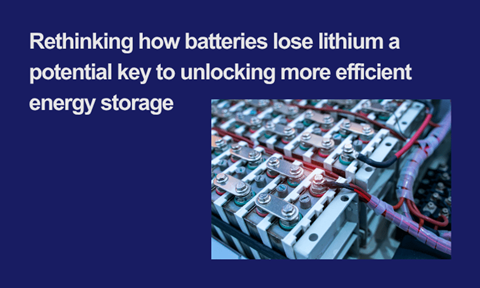
Yuan Song’s PhD research focused on an important limitation in today’s energy-storage technologies: lithium batteries do not perform equally well under all operating conditions.
“My PhD research aimed to make lithium batteries work where they currently fail,” he said.
Battery performance can decline sharply in extremely cold environments. Batteries must also withstand high temperatures, high voltages and other demanding conditions if electrification is to expand reliably across different climates and applications.
He therefore studied how electrolytes behave under extreme conditions.
Electrolytes enable ions to move within a battery. Understanding how their chemistry changes under demanding operating conditions could support the development of batteries that function more reliably beyond their conventional limits.
“This matters because clean electrification cannot be truly global if batteries fail in cold regions, hot climates, or other harsh environments,” Yuan Song said.
Rather than focusing only on individual electrolyte formulations, he hopes his research can contribute broader design principles for the development of next-generation electrolytes.
Yuan Song prepared the beamtime proposal before travelling to the Australian Synchrotron to conduct the experiments. The experience strengthened his ability to design complex studies and work independently under the demanding time constraints of synchrotron beamtime. |
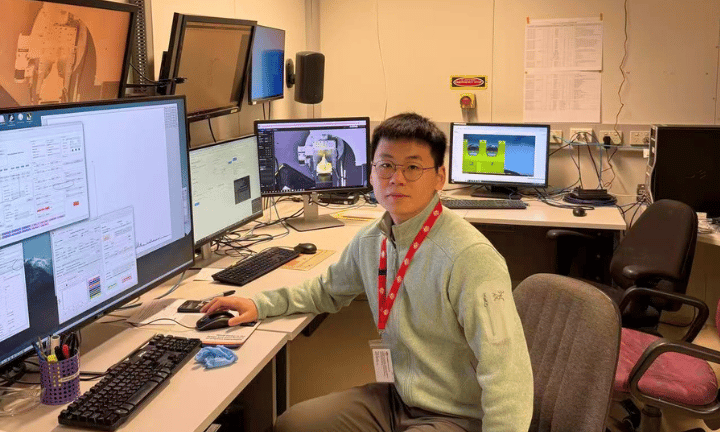
This image should appear here or immediately before the section on leading complex research. It makes the research journey visually tangible and introduces movement beyond the laboratory at NTU.
When the experiment contradicts expectations
One of the research projects Yuan Song is most proud of began with a result that did not align with the prevailing understanding in the field.
In the work, currently under peer review, Yuan Song and his collaborators observed an unexpected electrolyte response to changes in concentration and dilution.
Instead of treating the observation as an unsuccessful result, they investigated it further. This led them to develop a new framework to explain how electrolyte chemistry and interfacial reactions evolve under high-voltage and extreme conditions.
The experience reinforced one of his most important lessons from doctoral research:
"Good science often begins when experiments disagree with what we expect. Unexpected results are not failures — they are often the starting point of new ideas."
Transforming an unexpected observation into a broader scientific framework required Yuan Song to look beyond familiar explanations, interrogate the evidence and develop greater confidence in his own research judgement.
From completing experiments to owning the research
The transition from MSc study to full-time doctoral research also changed the way Yuan Song approached scientific problems.
The one-year MSc programme required him to think about research while also considering what would come next, including whether he could secure a scholarship and continue into a PhD.
Once he entered the doctoral programme, he gained more time and mental space to think deeply about scientific questions.
"This allowed me to become more independent, take greater ownership of my work, and develop a more patient and long-term approach to research," he said.
He attributes much of this growth to the combination of mentorship, intellectual freedom and consistently high standards in Professor Chen’s group.
During the earlier stages of his PhD, senior members of the battery subgroup helped him build experimental skills, develop research judgement and identify his own direction.
As he progressed, Professor Chen gave him the trust and freedom to explore the systems that interested him, set the pace of his projects and take ownership of important research decisions.
At the same time, the group’s expectations for research quality remained high.
Yuan Song describes NTU MSE as:
"A place that challenges curiosity with rigour and supports independence with trust."
Learning to lead complex research
Some of his most formative experiences took place beyond his immediate research projects.
He wrote a beamtime proposal and conducted synchrotron experiments at the Australian Synchrotron facility operated by ANSTO.
Synchrotron experiments require researchers to work within tightly allocated periods of beamtime. Yuan’s experience strengthened his ability to design complex experiments, coordinate research activities and work independently under significant time constraints.
He also benefited from the Facility for Analysis, Characterisation, Testing and Simulation at NTU MSE.
Through FACTS, Yuan Song received X-ray diffraction training and support from Dr Liu Weiling, as well as transmission electron microscopy training from Dr Tay Yee Yan.
Collaborations beyond the School further broadened his expertise. These included interphase characterisation with Professor Qiang Zhu at A*STAR and solid-state nuclear magnetic resonance work with Professor Kai Xue at NTU’s School of Physical and Mathematical Sciences.
"These experiences broadened my technical capabilities and showed me how impactful research is built through both independent thinking and interdisciplinary collaboration," Yuan Song said.
He also presented his research at the Materials Research Society Meeting in the United States in 2025. Communicating his work to an international research audience marked another important stage in his development and strengthened his confidence in presenting scientific ideas.
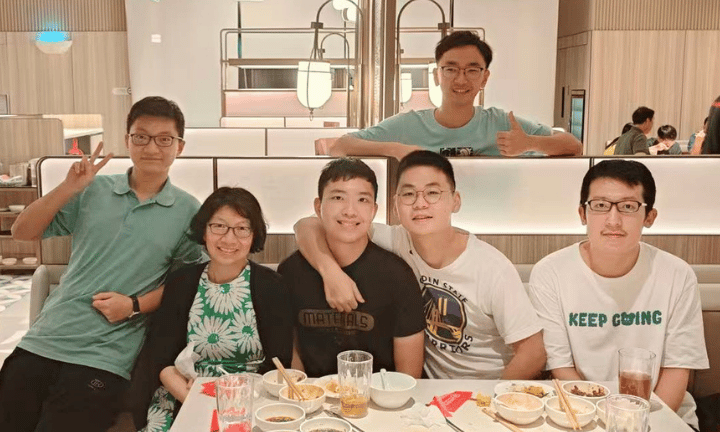
Yuan Song with Dr Ai Lin Chun and fellow junior PhD students after completing a scientific writing and research communication course. The experience reflected the group’s emphasis on learning how to structure ideas, present evidence and communicate research clearly. |
Growing by helping others grow
As Yuan Song became more experienced, his development increasingly involved supporting other researchers.
Mentoring junior students taught him to communicate scientific ideas more clearly and examine research problems from different perspectives.
He found that explaining experimental designs and scientific concepts to younger researchers often exposed gaps in his own understanding.
Participating in collaborative projects, proposal writing and manuscript preparation also changed how he viewed research achievement.
"Impactful research is rarely an individual effort, but rather the result of a strong and supportive team," he said.
This belief would later shape the way he responded to receiving two major honours.
Recognition for a journey shaped by others
In 2026, Yuan Song received the NTU PhD Medal of Honour.
He was also one of two Gold winners of the MSE Research Excellence Award at the MSE Postgraduate Awards Ceremony 2026.
For Yuan Song, the honours represent an important stage in his development — but not an individual achievement alone.
"I see this award as a meaningful recognition of one stage of my journey, and it encourages me to keep pursuing the work I truly care about," he said.
"More importantly, I also see it as a reflection of the support I have received from my supervisor, senior group members, collaborators, friends, and everyone who has helped me along the way."
"Research is never an individual effort, and this achievement belongs to them as much as it does to me. As the saying goes, ‘I am because we are."
More than research alone
Research was central to Yuan Song’s graduate journey, but it was not the only part of his life at NTU.
Basketball remained an important source of continuity, teamwork and belonging throughout his academic journey.
He had played competitively during his undergraduate years in China, where being part of his university basketball team taught him discipline, resilience and the importance of working towards a shared goal.
Those values later became equally relevant in scientific research.
After completing his PhD and beginning his next chapter as an NTU staff member, Yuan continued representing the University in an inter-institutional basketball competition in Singapore.
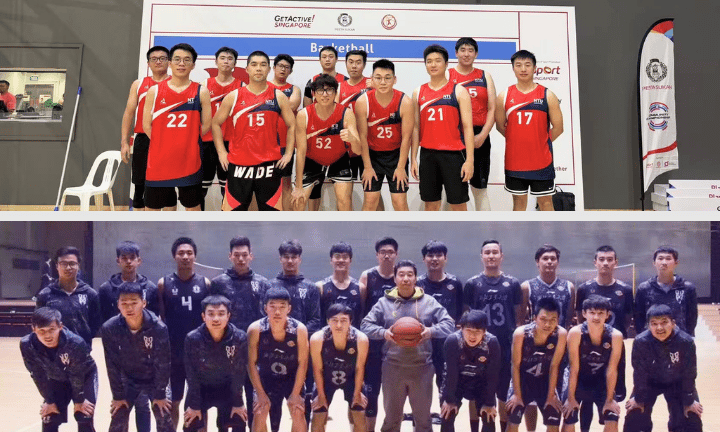
From playing university basketball in China to representing NTU after completing his PhD, the sport remained a constant throughout Yuan’s academic journey. He sees teamwork, discipline and resilience as qualities that matter in both sport and research. |
Beginning the next chapter
After completing his PhD in 2026, Yuan Song began his next chapter as a Research Fellow at NTU.
His graduate experience prepared him not only through technical training, but also by developing his ability to identify meaningful questions and create research strategies to answer them.
Across his MSc and PhD journey, he designed projects, wrote proposals, led collaborations and learnt to communicate scientific ideas to different audiences.
"More importantly, the culture of intellectual freedom and high standards in our group taught me to remain curious while being rigorous in my work," he said.
"These experiences have given me the confidence to continue pursuing an academic research career."
How do you know whether a PhD is right for you?
Yuan Song encourages students considering doctoral research to think beyond the appeal of successful findings, publications and awards.
"I would encourage MSc students to ask themselves a simple question: do you enjoy the process of research itself, or only the results that come from it?"
For that reason, Yuan Song believes curiosity and persistence may be more important than talent alone.
The research environment matters too.
"Choosing the right people and environment may matter even more than choosing the right topic," he said.
"Find a place that challenges you, supports you, and allows you to remain curious."
Find the environment in which you can grow
Yuan Song did not begin his MSc with a predetermined path or a particular accolade in mind.
He began by exploring a genuine interest in research, experiencing the realities of graduate study and finding an environment that matched the way he wanted to grow.
For prospective students, that may be the most useful starting point — not knowing exactly where the journey will lead, but being willing to ask difficult questions, learn from unexpected results and take the next step.
_____
Explore NTU MSE’s postgraduate programmes and research opportunities:
https://www.ntu.edu.sg/mse/admissions/postgraduates