Spiky sunflower pollen microgels help sustain tumour ablation in a preclinical cancer study
NTU Materials Science and Engineering researchers and collaborators used the physical architecture of sunflower pollen to address a persistent challenge in magnetic hyperthermia: keeping heat-generating nanoparticles at the tumour site long enough to destroy cancerous cells.
While cancer treatment is most associated with chemotherapy, researchers around the world are exploring a range of alternative strategies that have yet to reach the clinic, often held back by specific technical barriers within each approach.
Magnetic nanoparticles can generate localised heat when exposed to an alternating magnetic field, offering a potential way to destroy tumour cells. But this heating ability, used in magnetic hyperthermia treatments, is only useful if enough particles remain within the tumour.
The problem lies in keeping these nanoparticles in place long enough – once injected, these particles tend to diffuse away from the tumour site or are distributed unevenly within tissues, resulting in a weak or short-lived therapeutic heating effect. Currently, less than 1% of injected nanoparticles reach tumours within 24 hours, limiting the technique's viability.
A team at NTU's School of Materials Science and Engineering (MSE), co-led by Prof Nam-Joon Cho and Prof Ren-Jei Chung from the National Taipei University of Technology, have investigated a different approach to this retention problem.
Whilst existing strategies focused mainly on improving nanoparticle chemistry or biological targeting, the team sought to engineer a non-synthetic carrier for better physical retention within the tumour environment.
Their findings, published in Advanced Functional Materials, describe a delivery system built from an unexpected source: sunflower pollen.
Using physical architecture to improve retention
The researchers processed sunflower pollen into soft microgels and combined them with cationic liposomes and iron oxide nanoparticles.
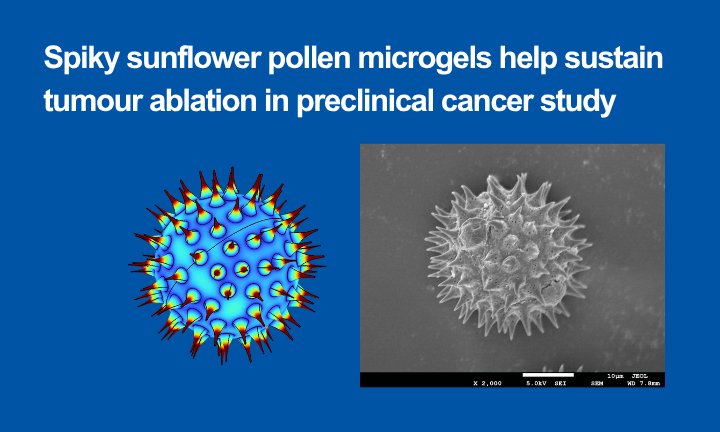
Sunflower pollen grains are covered in a tough, spiny outer shell called the exine, which evolved to help the pollen grain grip onto the flower during pollination. The research team sought to uncover whether this property could be repurposed to improve nanoparticle retention at a tumour site.
In a sheer-flow assay using HepG2 liver cancer cells as a model surface, the spiky sunflower microgels showed approximately 6.7 times greater accumulation than a smooth-surfaced camellia microgels.
The researchers attributed this difference to the sunflower microgels’ spiky architecture, which helped them resist movement under flowing conditions. In the animal model, this geometry also supported the composite’s continued retention at the tumour site.
"Much of nanoparticle delivery research focuses on surface chemistry or biological targeting. Our findings suggest that geometry can also be designed to do important work: the pollen microgels’ spiky structure helped the composite remain at the tumour site and generate therapeutic heat when the magnetic field was applied again three weeks later," said Prof Cho.
The results point to a retention-first strategy that complements approaches based on nanoparticle chemistry, circulation time or biological targeting.
Retaining the ability to generate heat
The researchers assessed the composite in a subcutaneous tumour model using Sprague-Dawley rats.
Following direct injection into the tumours, the composite was exposed to an alternating magnetic field for 300 seconds at intervals over 21 days.
The composite reached 48.0°C ± 0.7°C on day 0 and continued to reach 44.9°C ± 0.3°C on day 21. By comparison, free nanoparticles fell below 40°C by day 5.
The material did not generate heat continuously throughout the 21 days. Instead, the results indicate that enough material remained at the tumour site to generate therapeutic heating when the magnetic field was reapplied.
After 21 days, the composite group showed near-complete tumour shrinkage in the preclinical model. Histological analysis found extensive tumour-cell damage and fibrotic remodelling.
Keeping the nanoparticles localised may also help reduce unintended heating outside the treatment site. Animals treated with the composite had a surface-burn area of 0.27 ± 0.05 cm², compared with 1.56 ± 0.08 cm² among those receiving free nanoparticles. The researchers attributed this difference to more localised heating and reduced off-target nanoparticle dispersion.
Designed to retain, but also to degrade
A carrier intended to remain at the treatment site must eventually degrade or be removed safely.
In a separate laboratory experiment, the researchers exposed the pollen microgels to oxidative, acidic conditions intended to model aspects of the tumour microenvironment.
After 21 days, the microgels’ residual dry weight had decreased by 65%. Microscopy and chemical analysis also showed progressive breakdown of the pollen structure.
These results demonstrate that the microgels can undergo oxidative degradation under simplified laboratory conditions. However, the researchers noted that degradation within the body would involve a more complex combination of cellular, enzymatic and immune processes.
Further research is needed to establish how the microgels and their components degrade, distribute, and clear from the body over longer periods.
Why this matters
Most efforts to improve nanoparticle-based cancer therapies have focused on making the particles themselves "smarter" through altering variables such as surface chemistry or coatings.
This work instead demonstrates that the delivery structure itself can be engineered to solve the retention problem, using a geometry that requires no biological targeting.
The approach also has a sustainability dimension: sunflower pollen is an abundant, low-cost agricultural byproduct, and converting it into a functional biomedical material aligns with a broader waste-to-resource philosophy for materials design.
The findings are likely to be of interest to researchers and companies working in nanomedicine, drug delivery, and biomaterials, as well as those exploring sustainable or bio-derived alternatives to synthetic carrier materials.
Future possibilities
The study builds on NTU MSE’s research into pollen-derived biomaterials and brings together expertise in materials science, nanotechnology, sustainability and cancer research.
It illustrates how a naturally occurring architecture can be transformed into a functional biomedical material: in this case, a structured carrier that helps magnetic nanoparticles remain where their heating effect is needed.
The work should be understood as a preclinical proof of concept for a materials-based retention strategy. Future studies could examine how the microgels perform in more complex tumour models and how their structure, retention and degradation rates might be adjusted for different treatment conditions.
The underlying principle could eventually inform other forms of sustained localised therapeutic delivery, including combination treatments.
More about the publication
Published in Advanced Functional Materials, the study brought together researchers from NTU’s School of Materials Science and Engineering, the Singapore–HUJ Alliance for Research and Enterprise (SHARE), NTU’s Centre for Cross Economy Global and the National Taipei University of Technology.
The research was supported by NTU and Singapore’s Ministry of Education through the Academic Research Fund Tier 3, as well as the National Research Foundation, Singapore, through its CREATE programme and the Cellular Agriculture programme. It also received support from Taiwan’s National Science and Technology Council.
The researchers also acknowledged contributions from colleagues in Translational Science for Sustainable Materials and NTU’s Centre for Cross Economy, as well as technical support from the National Taiwan University and National Taipei University of Technology.
More about Prof Cho Nam-Joon
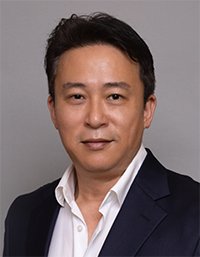 | Appointments: Professor, School of Materials Science and Engineering, NTU Singapore Singapore–HUJ Alliance for Research and Enterprise Centre for Cross Economy Global, NTU Singapore Corresponding author of the study Bioinspired and sustainable materials | Biomaterials and biointerfaces | Pollen-derived materials | Nanomedicine | Nanoparticle delivery | Lipid and liposome engineering | Translational materials science |