A Winning Gesture: Noah Lim Shows Sportsmanship at Asian Games
Text: Sanjay Devaraja | Photos: Noah Lim; SportSG; The Straits Times
At the 2026 Asian Games, which recently concluded in Japan, LKCMedicine student and national athlete Noah Lim Tian Run showed that medals are not the only measure of an athlete’s character.
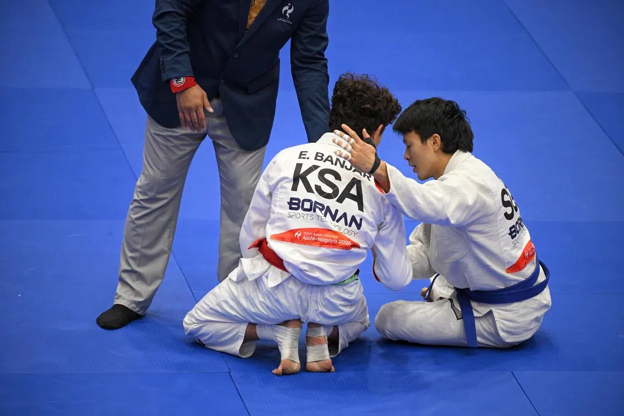 Photo Credit: The Straits Times
After defeating Saudi Arabian competitor Elyas Banjar in the men’s under-69kg jiu-jitsu round of 16 on 1 October 2026 in Aichi–Nagoya, Noah Lim noticed that his opponent remained hunched over on the mat, visibly devastated.
As the crowd cheered and Noah raised his hands in victory, he sat beside Banjar and waited patiently for him to collect himself before offering a long, consoling embrace.
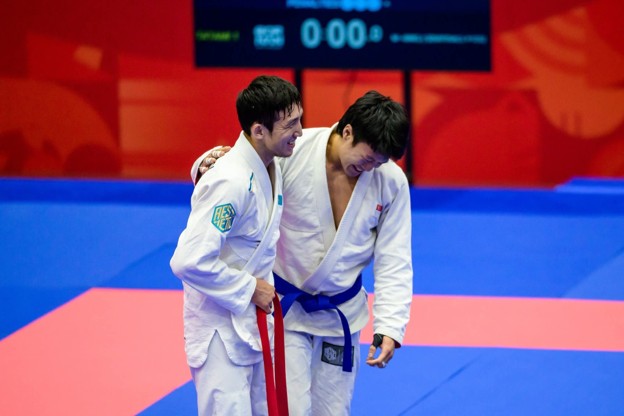 Photo Credit: SportSG
Noah was eventually knocked out in the semi-finals, finishing joint-fifth. But the quiet moment after the competition captured his commitment to excellence in sport and medicine, grounded in humility, resilience and care for others.
For Noah, the gesture was an extension of how he approaches both fields with composure and empathy, and with the understanding that how one responds to victory and defeat can say as much about character as the result itself.
Noah’s jiu-jitsu journey began at 14, inspired by his older brother Paul Lim – also a national athlete and a 2025 SEA Games silver medallist, who would often practise moves on him.
He was drawn to the “strategic, chess-like nature of grappling” and the idea that technique and leverage could overcome raw strength.
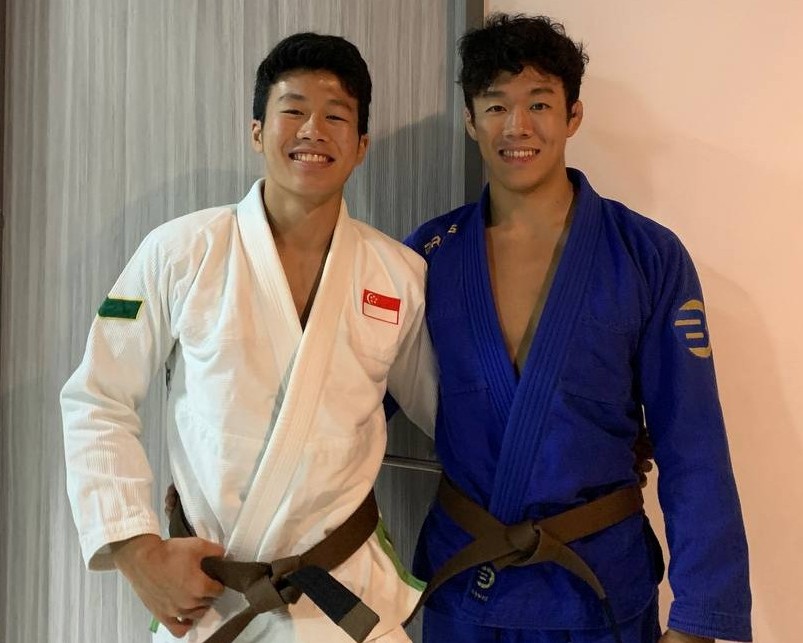
Noah (left) with his older brother Paul. Photo Credit: Noah Lim
That early curiosity grew into a rewarding sports journey for Noah. He became Singapore’s first jiu-jitsu gold medallist at the SEA Games in 2019 at just 17, and has since added multiple SEA Games medals, including a gold at the 2023 Cambodia SEA Games, achieving the feat despite a dislocated finger.
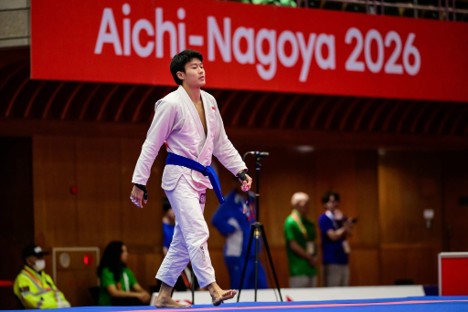 Photo Credit: SportSG
This August, Noah took a year-long break from his medical studies to focus fully on his sports career. Rather than treating medicine and sport as competing priorities, he chose to give each pursuit the focus it deserved at different stages of his life.
“Medical school can be demanding, but the School’s support showed me that excellence in one area doesn’t require abandoning another. We’re given the space to pursue our passions alongside our medical training,” says Noah.
When asked which victory matters most, Noah is careful not to tie self-worth to results. “I don’t believe your self-worth should be determined by victories or losses. Everyone wins and loses, and jiu-jitsu is no exception,” he opines.
Over the years, Noah’s training has shifted from sheer volume on the mats to a more strategic approach.
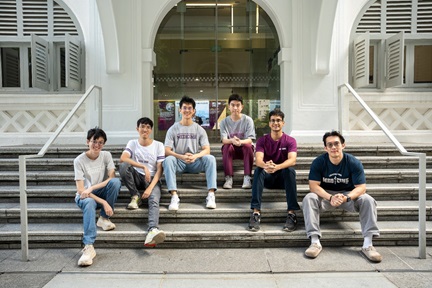
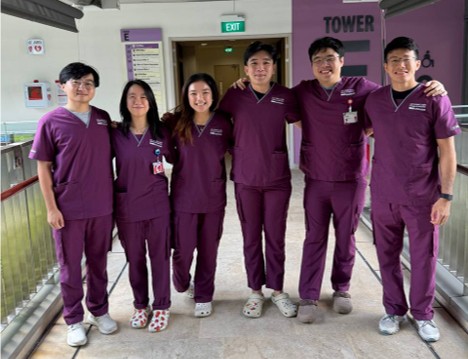 Noah (extreme right) with his peers. Photo Credit: Noah Lim
“My biggest takeaway since starting medical school has been to train smarter, not just harder. I’ve learned how to study effectively and efficiently, think in an algorithmic manner, learnt more about recovery and nutrition, and have an enhanced understanding of anatomy and biomechanics. Understanding these subjects has transformed how I approach training and competition. I can usually recognise the likely differential diagnosis and management for most of the injuries that my teammates and I have on the mats,” he shared.
His research in orthopaedics, particularly around musculoskeletal conditions, has further deepened his insights into movement patterns and injury prevention, allowing him to treat his athletic career almost like approaching an athletic career as a long-term clinical case study where one continuously gathers data and adjusts approach.
Mentally, he approaches competition preparation much like clinical examinations: anticipating variables, preparing protocols for different scenarios, and staying adaptable when things deviate from plan.
“The key has been treating both pursuits with equal seriousness rather than seeing one as a ‘hobby’. Competition preparation is similar to preparing for clinical examinations – you must anticipate variables, have protocols for different scenarios, and stay adaptable when things don’t go as planned. I am extremely grateful for LKCMedicine’s flexibility and support,” Noah said.
For Noah, jiu-jitsu has shaped not just his athletic identity but the kind of doctor he aspires to be. The sport, he says, teaches comfort with discomfort, a skill directly transferable to medicine.
“Jiu-Jitsu teaches you that being comfortable with discomfort is essential for growth. In medicine, we constantly face situations that are uncomfortable like difficult diagnoses, challenging conversations, procedures we’re learning. No matter how good you become, there’s always someone better, something new to learn. That mindset translates directly to medicine, where lifelong learning is essential.”