Beyond the Accolades: Aditya Nair’s Journey to Research Leadership
Text: Sanjay Devaraja | Photos: Aditya Nair
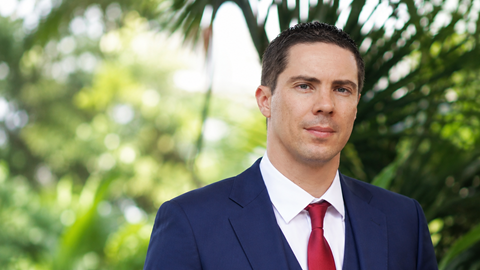
At just 30, Nanyang Assistant Professor Aditya Nair is at a pivotal stage in his scientific journey, moving from an early-career researcher uncovering the neural basis of emotion to leading his own laboratory at the forefront of artificial intelligence, neuroscience and mental wellbeing research.
The path from early-career researcher to principal investigator has involved more than scientific discovery.
After studying life sciences at NUS, he headed to the US for his PhD at Caltech, followed by postdoctoral training at Stanford and Caltech. It was during his PhD in Computation and Neural Systems that his fascination with how the brain generates emotions took shape.
Studying the neural basis of aggression, he uncovered a new form of network computation in the hypothalamus known as a “line attractor”, which encodes a persistent state of aggression.
In 2025, he returned to Singapore to establish his own research programme at LKCMedicine and A*STAR’s Institute of Molecular and Cell Biology, bringing together neuroscience and AI to understand how the brain generates emotions.
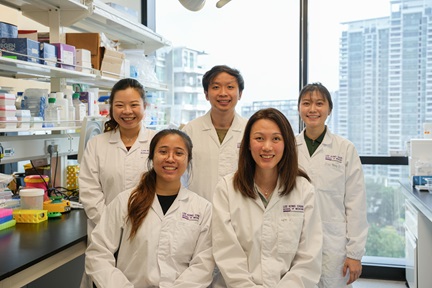
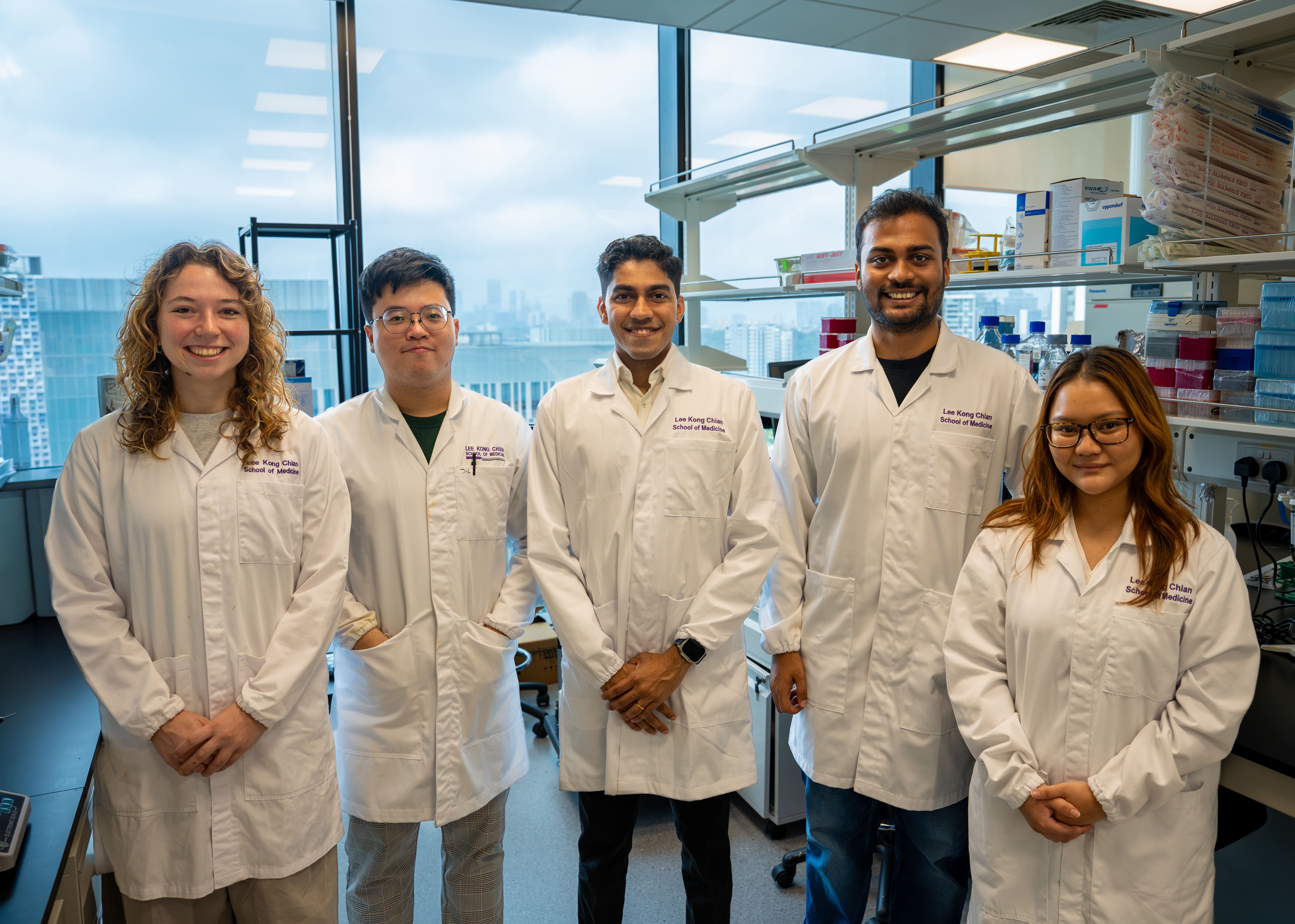
Asst Prof Nair started the Nairlab in August last year to bring together researchers from different disciplines, including computer science, molecular biology and psychology, to investigate how the brain generates emotional states. Combining neuroscience with AI, the lab aims to deepen understanding of mental health and enable interdisciplinary research with the potential to improve lives.
“We're in an era now of science where you can't afford to be siloed within your field, and so I've been very intentional in creating a lab which welcomes different perspectives and expertise to tackle important questions about how the brain generates emotion. I hope our intensely collaborative and multi-disciplinary approach will inspire students at all levels to think boldly and ambitiously and explore across disciplines to pursue research that can ultimately make a difference to mental health,” shared Asst Prof Nair.
One of the defining breakthroughs in his career came when Asst Prof Nair and his team combined AI with calcium imaging, a technique that listens to brain activity using light, to analyse the activity of hundreds of neurons simultaneously in mice.
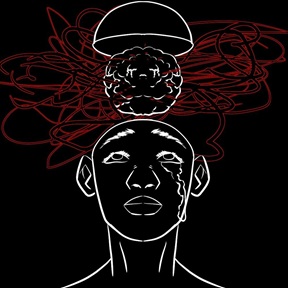
Instead of looking for individual neurons that “light up” during a particular emotion, they searched for complex, distributed signals across neural populations using machine learning to search for those signals.
The team went a step further. After identifying brain patterns linked to certain emotions, they stimulated the brain to recreate those patterns and produce the same lasting state.
The research also offers clues as to why feelings can stick around long after the moment that caused them, with brain chemicals such as vasopressin and oxytocin possibly playing a role.
The discovery led to a new question: Can we spot these same brain patterns in people?
Asst Prof Nair and his team are now looking for ways to detect brain activity linked to emotional states such as those experienced in depression and anxiety, without invasive procedures.
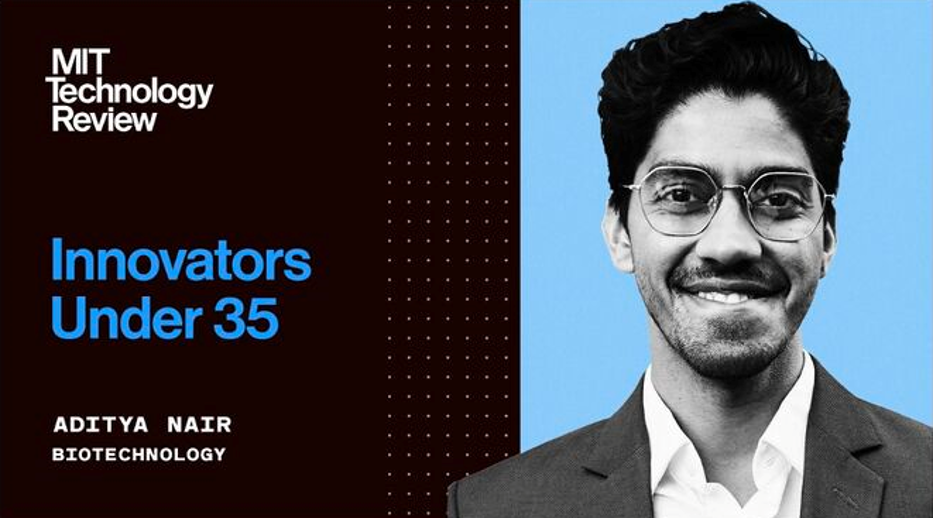
Asst Prof Nair’s work has been published in leading journals including Nature, Science and Cell, and has received recognitions, including:
- 2025 Science and Chen Institute Prize for AI-Accelerated Research, for which he was a finalist
- 2024 Peter and Patricia Gruber International Research Prize in Neuroscience from the Society for Neuroscience
- 2024 NIH NeuroAI Early Career Scholar recognition
- 2025 Caltech’s Ferguson Prize for best biology thesis
- 2026 MIT Technology Review 35 Innovators Under 35
- 2026 Life Sciences Fellow of the Asian Young Scientist Fellowship
- 2026 AI2050 Early-Career Fellow by Schmidt Sciences
“To have this work recognised by the global scientific community tells me we are on the right path to pursue ideas that can discover new principles of brain computation and can potentially reshape how we think about mental health,” he says. “It’s motivation not just for me, but for my entire team, that our work has the promise to truly make a difference.”