Tiny but mighty
NTU researchers are harnessing the properties of nanomaterials to tackle life’s challenges head-on.
.jpg?sfvrsn=6307022a_1 "Tiny but mighty (NTU research)")
In science fiction, nanotechnology is a popular trope. Think self-assembling superhero suits like in Marvel’s Iron Man films, and disease-curing nanomachines in Japanese manga Ghost in the Shell.
While these stories stretch one’s imagination, nanomaterials – nanoscale-sized materials that are hundreds to thousands of times smaller than a strand of human hair – offer promising applications in the real world.
From new vaccines for infectious diseases to devices that mimic neurons, researchers at NTU, ranked fourth in the world in nanoscience and nanotechnology by US News & World Report, are using nanomaterials to solve the problems of everyday life.
Nanomaterials are appealing because of their unusual properties at the nanoscale, one of which is a high surface area to-volume ratio that makes them excellent catalysts for chemical reactions.
These special traits depend entirely on how the nanomaterial is shaped.
“Having materials with various physical forms expands the design toolbox for solving different technological needs,” says Assoc Prof Ni Ran from NTU’s School of Chemistry, Chemical Engineering & Biotechnology (CCEB), who uses computer simulations to model how molecules assemble by themselves into intricate nanostructures to create next generation nanomaterials.
“By mastering how to make use of different nanomaterials, we can combine them into complex systems and create entirely new technologies,” says Prof Liu Zheng from NTU’s School of Materials Science & Engineering (MSE). His work focuses on using these tiny materials to overcome the limits of today’s computers and clean energy tools.
POWERFUL PARTICLES THAT DELIVER BETTER HEALTHCARE
.jpg?sfvrsn=be027d06_1 "Nanoparticles, nanorods (NTU research)")
A landmark application of nanomaterials emerged during the COVID-19 pandemic when vaccines were developed using messenger ribonucleic acids (mRNAs).
Delivering these life-saving vaccines was made possible by using nanoparticles to protect the fragile mRNAs and carry them into our cells. These mRNAs contain instructions for cells to make a protein essential for triggering a protective immune response to combat infection.
Nanoparticles carrying mRNAs enter cells by getting “swallowed” by the cells and trapped inside a “bubble” called an endosome. Once inside, however, the mRNAs struggle to escape the endosome to direct the production of disease fighting proteins, and are eventually broken down.
One way to overcome this is to use higher doses of mRNAs to improve the odds of more “leaking” out of the endosome, but too high a dose causes toxicity.
To address this challenge, Prof Mary Chan from NTU’s CCEB and Lee Kong Chian School of Medicine (LKCMedicine) is designing biomimetic nanoparticles tailored to different cell types to help mRNAs escape the endosome more effectively, thereby improving treatment efficacy. She is optimistic that the ability to customise nanoparticles to target specific cells will result in better use of mRNA therapeutics in personalised healthcare.
Assoc Prof Huang Changjin, from the School of Mechanical & Aerospace Engineering, says that nanomaterials have had a “transformative impact due to their nanoscale size and ability to be altered”.
“They are effective drug carriers because they can pass through biological barriers, unlike bulkier materials,” says Assoc Prof Huang, who uses molecular dynamics simulations to understand how nanomaterials interact with our body’s biological barriers, from cell membranes to our skin.
ULTRATHIN WIRES AND SHEETS FOR ELECTRONICS AND ENERGY PRODUCTION
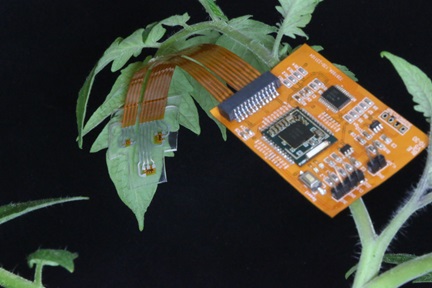
Nanotechnology is also shaping healthcare through electronics. Prof Chen Xiaodong and his team at NTU’s MSE are harnessing nanotechnology to bridge the long-standing gap between hard, rigid electronics and soft, living tissues. By combining the electronic functions of nanostructures with soft biocompatible materials, they are creating soft nanoelectronics that fit the human body more comfortably, safely and effectively.
.jpg?sfvrsn=cd6ab719_1 "Nanosheets, 3D structures (NTU research)")
One of their breakthroughs is the creation of artificial neurons that emulate real brain cells by receiving and releasing dopamine through electrochemical sensors. This is made possible by flexible nanomaterials like nanowires, nanotubes and nanosheets. At the nanoscale, electron motion is largely restricted, giving nanomaterials unique electrical and optical properties that researchers can fine-tune to improve the accuracy of neural signal detection and transmission.
Ultrafine wire-like nanomaterials conduct electricity efficiently because their electrons can only travel in one direction – left or right along the wire, with no up or down movement. This one-way movement makes them ideal for flexible electronics, sensors and next-generation transistors. Similarly, the strength and conductivity of ultrathin nanosheets make them durable and effective materials for electronics.
“Soft nanoelectronics are set to make medical procedures less invasive and deeply personalised. We’re already seeing their impact on wearables for health monitoring, and implantable technologies like pacemakers that help regulate the heartbeat,” remarks Prof Chen.
Beyond electronics, nanosheets are also helping to power a more sustainable future. In his research on renewable energy, Prof Liu from NTU’s MSE found that semiconductors shaped into thin nanosheets become strong catalysts for producing hydrogen sustainably by splitting water molecules. At this atomic level, these materials have more “active” space on their surface, and their electrons move more effectively. Both factors help speed up the process of generating clean hydrogen.
“For green hydrogen production, our engineered nanosheet catalysts are highly efficient. Because they are made from common, easy-to-find elements, they are a much cheaper alternative to expensive metals like platinum,” he explains.
3D STRUCTURES FOR ENERGY AND CARBON STORAGE
Like building blocks, nanoparticles can organise themselves into bulkier, customisable 3D superstructures.
At NTU’s CCEB, computation simulation expert Assoc Prof Ni works closely with experimental researchers to study particles that can spontaneously assemble into complex shapes, such as clusters, rings and fibres.
These 3D nanomaterials have a plethora of applications, from catalysis, photonics and water transport to biomedical uses like biosensors and bioimaging. “Simulations and experiments work hand in hand,” he says. “Experiments can reveal novel structures, while our modelling identifies the physical principles that drive how nanoparticles assemble into these forms,” he says.
Assoc Prof Ni adds that porous 3D nanomaterials, such as metal-organic frameworks formed when metal ions connect with organic compounds like oxygen, can be used for hydrogen storage.
Their nanoscale pores provide a vast surface area for storing gases and speeding up chemical reactions. These materials can also be applied to carbon-capture technologies, helping to trap more carbon and reduce greenhouse gas emissions and their impact on the climate.
SAFETY, SUSTAINABILITY AND PUBLIC TRUST
While nanomaterials can improve many parts of daily life, we must answer important questions before they are widely adopted.
These include health and environmental concerns, which the scientific community takes seriously. According to Prof Liu, a major challenge is “nanotoxicity”. Because nanomaterials are so small and reactive, they could potentially enter living cells and cause damage. The goal is to ensure these materials are as safe for the body as they are helpful for technology.
Assoc Prof Sanjay Chotirmall from LKCMedicine echoes this sentiment, noting that nanomaterial exposure can occur through multiple routes – breathing them in, absorbing them through the skin and ingesting them. Once in the body, nanomaterials may promote inflammation in organs such as the lungs and heart. He adds that workers involved in manufacturing or handling of nanomaterials face higher risks.
It is also uncertain if nanomaterials will degrade safely or accumulate in our ecosystems. “The fate of nanomaterials in the environment is really a fledgling area of understanding. Their potential to contaminate the air, water and soil is not yet fully known,” explains Assoc Prof Chotirmall.
There are psychological considerations too. Prof Shirley Ho from NTU’s Wee Kim Wee School of Communication & Information found that members of the public who held unfavourable attitudes towards genetically modified (GMO) foods tend to hold negative opinions about nanoparticle additives in food. In her study of 1,000 adult Singaporeans, one third of respondents who reported negative feelings towards GMO foods were likely to feel the same about nano-enabled foods.
Addressing these concerns requires a multifaceted approach to risk management and public trust. One important strand is regulation. Local institutions such as the Singapore Food Agency and global bodies like the World Health Organisation have published clear guidelines on the safe use of nanomaterials.
On the research front, scientists are working to design inherently safer nanomaterials from the outset, alongside improved containment and recycling methods to prevent unintended release and promote a circular economy for nanotechnology.
“Ultimately, the goal is to strike a balance – minimising risks while continuing to embrace innovation and technological progress,” adds Assoc Prof Chotirmall.
The article appeared first in NTU's research & innovation magazine Pushing Frontiers (issue #26, May 2026).