

Why NTU Materials Science and Engineering
Materials Science and Engineering (MSE) is a confluence of chemistry, physics, biology and engineering mathematics. Learn how to design, process and improve materials for advanced chips, next-generation batteries and medical technologies. By combining scientific knowledge with hands-on experience and analytical problem-solving, you will build the versatility to adapt as technologies evolve, move across industries and thrive in a changing world of work.
Nanyang Technological University (NTU), Singapore, pioneered Singapore’s first Materials Engineering degree in 1991 and has consistently ranked among the world’s Top 3 leading institutions for Materials Science in the QS World University Rankings by Subject.
At NTU’s School of Materials Science and Engineering, you benefit from over thirty-five years of expertise, extensive research facilities, and an internationally recognised faculty with strong research and industry connections. Through laboratory learning, internships and a final-year project, students develop the knowledge and practical skills for careers across semiconductors, advanced manufacturing, energy and biomedical technologies.

For Admissions Enquiries, email:
Upcoming Outreach Events
Join us for a first-hand experience of what studying MSE entails!
What exactly is Materials Science and Engineering?
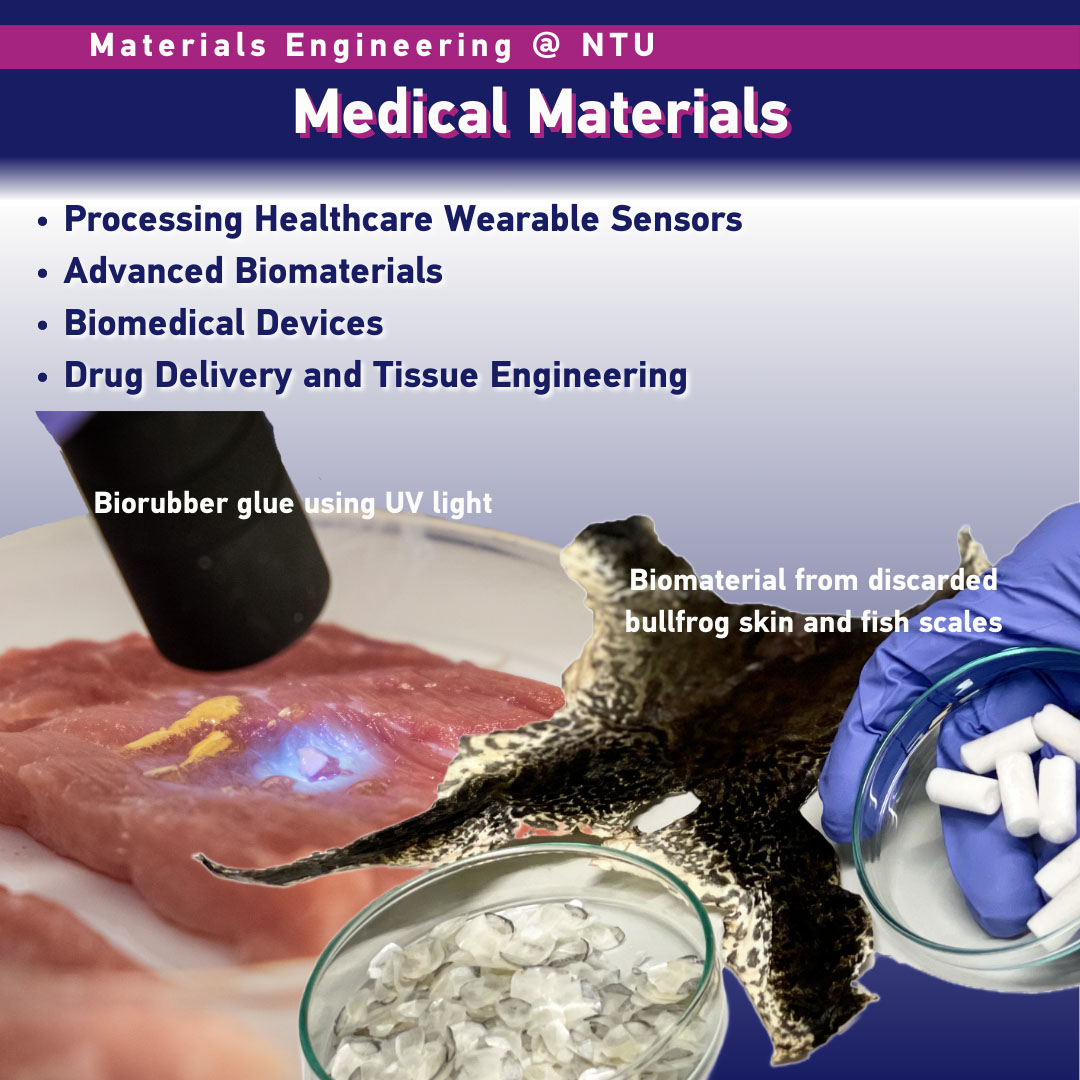
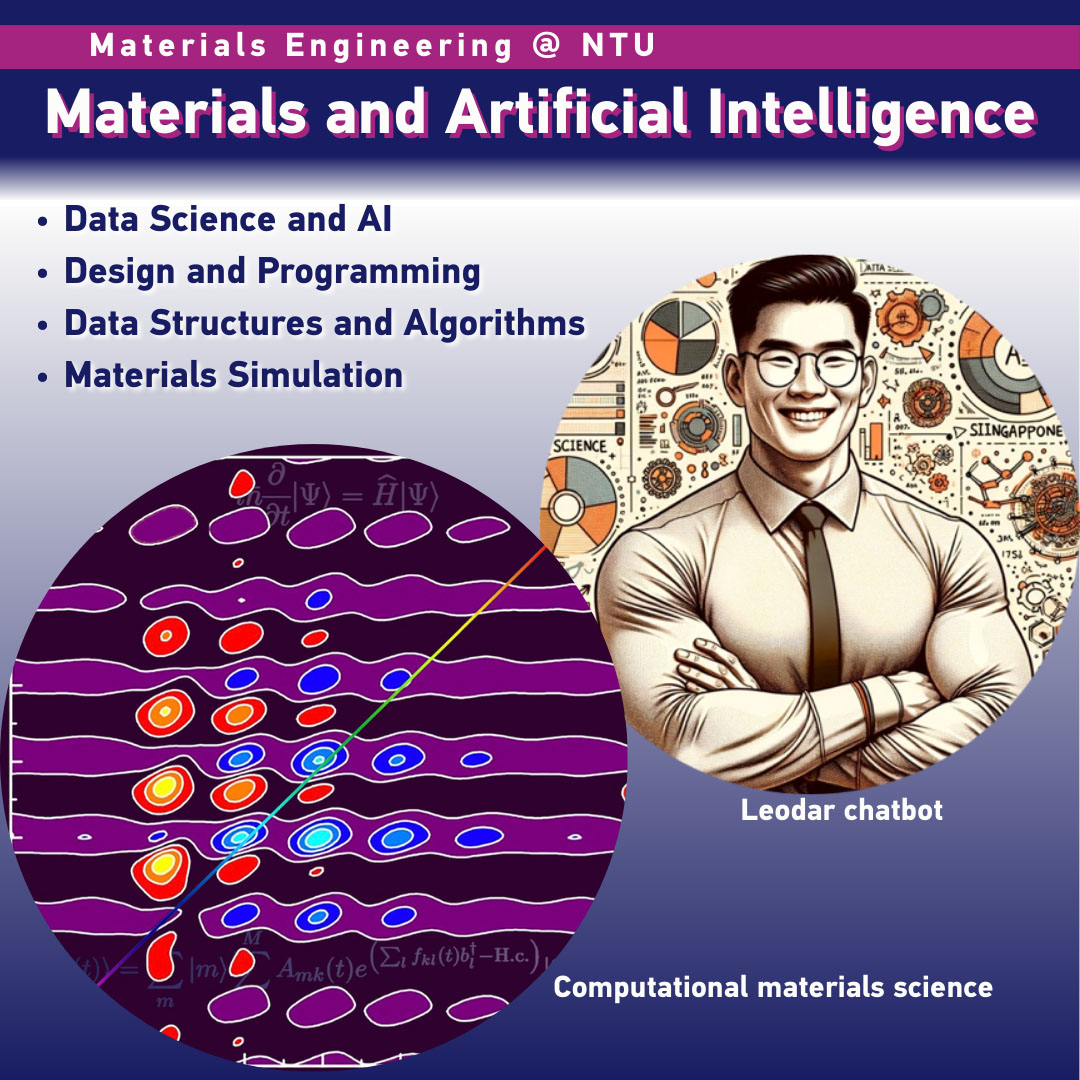
Understand the versatility of a Materials Engineering degree through the lens of our 7 Undergraduate Specialisation offerings. These optional specialisations let students go deeper into a chosen area and add value to their degree. Please refer to this page for more information.
Every day applications
Recent MSE Research areas
Relevant Industries
Career pathways to explore
Latest Industry Growth & Career Outlook: More than 400 global and local MedTech enterprises employ over 17,000 people, and manufacturing output grew more than threefold to S$20.3 billion from 2013 to 2024. (Ministry of Energy, Trade and Industry Singapore, June 2026)
Every day applications
Recent MSE Research areas
Relevant Industries
Career pathways to explore
Rechargeable devices: Could AI find better battery materials?
Latest Industry Growth & Career Outlook: Singapore’s S$150 million Marvel-AI initiative to advance materials discovery and develop talent across materials science, AI and automation. (Ministry of Energy, Trade and Industry Singapore, Oct 2026)
| 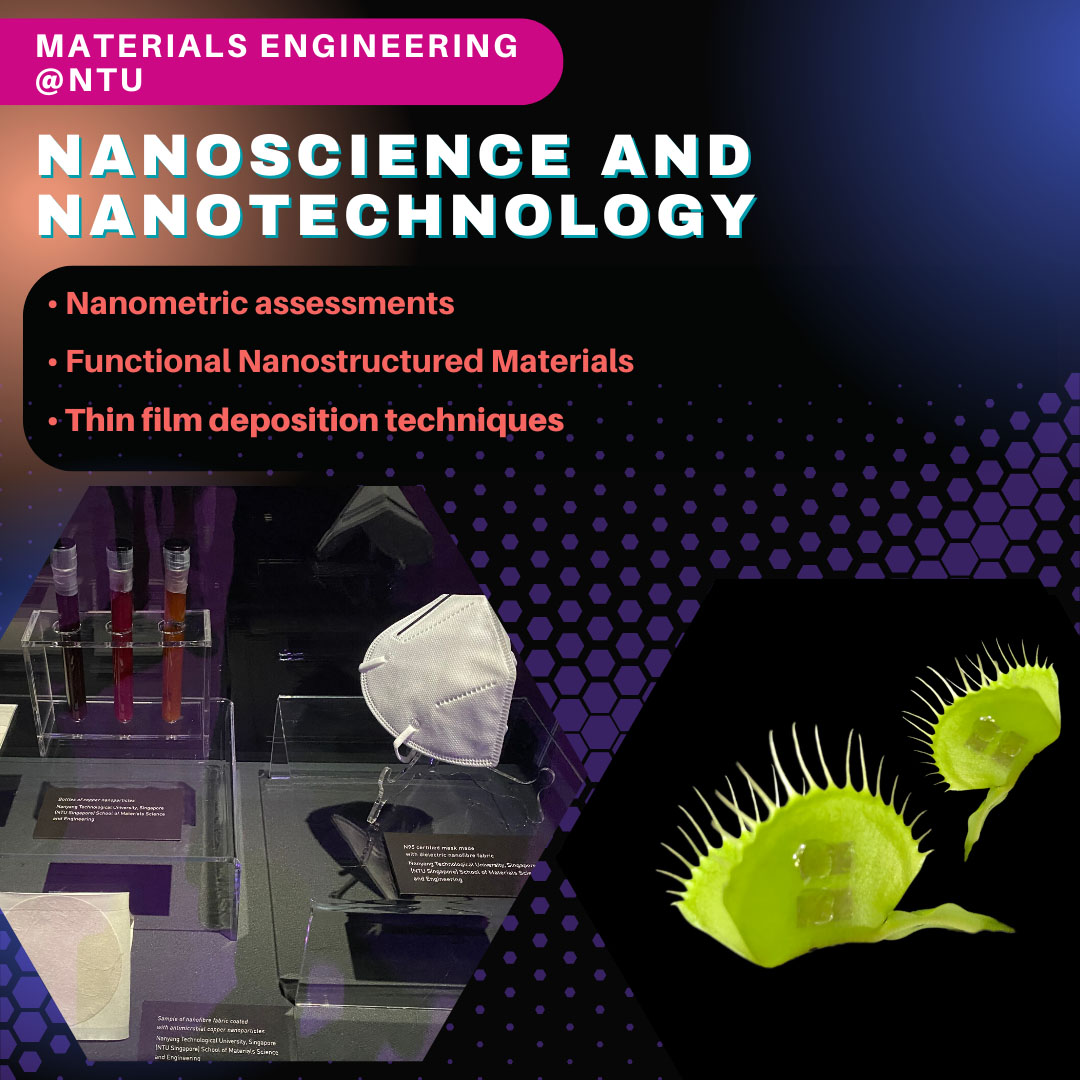 Latest Industry Growth & Career Outlook: Singapore committed S$800 million to its semiconductor RIE Flagship, strengthening capabilities in advanced packaging and photonics to support next-generation chip technologies. ( A*STAR, March 2026) | 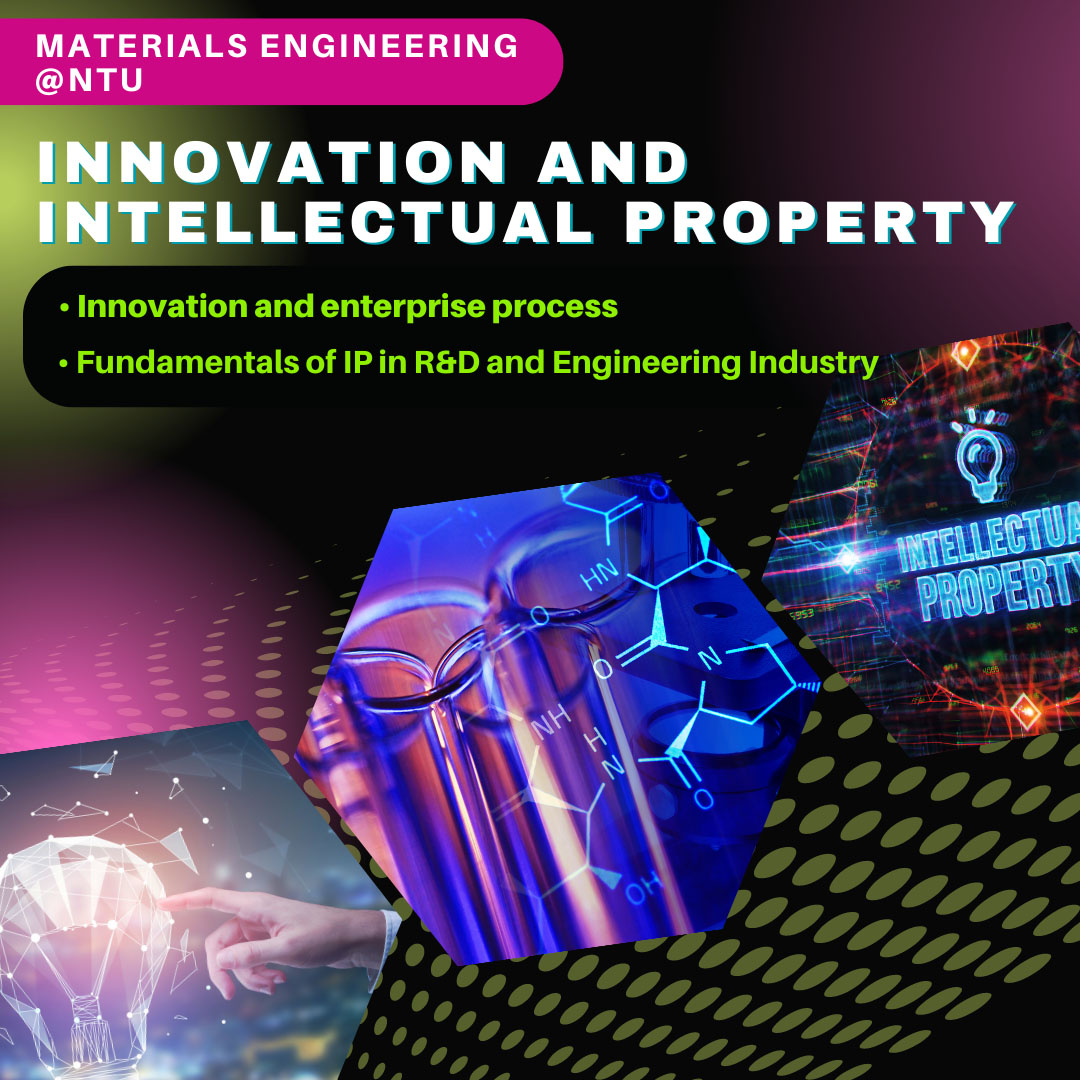 Latest Industry Growth & Career Outlook: Singapore added S$1 billion to Startup SG Equity, expanding support for early-stage and growth-stage deep tech companies to develop and scale new technologies. ( Enterprise Singapore, March 2026) |
 Latest Industry Growth & Career Outlook: Singapore’s advanced manufacturing investments and infrastructure projects sustained demand for engineering professionals across multiple fields, according to MOM’s Job Vacancies 2025 report. ( Ministry of Manpower, March 2026) | 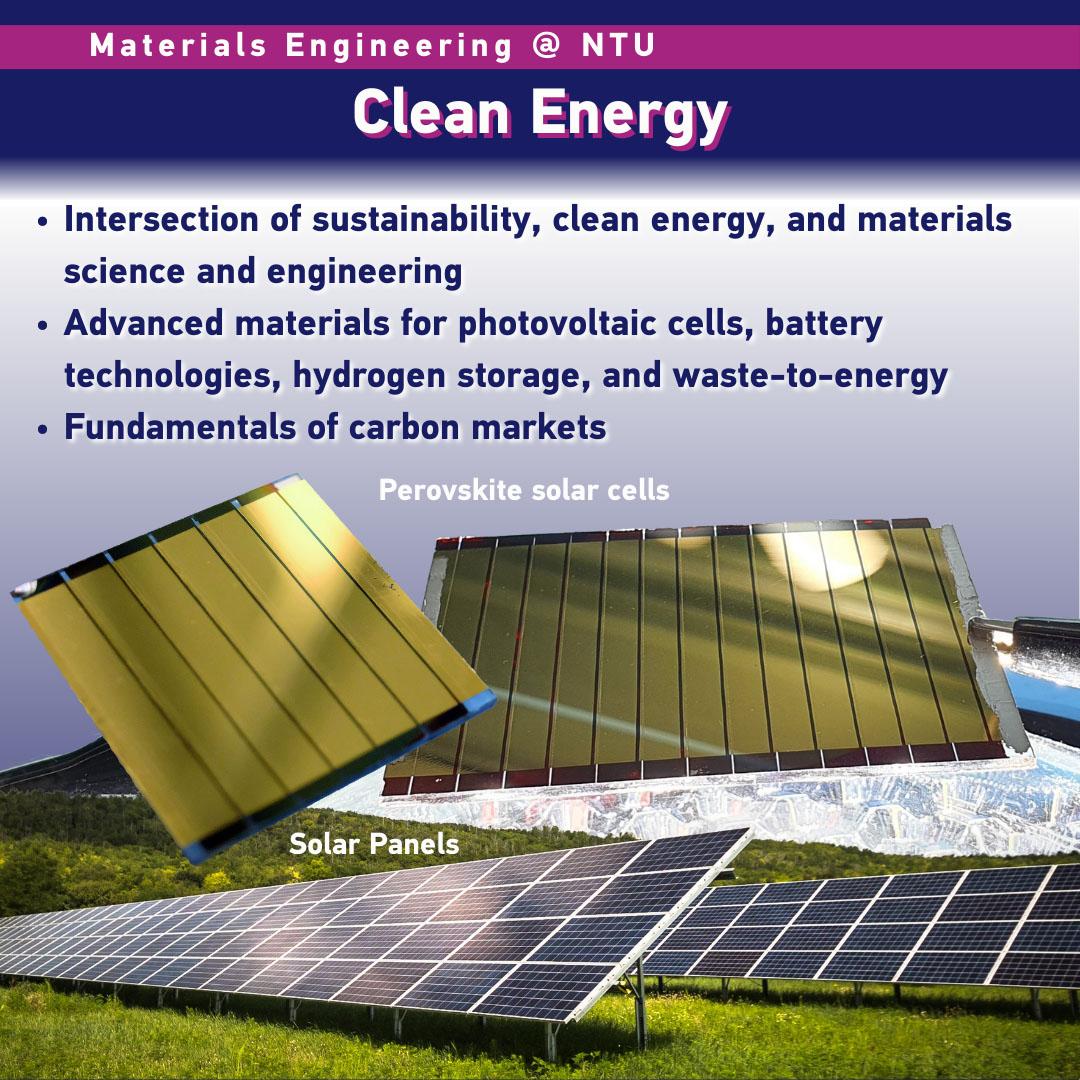 Latest Industry Growth & Career Outlook: Singapore aims to nearly triple energy-storage capacity to around 1 GWh by 2030, opening opportunities to develop and deploy storage solutions that support renewable energy and power-system reliability. ( Energy Market Authority, October 2026) |
|
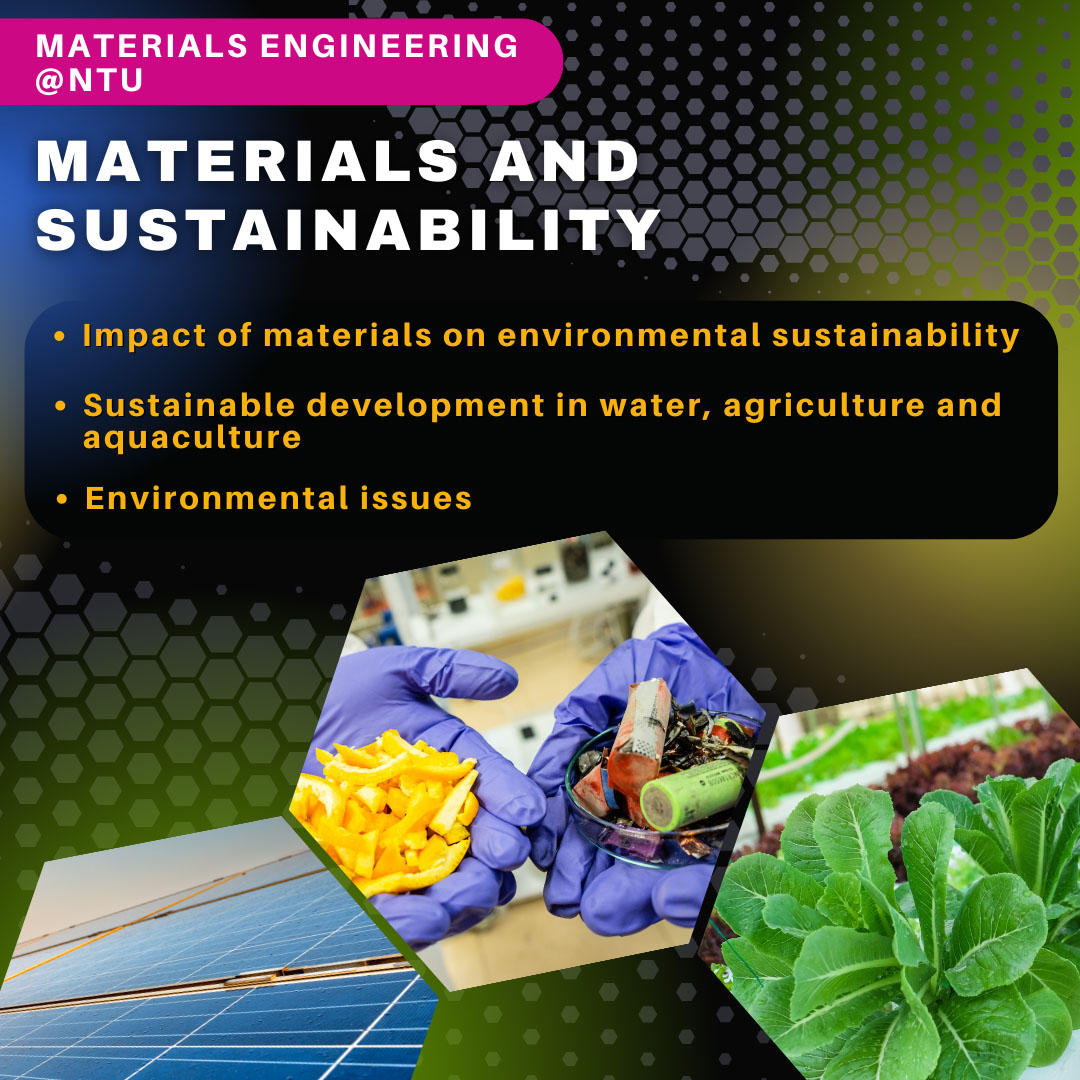 Latest Industry Growth & Career Outlook: Singapore prioritises food waste, e-waste and packaging waste for resource recovery, while PUB secured almost S$100 million in initial RIE2030 funding for water-technology research. (
Follow your passion! View various programmes in MSE
4 programme offers
Single degree
Bachelor of Engineering in Materials Engineering — with or without Specialisation
Specialisation Options (Choose 1):
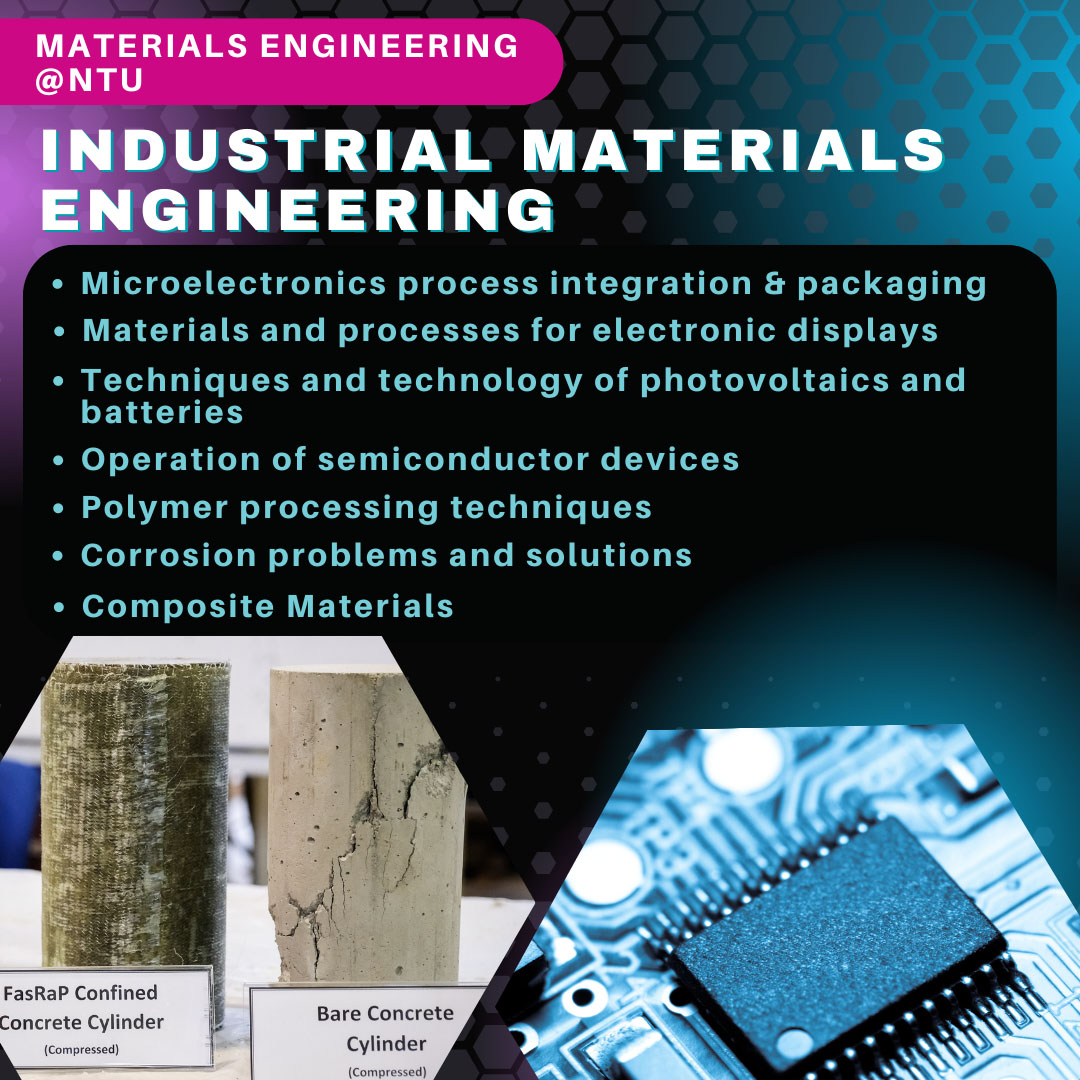
• Industrial Materials and Engineering
• Innovation and Intellectual Property
• Materials and Artificial Intelligence
Single degree with a Minor
Minor options
(Choose 1)
Single degree with a Second Major
Second Major Options (Choose 1)
MSE Chair Scholar
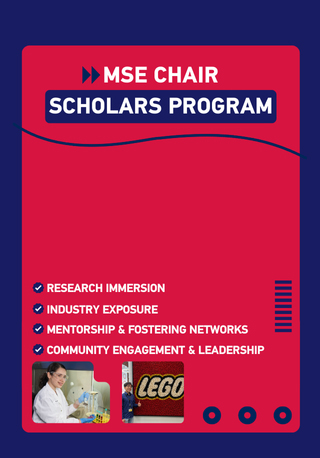
Take your ambitions further. Explore research, industry and leadership opportunities with personalised mentorship through the MSE Chair Scholars Programme.
A snapshot of your undergraduate journey
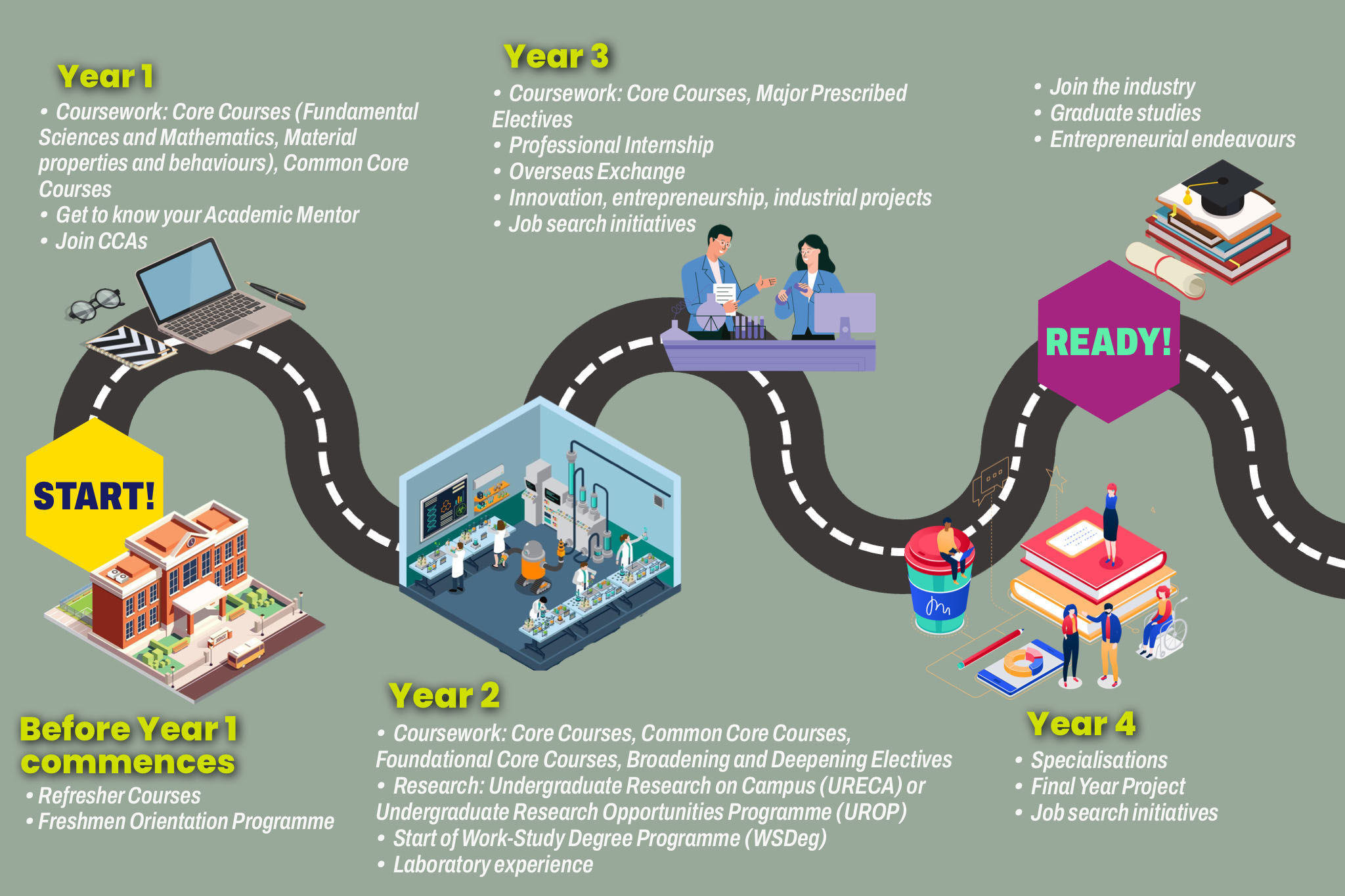
Learn more
Experiential Learning
Student Life
Student Support
Scholarship and Funding
Frequently Asked Questions and Answers for Prospective Students
General
Besides being one of the largest Materials Engineering programme in the world, Materials
Science in NTU is ranked in the top 10 by the US News Global Universities Rankings and by QS World University Rankings by Subject. Her large and diverse faculty allows students to
leverage on the expertise of our internationally-renowned professors in the field of Materials
Engineering. You will also be in the company of a larger cohort that translates to a larger
industry network because of our alumni numbers.
In addition, NTU MSE offers the Work-Study Degree programme, an opportunity to connect
you to industries as early as possible, and for a longer duration. Aside from work terms with
companies, you will be undertaking an industry-sponsored final year project.
Materials Engineering may seem less familiar because the materials that make technologies possible are often less visible than the finished products. Understanding how materials behave also requires specialised equipment and expertise. Advances such as the first commercial scanning electron microscope in 1965 were pivotal in expanding our ability to examine microscopic structures and connect them to material performance.
As Singapore’s electronics and semiconductor industries grew, materials expertise became increasingly important. NTU introduced Singapore’s first Materials Engineering degree in 1991, as the country developed into a technology and manufacturing hub.
Unlike engineering degrees focused primarily on a particular system or application, Materials Engineering examines the materials that underpin technologies across industries. You learn how a material’s structure, composition and processing determine its properties—and how to improve them for different applications. This gives you three interconnected strengths:
A broad foundation across science and engineering: Understanding materials requires chemistry, physics, engineering mathematics and, for biological applications, biology. You learn to connect these disciplines to explain material behaviour and make practical engineering decisions.
Versatility across industries: The principles of material selection, processing, performance and failure apply across chips, batteries, aircraft components and medical implants. This shared foundation helps you transfer your expertise across products and sectors as your career develops.
Relevance to emerging technologies: Technological progress often depends on overcoming material limitations—from managing heat in advanced chips to reducing battery degradation. You learn to investigate these challenges and improve the materials that enable new technologies.
Together, these strengths equip you to bridge disciplines, pursue different career pathways and adapt as technologies and industry needs evolve.
Academic Matters
Information about the curriculum is available in the MSE Website.
You may read about MSE courses and what you will learn in each class in our website.
Course summary:
https://www.ntu.edu.sg/mse/admissions/undergraduates/current-students/academic-matters/course-summary
We also recommend “Stuff Matters” by Mark Miodownik, to find out more about materials
science, which is available in the National Library.
The School’s Academic Office will send an email to all students before they begin their semester with information on bridging courses. Module summaries and suggested readings are also available on the MSE website.
Refresher courses for freshmen (Math and Physics) are conducted by College of Engineering (CoE). The lessons normally commence around July (in-person or e-learning). More information will be released by CoE at a later date.
Additionally, for MSE students, all freshmen will be enrolled on a preparatory course on topics relevant to MSE. More information on the preparatory course will be sent around mid-July
Materials Engineering with a 2nd Major in Entrepreneurship has been offered from AY2021/22.
Students may also take elective modules that focus on entrepreneurship. In addition, the Nanyang Technopreneurship Center (NTC) equips its students with the requisite knowledge and skills in entrepreneurship competence through the Overseas Entrepreneurship Programme (OEP) for undergraduates.
Students can hone their entrepreneurial mindset and skills by submitting a project in the annual Ian Ferguson Innovation Challenge. These are projects that are relevant to materials science and engineering. Teams must demonstrate creativity and provide original and practical solutions to an engineering problem. Link
https://www.ntu.edu.sg/mse/admissions/undergraduates/current-students/academic-matters/course-exemptions
Career Prospects
MSE students have the advantage of gaining a degree that gives adaptability to work in different types of industries as the programme combines all fundamental sciences and engineering.
- Aerospace / Defense
- Biotechnology / Pharmaceuticals
- Consumer Business
- Energy & Chemicals
- Electronics / Electronics Manufacturing
- Industrial Engineering
- Public Service
- Oil & Gas
- Renewables & Sustainability
- Research & Development
Admissions
For polytechnic diploma qualification, applicants can apply based on eligible diploma as listed in the NTU Admissions website. There are no additional subject requirements.
Follow Us
Follow MSE Facebook @ntumse | Follow MSE Instagram @ntu_mse | Follow MSE YouTube @ntumse1991 |
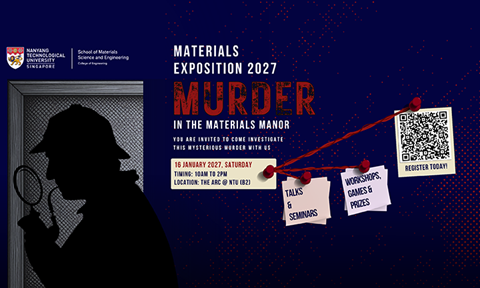
Join us for our Outreach Flagship Events
Learn more about what studying at NTU MSE is like! Email: msestudentlife@ntu.edu.sg
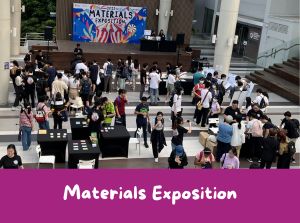 | 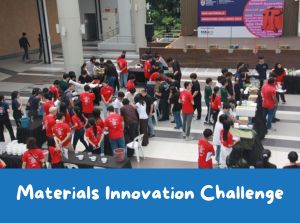 | 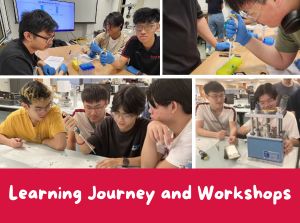 | 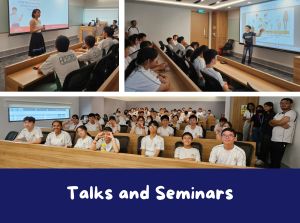 |
Discover the fascinating world of materials and how they are engineered to create human-centred solutions through talks, fun booth activities, and hands-on laboratory workshops. | Test your creativity, problem-solving skills and teamwork while learning about materials science and engineering concepts by tacking a given problem statement. | Experience the unique MSE education and peek into cool research projects through exciting hands-on laboratory activities and tours. | Explore why Materials Engineering is the right programme to propel you to your career of choice through sharing by professors, students and alumni. |
ntu learning, ntu singapore, ntu careers, singapore nanyang technological university, undergraduate degree, materials science, material science and engineering, prospective student, materials engineering, engineering schools, university students, ntu mse, students studying, ntu student, nanyang singapore, ntu undergraduate, singapore student, ntu undergraduate admission, ntu undergraduate courses, ntu engineering courses, singapore engineering, ntu job, materials engineering ntu, engineering ntu, ntu materials science, university ntu, undergraduate courses, undergraduate admission, science student, undergraduate jobs, jobs for science students, jobs for undergraduate students, engineering students, materials science and engineering jobs, materials engineering degree, Engineering, best engineering school, NTU, high paying jobs, best jobs, careers, jobs, highest salary, high demand job, top ranking, high reputation among employers, University applications, NTU application