Nanocrystals that “lock together” to form rare Kagome lattices
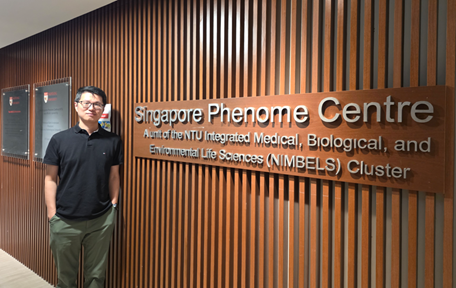
A breakthrough study led by Ni Ran from Nanyang Technological University, Singapore reveals a new way to assemble nanocrystals into highly ordered, exotic lattices by harnessing particle shape instead of chemical bonding.
A breakthrough study, led by A/Prof Ni Ran from Nanyang Technological University, Singapore (NTU Singapore) and international collaborators have discovered a new mechanism to assemble nanocrystals into highly ordered, exotic lattice structures by exploiting particle shape rather than chemical bonding.
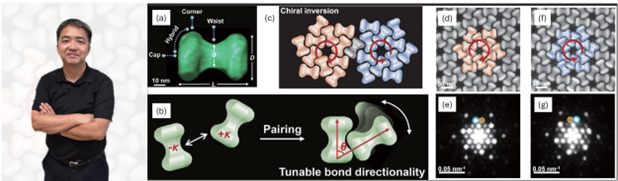
In a study published in Science, the team showed that non-convex, dumbbell-shaped nanocrystals can spontaneously “lock” into intricate two-dimensional superlattices—including the elusive Kagome lattice—through a mechanism known as curvature-guided depletion interactions.
Unlike conventional nanocrystal assembly, which typically relies on spherical or faceted particles, the researchers engineered nanocrystals with a concave waist and convex ends. This geometry allows neighboring particles to recognize each other through complementary curvature, much like a lock-and-key fit. As the particles assemble, this geometric matching enforces highly directional bonding, enabling structures that are difficult or impossible to achieve using traditional building blocks.
One of the most striking outcomes is the formation of large-area, chiral Kagome lattices, which are open, low-density structures known for their unusual symmetry and potential applications in photonics, mechanics, and topological materials. Such lattices have long been sought after but are notoriously challenging to stabilize at the nanoscale.
Crucially, theoretical modelling and simulations led by NTU revealed why these open structures can form and persist. The simulations showed that depletion interactions, induced by free ligands in solution, selectively stabilize curvature-matched particle arrangements and make the Kagome lattice thermodynamically favourable despite its low packing density.
“This work demonstrates that particle curvature itself can be used as a powerful design parameter,” said Prof. Ni. “By programming shape rather than surface chemistry, we open a new route to creating complex nanomaterials with tunable symmetry and functionality.”
The findings establish curvature-guided self-assembly as a general design principle for nanomaterials and point toward future strategies for constructing multicomponent and low-density architectures with tailored optical and mechanical properties.
Click here to read the full publication.