
Feeding the crowd: Rice Rationing Policy in Hong Kong (1945-1954)
Attend in-person seminar at SHHK Conference Room: Register Here
Attend virtually on Zoom: Click Here
Food provisioning systems provide a valuable lens through which to examine state governance, social stability, and imperial administration. In the case of early post-war Hong Kong, which was undergoing rehabilitation while confronting a rapidly transforming Asian geopolitical landscape, food provisioning served as an essential instrument for stabilizing Hong Kong society.
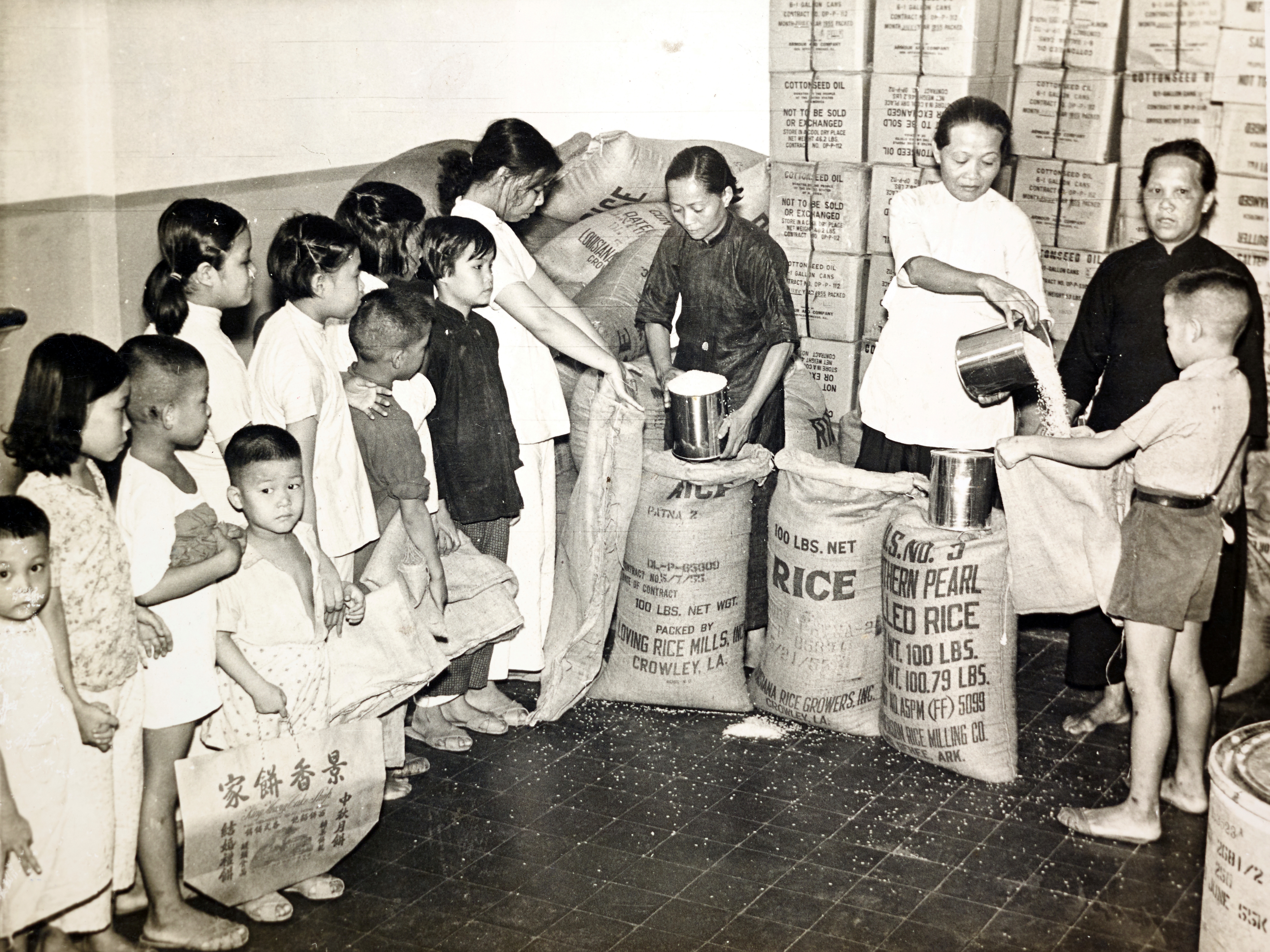
Rice, being a fundamental necessity for the majority Chinese community, played a crucial role in Hong Kong government's food provisioning policies. The Hong Kong government regulated the importation and distribution of rice through a rationing system between 1945 and 1954 embedded within imperial rice supply networks. In managing the rice supply, the government navigated unpredictable regional geopolitics, attempted to align with the overall policy direction of the British government, and adjusted to citizens' tastes and preferences. The government's guiding principle was to maintain a stable rice supply while minimizing its financial burden.
This talk examines how food provisioning policies performed as a stabilizing force in local society and argues that the Hong Kong government possessed a certain degree of operational space and flexibility. By further situating Hong Kong within wider "Far Eastern" rice procurement and distribution networks, this talk also explores the regional management of British colonial interests in Cold War Asia.
Ho Wan HONG is a Research Associate in the History Department at Nanyang Technological University. His research interests focus on the history of food provisioning in Hong Kong and the British Empire in Asia, particularly through the lens of agricultural policy and food provisioning networks.