Lee Kong Chian Distinguished Professor Public Lecture by Prof Thomas Südhof
Written by Yang Haoning | Research Fellow, Lee Kong Chian School of Medicine, NTU
On 30 October 2026, the Institute of Advanced Studies (IAS) at Nanyang Technological University (NTU) hosted the Lee Kong Chian Distinguished Professor Public Lecture by Prof Thomas Südhof (Nobel Prize in Physiology or Medicine 2013), Avram Goldstein Professor at Stanford University School of Medicine and investigator of the Howard Hughes Medical Institute. Prof Südhof shared his team's recent work on how the brain builds and maintains its synaptic connections. The lecture was co-organised with the Lee Kong Chian School of Medicine and sponsored by the Lee Foundation.
Synapses connect neurons into functional circuits, allowing information to pass from one neuron to another. Despite years of research, scientists are still working to understand how synapses form and how they are maintained. Prof Südhof approaches these questions by studying adhesion molecules, which turn out to be far more than the "glue" holding a synapse together. He presented an elegant demonstration of molecular neuroscience, taking a synapse apart piece by piece, testing each part of the machinery, and correcting textbook models along the way.
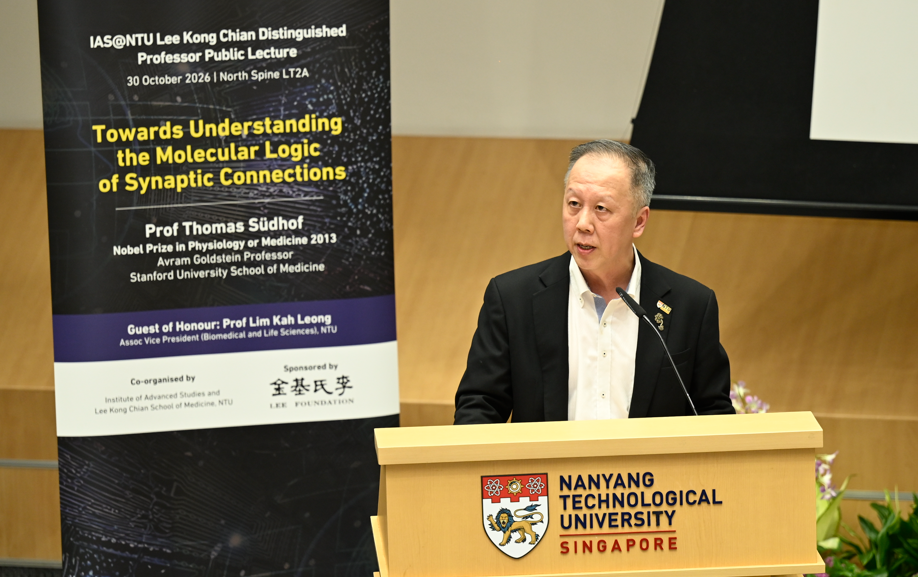 Opening address by Prof Lim Kah Leong, Associate Vice President (Biomedical and Life Sciences).
In the opening address, Prof Lim Kah Leong, Associate Vice President (Biomedical & Life Sciences), described Prof Südhof as one of his heroes in neuroscience. He highlighted what rests on these tiny junctions: our thoughts, memory, learning, behaviour and even our consciousness. He added that this was the third time he had hosted a talk by Prof Südhof, and that he was particularly glad to welcome him this time to NTU, his home ground. Prof Südhof opened with a warning of his own. The talk would be heavily molecular and detailed, he said. "Thank you for wanting to listen to me. I hope you won't regret it." The room laughed.
The Molecular Code that Wires the Brain
Prof Südhof began with the one idea every neuroscientist agrees on: the brain is best understood as a neuronal circuit, connected through synapses, with information processed at each node before being passed on. Yet each type of synapse possesses very different properties, which makes the output of a circuit highly unpredictable.
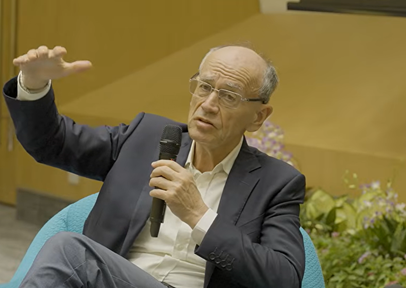
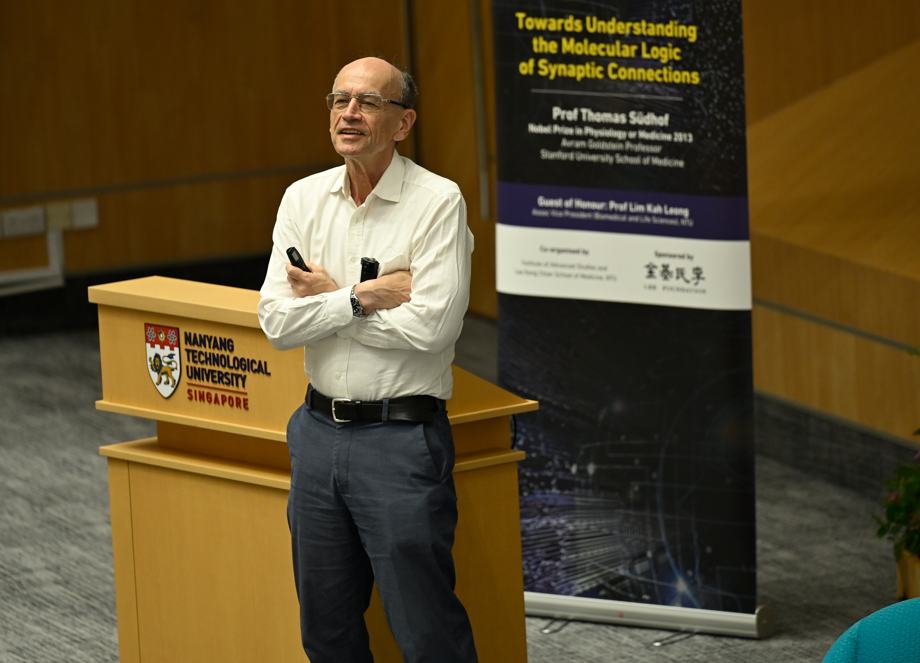 Prof Südhof explained how synapses continually renewed themselves while maintaining stable brain function and memory.
He then corrected a misconception that many may have held. Synapses are not formed once during development and left unchanged. Pointing to live brain imaging studies of the animal hippocampus, he explained that while overall synapse density stays constant over time, individual synapses are continually dismantled and rebuilt. More than a fifth of them disappear every two days and are replaced. Put differently, the circuit a person uses to remember this lecture will have been substantially rebuilt by the time they recall it next month. Yet the brain maintains normal function throughout. Understanding the mechanisms behind this renewal is essential for addressing disorders linked to synaptic dysfunction, such as schizophrenia and Alzheimer's disease. This led to his central proposition: synapses are organised by trans-synaptic adhesion molecules that act as signalling devices.
Adhesion Molecules Participate in Neuronal Signalling
Adhesion molecules sit on the membranes of the presynaptic and postsynaptic neuron, the ones sending and receiving the signal, respectively. These molecules reach across the gap at the synapse, some twenty nanometres wide, and bind to each other. They are also, as the talk went on to show, far more than passive glue.
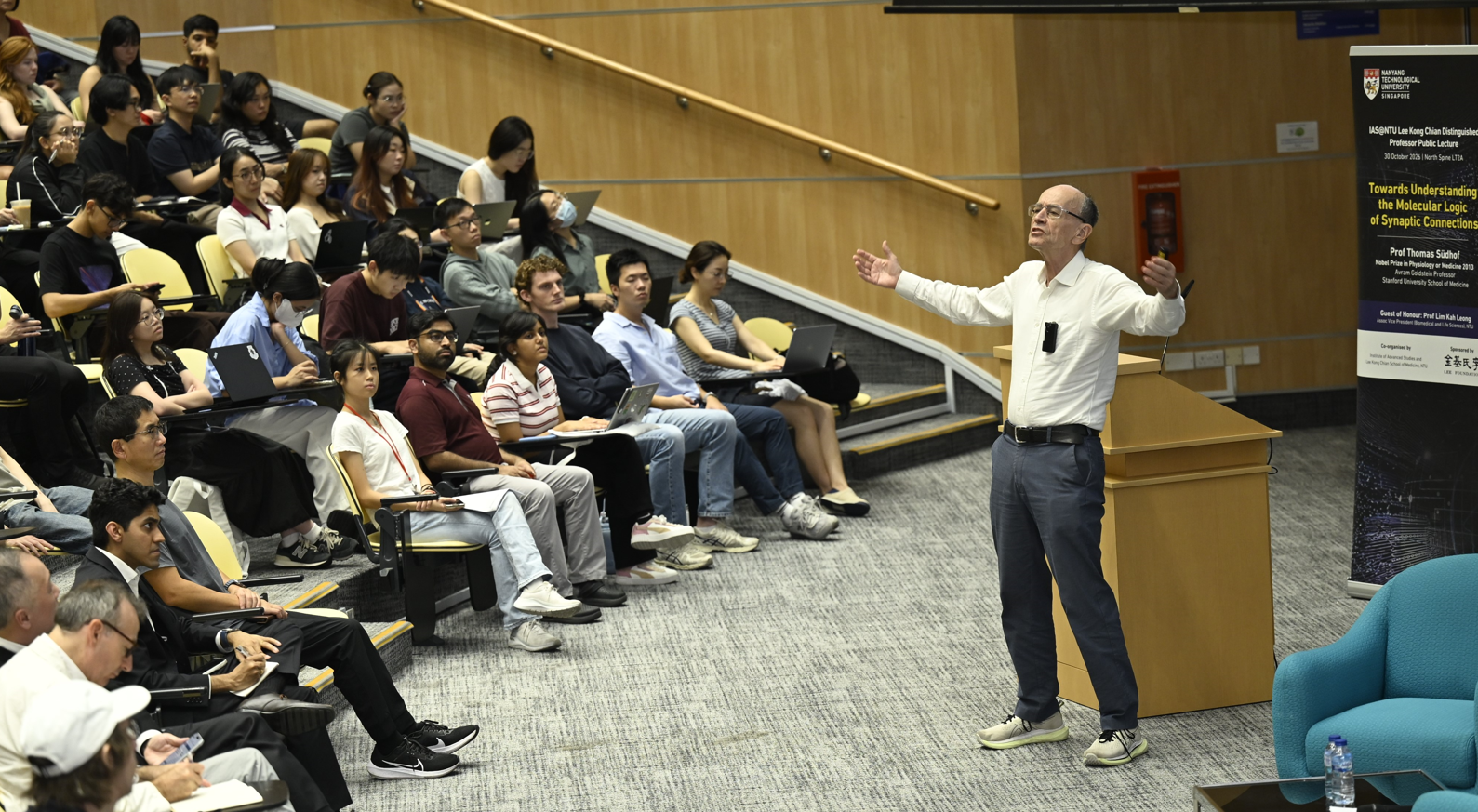 Prof Südhof challenged conventional understanding of synapse formation through his groundbreaking research on latrophilins.
Prof Südhof focused on latrophilins, a postsynaptic family of adhesion molecules that interacts with the presynaptic partners teneurins and FLRTs. Using electrophysiology and advanced microscopy, he challenged the field's understanding on two counts. First, a latrophilin must bind both teneurin and FLRT before a synapse will form, which is unusual for a receptor of its kind. Second, the textbook mechanism of activation does not hold. The textbook proposes that latrophilin switches itself on once its extracellular end is cleaved and pulled away by mechanical force. What he found is that the cleavage happens long before any partner arrives, and the two pieces stay together. What teneurins and FLRTs do is gather the receptors into dense patches. This clustering raises the level of cyclic AMP, a chemical messenger inside the cell, and draws in the scaffolding proteins that organise the postsynaptic density. A new synapse then forms. An event outside the cell both starts a chemical signal and assembles the structure that signal is meant to build.
A Gene Read in Alternative Ways
A minor difference in reagents can quietly determine what a whole field believes. For years, his laboratory and others had reported different yet equally convincing results about the signal latrophilin-3 sends into the cell. It turned out that they had not been working on the same protein. The latrophilin-3 gene undergoes alternative splicing, a mechanism that produces variant forms of a protein from a single gene. The gene can be read in two ways, ending in one of two tails, and only one of those versions triggers the signalling event. Most laboratories had been using the shorter version. His team had used the longer one, he admitted, by "pure luck".
That difference mattered a great deal. Deleting the longer tail alone, leaving the protein intact and present at normal levels, impairs synapse formation as severely as removing the entire gene. Neurons also choose between the two versions themselves, favouring the synapse-forming one when activity rises. This means that cellular activity can call for new synapses simply by changing how a gene is read. Had his team followed convention, the effect might have gone unnoticed for years.
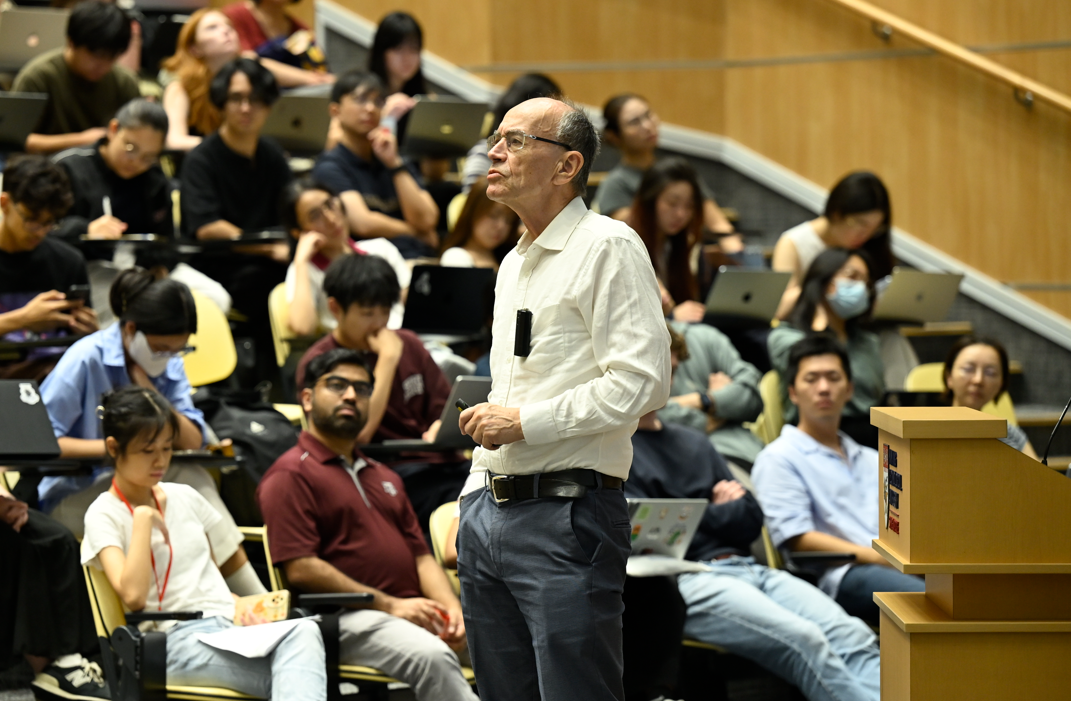 Experimental findings challenged conventional understanding of synapse formation and highlighted the importance of rigorous scientific testing.
Teneurins: Challenging the Model
Teneurins were thought to exist on both sides of the synapse, binding each other to maintain synapses, a model supported by many studies. The difficulty, Prof Südhof pointed out, is that none of those papers had manipulated one side of the synapse and then the other to see whether the effects matched.
His laboratory did. Deleting teneurins from the postsynaptic neurons left synaptic responses completely unaffected, while deleting them from the presynaptic neurons severely impaired synapse formation. Teneurins, at least at these synapses, work only from the presynaptic side. He went further and removed the parts of teneurins thought to mediate the interaction, which should have caused significant problems if the textbook model were true. The cells, however, worked perfectly well without them.
The recurring theme of the lecture brought an important lesson for students. Scientific conclusions must be rigorously tested, as they often depend on experimental design. "This happens in science all the time, conclusions that contradict each other. They all depend on approaches… we always depend on the approaches we use to address the question."
Building a Synaptic Junction in a Test Tube
The last part of the lecture explored whether understanding the pieces is enough to build one. Both sides of a synapse are backed by a dense cluster of scaffolding proteins which, surprisingly, behave like droplets, gathering through a process called phase separation. Purified in a tube, the presynaptic and postsynaptic scaffolds form their own droplets without merging. When latrophilin and teneurin are added, each joins its corresponding droplet. The two kinds of droplet line up and attach, showing exactly what the two halves of a synapse do in the brain.
The refusal to mix is the significant part. Droplet behaviour is often pictured as oil separating from water, he said, that is not the case here. Here, the biochemistry keeps a presynaptic droplet from fusing with a postsynaptic one while holding the two in contact. He was equally careful about what had been built. It’s a synaptic junction complex, he said, not a full synapse. Still, for a field that has spent decades describing synapses, assembling one from purified parts is a different kind of claim to understanding.
Questions from the Floor
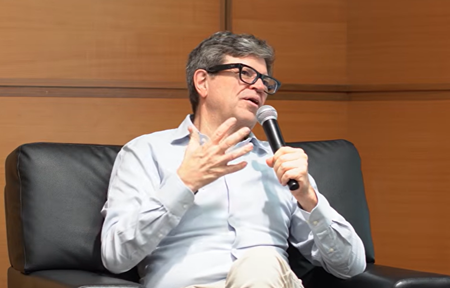
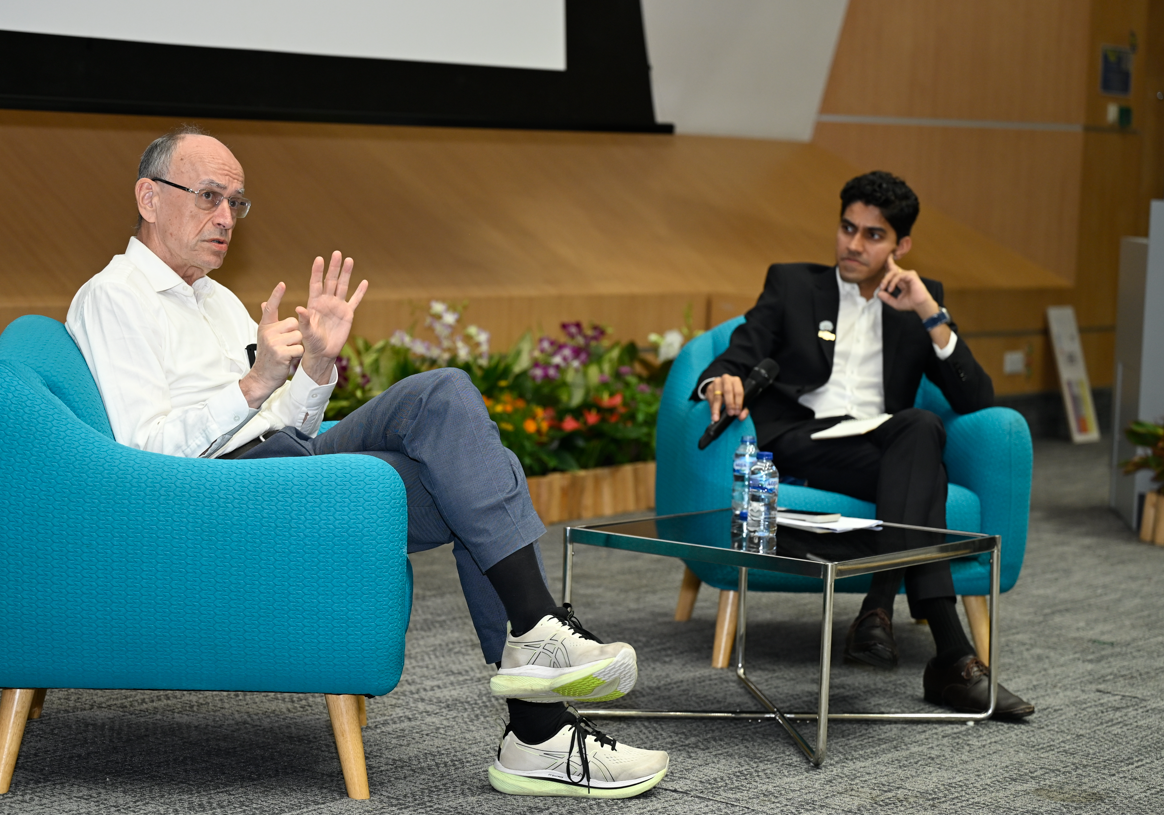 An insightful Q&A exploring emerging technologies and neuroscience research.
The Q&A was moderated by Nanyang Assistant Professor Aditya Nair (LKCMedicine, NTU), who asked how the increasingly siloed subfields of neuroscience, from molecular to computational, might be brought together by emerging technologies. Prof Südhof argued that the field already has tools it has not made full use of. Single-cell RNA sequencing, for example, has largely been used to classify cells into types. His own finding on activity and splicing came from re-analysing published data in a direction no one had examined. "If you don't look, you wouldn't find it."
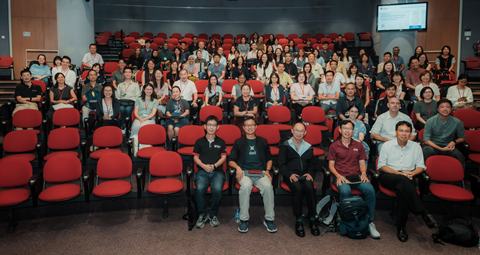
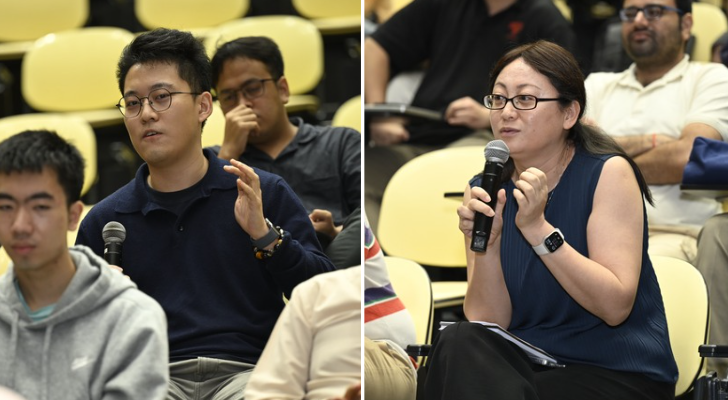 Audience members explored how synaptic condensates contributed to stability, regulation and neural activity.
The audience then returned to the mechanisms. Asked whether the condensates give a synapse physical stability, he suggested the scaffolds are less rigid than the older textbook picture but more stable than they would be without these interactions, their shape in a living cell set by biological regulation rather than by the test tube. He agreed that the missing membrane in the reconstitution was a real limitation. On why synapse formation reinforces activity when other biological systems resist it, he favoured sparse coding: the brain does not become active all at once, and such changes affect only a few connections at a time.
Concluding Remarks
The molecules at the centre of Prof Südhof's talk are among those repeatedly implicated in neurodevelopmental and neurodegenerative disorders. The case he made is clear, that we should understand how a synapse is built before attempting to repair one. For anyone working on health and ageing, it was a timely reminder of what basic mechanism is for.
He closed with an elegant analogy that stayed with the audience. A synapse, he said, is like an orchestra. Some players are partly interchangeable and the loss of one would go unnoticed, like ten first violins. Others are irreplaceable, like the wind instruments. Together they make the music, and the task his field has set itself is an unusual one. "What we're trying to do, in some ways, is we're trying to figure out the score from listening to the music."
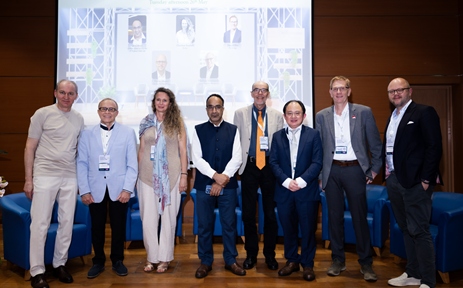
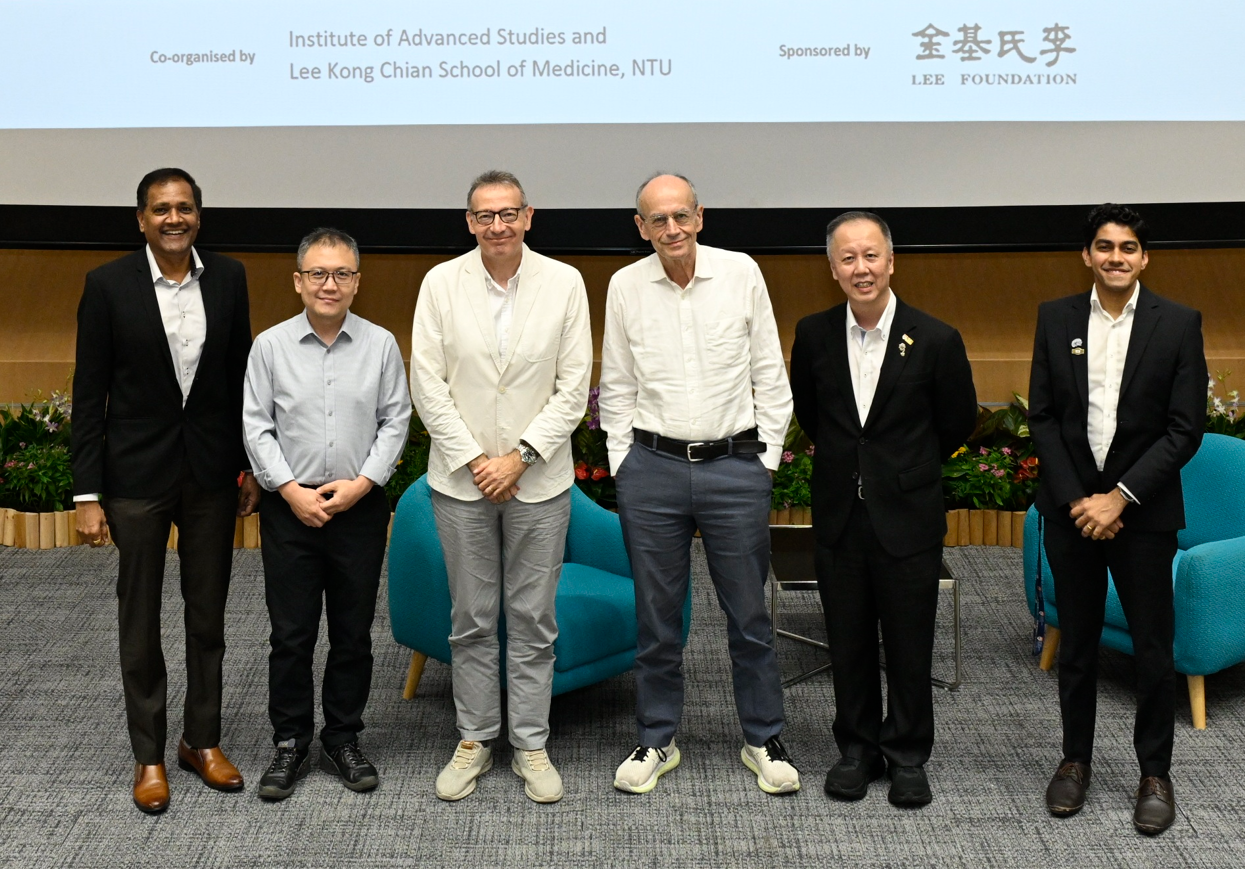 From left to right: Prof Kanaga Sabapathy (SBS, NTU), Prof Duan Hongwei (Acting Chair CCEB, NTU),
Prof Rafael Fernandez-Chacon (University of Seville), Prof Thomas Südhof, Prof Lim Kah Leong (Associate Vice President (Biomedical and Life Sciences), NTU) and Asst Prof Aditya Nair (Lee Kong Chian School of Medicine, NTU)
"It was very inspiring to be able to attend a lecture by this Nobel Prize winner" - Radhakrishnan Sivani (PhD student, LKC School of Medicine)
"The professor's philosophy about research outcomes and findings are insightful." - Aung Aung Phyo Wai (PhD student, CCDS)
"The technical details were very interesting. I enjoyed learning about synaptic connections."- PhD student, MAE
"The professor took the time to explain concepts even for those in attendance with a non-neurology background." - Research Fellow, SBS
"I enjoyed the academic atmosphere, and it was inspiring to listen to a world-class scientist." - Zhang Jing (Masters student, Project Management)