
TWEAKing Genome Regulation in Breast Cancer to Discover New Drivers of Metastasis | IAS Discovery Science Seminar
About the talk
Breast cancer remains the most prevalent cancer and leading cause of cancer mortality among women worldwide. Triple-negative breast cancer (TNBC) is the most aggressive subtype of breast cancer that poses unique challenges due to its early onset, high metastasis rate and resistance to standard therapies. In this study, we used multi-omics approaches to understand how tumour microenvironment signalling can regulate the genome of TNBCs to induce the expression of pro-metastatic genes.
We uncover a major pathway, TWEAK/Fn14 signalling, that is implicated in the pathogenesis of this breast cancer subtype and identify novel regulatory DNA regions mediating the expression of pro-metastatic genes. Our study reveals the mechanistic link between TWEAK/Fn14 signalling and TNBC metastasis, laying the foundation for discovering new cancer vulnerabilities that can be developed for the future targeted therapy of TNBC patients.
Our distinguished speaker
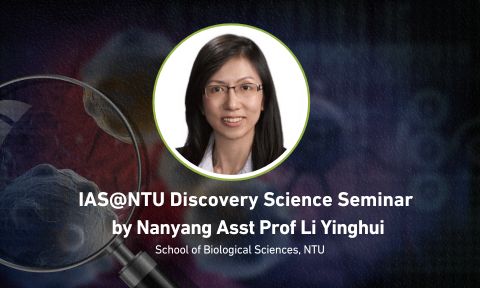
Asst Prof Yinghui Li leads the Transcription and Chromatin Regulation in Cancer Laboratory. Her lab’s research is focused on understanding how transcription and chromatin become dysregulated during cancer progression. Recent studies by her group have uncovered the mechanisms by which pro-inflammatory signalling pathways including TWEAK/Fn14 and non-canonical NF-κB alter the cancer cell epigenome and transcriptome to drive cancer progression. She is currently a member of the EMBO Global Investigator Network (GIN).
Co-Organisers
IAS@NTU and the Graduate Students' Clubs of CCEB and SBS.