Fishing for Lithium in Seawater Brine
Scientists create polymer ‘sponges’ that can adsorb lithium ions from desalination wastewater
🎓 Find out more about CCEB's postgraduate programmes here.
Summary:
- Researchers at NTU CCEB and NEWRI have developed polymers that can adsorb lithium ions selectively from other seawater brine constituents such as sodium and magnesium ions
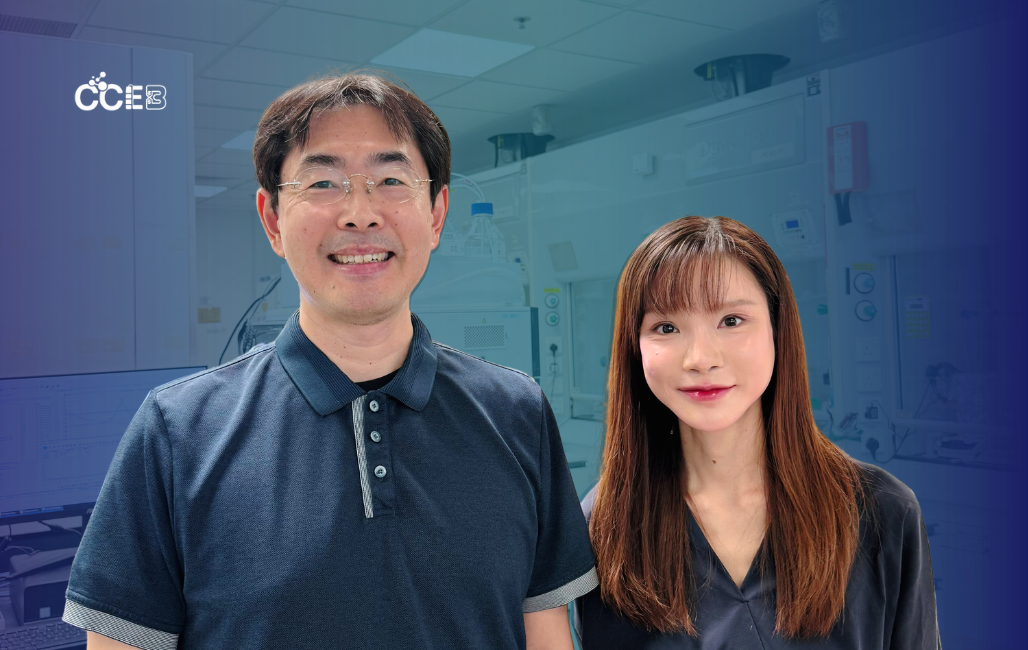
Prof. Atsushi Goto and Dr. Hong Tho Le from NTU’s School of Chemistry, Chemical Engineering and Biotechnology (CCEB)
Mining for critical minerals
Lithium powers our smartphones, laptops, and electric vehicles. During seawater reverse osmosis (SWRO) desalination, the resulting brine contains roughly twice the concentration of lithium as raw seawater and is generated in massive volumes. Harvesting lithium ions from this stream may help to offset desalination operating expenses. In Singapore, where SWRO desalination is expected to meet up to 30% of water demand by 2060, this brine stream can serve as a sustainable source for lithium recovery.
In seawater brine, the trace amount of lithium is overwhelmed by other ions such as sodium and magnesium. To overcome this, the researchers developed new porous polymer materials that can effectively and selectively adsorb lithium ions from other ions.
Highly selective polymers for lithium ions
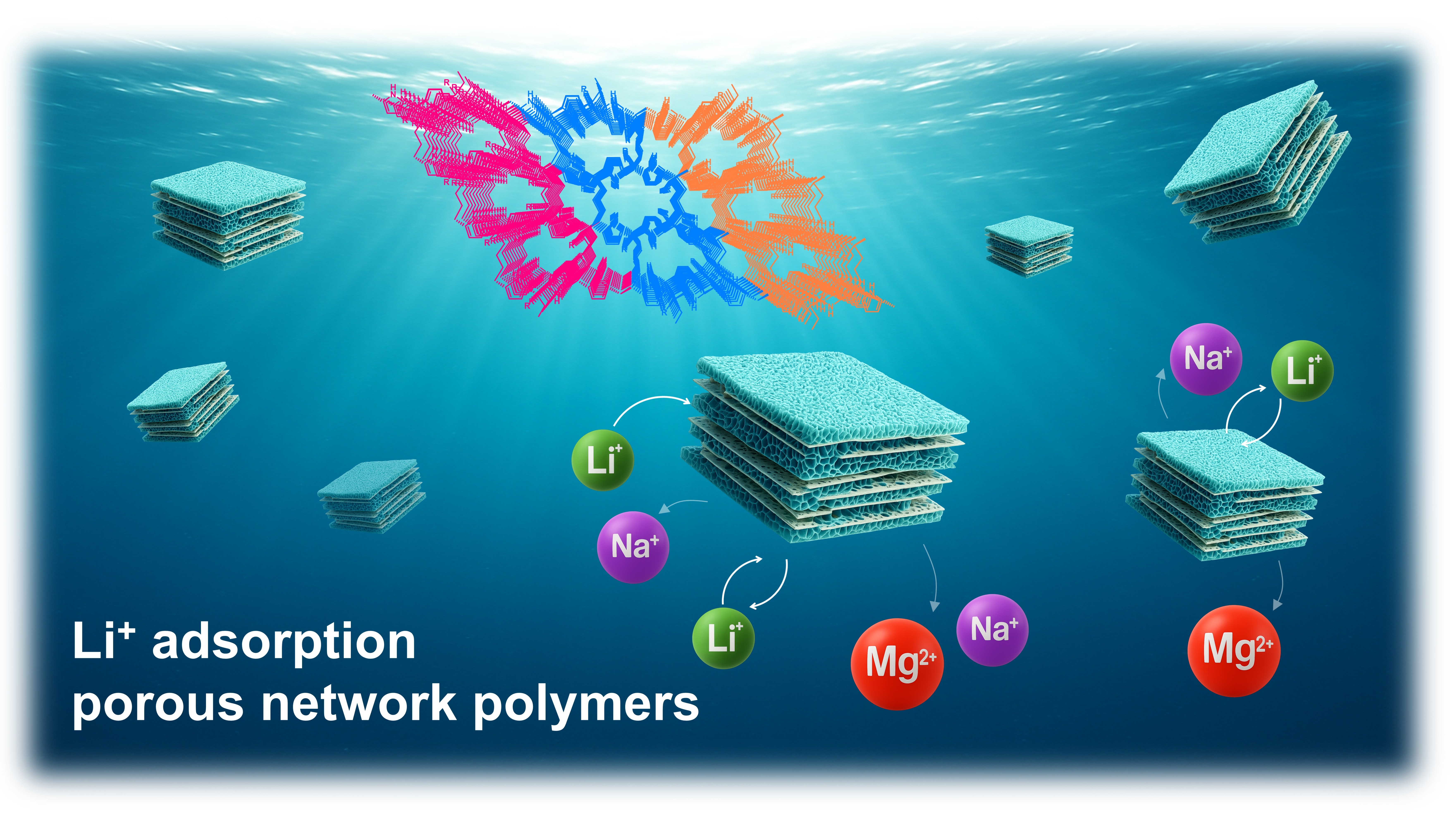
The porous network polymers are composed of layered sheets with tailored nanopores and pyrrole binding sites that selectively capture lithium ions, whereas competitor ions such as sodium and magnesium do not get adsorbed onto these sheets as much.
Prof. Atsushi Goto and Dr. Hong Tho Le from NTU’s School of Chemistry, Chemical Engineering and Biotechnology (CCEB) and Prof. Rong Wang from the Nanyang Environment and Water Research Institute (NEWRI) synthesized solid-phase porous network polymers that are highly efficient and selective in adsorbing lithium ions from model SWRO brine.
In a study published in The Journal of the American Chemical Society, the researchers used halogen-bonded “helper” linker molecules to align the monomers into orderly solid cocrystals, bringing the adjacent vinyl groups into close physical contact. Exposing this solid assembly to UV light triggered radical solid-phase polymerization. Once the helper molecules were washed away, a robust, porous polymer network was obtained with nanosized pores and pyrrole binding sites tailored for adsorbing lithium ions. When tested in simulated SWRO brine, researchers found that 1 gram of this porous sponge soaked up to 21 milligrams of lithium (the highest adsorption capacity on record for SWRO brine adsorbents). This high selectivity means that researchers can preferentially extract lithium from desalination waste.
In addition, these polymers are highly resistant to degradation in harsh conditions such as strong acids, bases, and temperatures up to 238 °C. This durability enables the polymer to be recycled for multiple uses.
| So how do lithium ions get trapped? Lithium, on one hand, is small enough (ionic diameter of 0.31 nm) to fit into the polymeric nanopores (~1–2 nm) and interlayer spaces. On the other hand, the electron-donating nitrogen atom in the pyrrole ring can form strong coordinate bonds with Li+. The higher charge density of the smaller lithium ion enhances the strength of this coordination bond compared to larger sodium and magnesium ions. |
What is next?
Moving forward, researchers hope to further study efficient desorption (collection) of lithium ions from the polymer network once they have been adsorbed by the polymer network. By embedding these lithium-trapping polymers directly into separation membranes, brine can flow through while lithium is trapped selectively for practical cumulative recovery. Apart from seawater brine extraction, the innovative design and rugged durability of these porous network polymers may open broader opportunities in environmental and separation applications.
💬 Stay connected! Follow CCEB on LinkedIn, Instagram, and Facebook to keep up with our latest research highlights, student stories, and campus happenings.
Story by Kabir Raj M Kimura Singh, and Sumita Thiagarajan, NTU CCEB