Shining a Light on Next-Generation Drug Discovery
Photoredox Method Unlocks Hidden Chemical Space in Pyridines
Summary:
- Pyridines are foundational scaffolds in drug discovery, but their natural chemical properties severely limit how new drugs can be designed.
- Researchers from NTU CCEB have developed an innovative light-driven technique to unlock previously inaccessible regions of pyridine chemical space, providing medicinal chemists with a new strategy for rapidly exploring molecular analogues.
The Power of Pyridines
Pyridines are among the most important heterocyclic scaffolds in medicinal chemistry and are found in numerous pharmaceuticals. Their unique electronic properties and chemical versatility make them valuable building blocks for the development of therapeutic molecules. By adding different functional groups to the pyridine base, researchers can produce compounds with powerful therapeutic properties, including:
- Anti-microbial and anti-fungal agents
- Anti-malarial treatments
- Anti-tumour therapies
- Anti-diabetic medications
While this compound is a highly versatile starting material, it has significant synthetic limitations. Due to the ring's inherent electronic properties, traditional chemical reactions naturally direct new functional groups to the ortho (C2) or para (C4) positions.
Adding an aryl group – an aromatic hydrocarbon – to the meta (C3 or C5) position has historically been a major synthetic bottleneck. This "electronic bias" effectively locks away a highly desirable region of chemical space, limiting the development of new, potentially life-saving drugs.
Editing Pyridines with Light
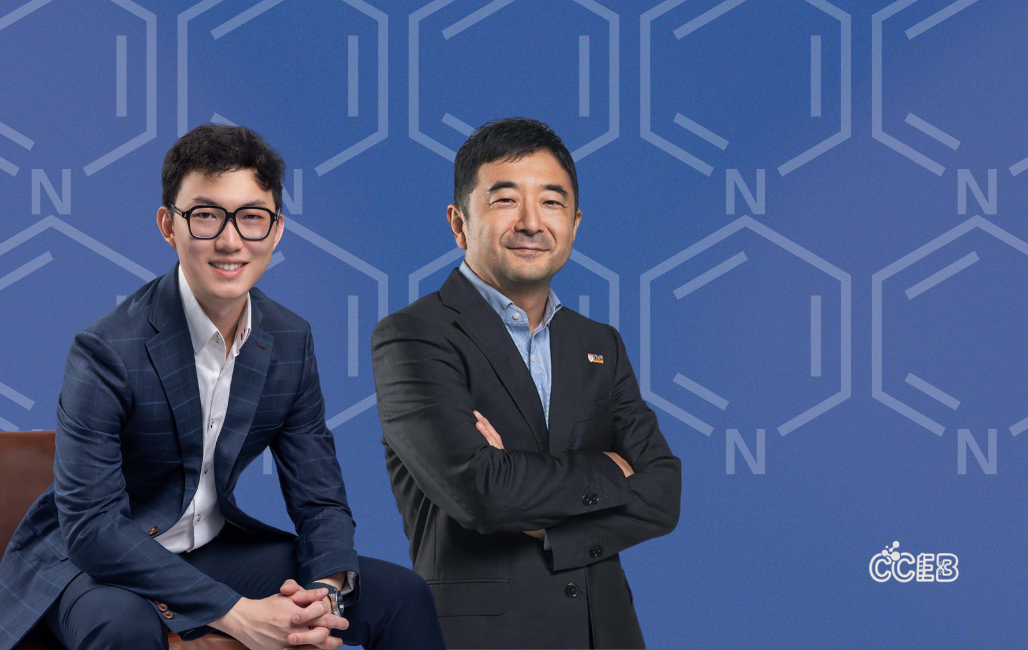
To overcome this limitation, lead author Dr. Eugene Yew Kun Tan, under the guidance of Prof. Shunsuke Chiba and their NTU CCEB team, developed a novel method to shift an aryl group directly to the elusive meta position, with their findings published in Nature Synthesis. Their technique utilizes photoredox catalysis to achieve what they call "peripheral editing" or "aryl group transposition." Rather than constructing a new molecule from scratch or installing a new functional group, the team's strategy repositions an existing aryl group around the pyridine ring through a concept they term "peripheral editing". This provides medicinal chemists with a direct way to access previously difficult-to-obtain molecular architectures through molecular editing rather than conventional synthesis.
Here is a breakdown of how the light-driven mechanism works:
- Temporary Dearomatization: Pyridines are inherently tough to alter because their stable, aromatic structures create a strong electronic bias. The team overcomes this by using light (photocatalysis) to temporarily break this aromatic stability—a process called dearomatization.
- Creation of Radical Intermediates: Through a single-electron transfer driven by an organic photocatalyst and blue light, they generate a highly active intermediate known as an azacyclohexadienyl radical.
- 1,2-Aryl Migration: Once the pyridine ring is temporarily converted into this reactive state, the pre-installed aryl group migrates to the adjacent carbon atom. For example, it transposes from the C4 (para) position to the C5 (meta) position.
- Rearomatization: After the aryl group has "danced" over to the desired meta position the molecule regains its stable aromatic structure, completing the transformation.
Unlike traditional metal-catalyzed methods that rely on expensive transition metals (like palladium) and are restricted by chemical biases to the ortho or para positions, this innovative photoredox approach elegantly bypasses conventional C-H functionalization limits to directly access the notoriously difficult meta position. By allowing chemists to "cut and paste" an existing aryl group to a previously inaccessible position, this strategy provides a direct alternative to de novo synthesis for selected pyridine architectures. This offers an efficient way to edit molecular scaffolds and rapidly access valuable analogues for medicinal chemistry. By using light to temporarily trick the molecule into dropping its natural defenses, the researchers have created a powerful "cut and paste" tool for drug designers.
Opening Up New Possibilities in Drug Design
This breakthrough provides medicinal chemists with a powerful new strategy for accessing valuable pyridine architectures that have traditionally been difficult to synthesize. Meta-substituted pyridines are important structural motifs found in numerous approved medicines, highlighting the value of methods that expand access to these challenging chemical structures. Examples include:
- Etoricoxib: A non-steroidal anti-inflammatory drug (NSAID) used to treat joint pain, inflammation, and acute gout.
- Imatinib: A targeted anti-cancer therapy used to treat chronic myeloid leukemia (CML) and gastrointestinal stromal tumours (GIST).
By providing a more direct route to these valuable molecular architectures, this research expands the synthetic toolbox available to medicinal chemists for exploring new drug candidates and optimizing existing therapeutic scaffolds. NTU CCEB is proud to contribute to advances in synthetic chemistry that support future innovation in drug discovery and development.
Funding & Acknowledgements
Financial support for this breakthrough research was provided by Nanyang Technological University (NTU Singapore), alongside the Singapore Ministry of Education (Academic Research Fund Tier 2: MOE-T2EP10122-0007) and the National Research Foundation, Prime Minister’s Office, Singapore, under its Campus for Research Excellence and Technological Enterprise (CREATE) programme through the Decarbonisation Grand Challenge Project SM3: Sustainable Manufacture of Molecules and Materials.
(Note: Prof. Shunsuke Chiba currently serves as a program lead for the SM3 initiative. You can read more about the SM3 project and its sustainability goals here.)
🎓 Find out more about CCEB's postgraduate programmes here.
💬 Stay connected! Follow CCEB on LinkedIn, Instagram, and Facebook to keep up with our latest research highlights, student stories, and campus happenings.
Story by Sumita Thiagarajan, NTU CCEB