Interview with Guillaume Thibault – President of the Society for Cell Biology Singapore
Guillaume Thibault is an Associate Professor at Nanyang Technological University (NTU) in Singapore. He obtained his PhD from the University of Toronto, Canada, and completed postdoctoral research at Temasek Life Sciences Laboratory, Singapore, before deciding to stay on in Singapore to establish his own lab. His research focuses on cellular stress and lipid homeostasis, examining how endoplasmic reticulum stress and the unfolded protein response contribute to cellular function and disease pathology. In addition to running his group, Guillaume is Assistant Dean of International Engagement at the College of Science at NTU, and the founding and serving President of the Society for Cell Biology Singapore (SCBS). We chatted with Guillaume to find out more about his route into academia, his research and his advice for junior scientists.
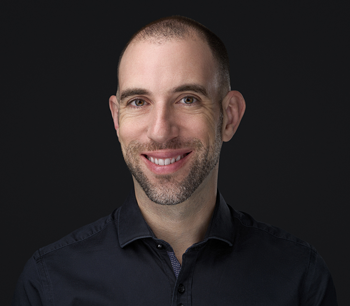
Guillaume Thibault
Let's start at the beginning – how and when did you first become interested in science?
As a kid, I was always interested in science – possibly even from the age of six or seven. Even at that age, when people asked me what I wanted to do later in life, I said I wanted to become a scientist; I could see myself with a lab coat on and doing science experiments, which looking back seems quite geeky! I started to become interested in electronics, wanting to learn how things like batteries, motors and lights work. Then in high school, I became more interested in chemistry and decided that I wanted to focus on that. So that's what I went on to do: I completed a three year programme in chemical analytics after high school and started work as a technician. I worked in the role for three years and learned a lot. But, although the job was quite interesting (for example, I was involved in doping control for athletes), I soon realised that I would get bored and needed to find something else. People thought I was crazy, because I had a job for life, but I just knew it wasn't for me. So, I went back to school and started a Bachelor's degree in biochemistry at the University of Quebec in Montreal. I initially started part time, just to make sure I really liked it, as I had no biology background. After a year, I realised I really enjoyed it, so I decided to go full time, and it was around then that I decided I also wanted to carry on and do a PhD.
How did you decide where to go and what lab to pick for your PhD?
I was actually supposed to do a PhD in Montreal. I had been accepted onto the programme and had been awarded a national scholarship. But I couldn't speak English; I had grown up in Quebec, and all my teaching had been in French, so my English was poor – I could barely string a sentence together. But I knew it would be important to learn English for my PhD, so I decided to apply for a summer job in a lab at the University of Toronto. After the first month, my supervisor there (Professor Walid Houry) tried to convince me to stay, but I kept saying ‘No, I'm definitely going back to Montreal as I have my whole life over there’. But by the end of the summer, I changed my mind. I really liked the project and the lab, and I also enjoyed life in Toronto. Basically, I went there thinking I would be there only for the summer but ended up staying for years! It's something I’ve never regretted, as it all worked out for the best, and it was also good for my English. While I was there, I really forced myself to speak English – I didn't speak French with anyone, and I didn't hang out with French people. I think they thought I wasn't very friendly, but I didn't care, as I knew it was the only way I'd improve.
Following your graduate studies, you moved from Canada to the Temasek Life Sciences Laboratory in Singapore for your postdoctoral research – what triggered that move?
My PhD was more of a biochemistry project – I was working on molecular chaperones in bacteria, focusing on the ClpXP system, which is a protease complex responsible for degrading proteins. Most of the work I was doing was in vitro, and I was keen to move into the cell biology side of things and work with mammalian cells. I wasn't interested in moving to the USA, partly because I'm Canadian but mostly because of the funding situation at the time. Things were very unstable and funding was being cut; I think the success rate for NIH grants was below 10%. It meant that you could join a lab and they might not have funding after a couple of years. I also knew that, in general, labs in the USA were very big, so you'd have lots of competition on top of the limited funding. It all just felt very risky to me. I started looking around for smaller groups to join and came across Davis Ng's group at Temasek Life Sciences Laboratory in Singapore. He was working on the endoplasmic reticulum (ER) stress pathway, which was a topic I was really interested in, so I decided to apply for a postdoc position in his lab. I honestly had no clue about Singapore – about life there and about the research landscape and culture there – and I was very nervous about going there. However, I knew they were expanding and investing a lot of money in research, so I decided to give it a shot. It turned out to be a great place and a great move for me.
How did you then decide what direction you wanted to go in – and where you wanted to go – when making the transition to setting up your own research group?
When I started my project in Davis’s lab, it was clear from the beginning that I was starting a new branch of research, looking at lipid homeostasis and the ER. Lipid research wasn't so popular at the time, but people were slowly starting to become more interested in it. So, during my postdoc, I was able to build up my own niche and start to think about projects that I wanted to continue in my own lab. I applied for independent positions in Singapore and Canada, but again could see that the funding situation in Canada wasn't so great; it would take a lot of effort to get a grant, and even then it would only fund a single PhD student. By contrast, the start-up package that I was being offered as an Assistant Professor in Singapore was much more attractive – it was hard to say no.
Overall, I feel that Singapore is very generous compared to other countries, especially if you compare it to the size of the population. They support basic research in a very strong way; you feel that they really care and want to invest in research. For example, a large proportion of PhD students that they train are from overseas, whereas in other countries this fraction is usually much smaller and is capped. I think this is very generous, because it's taxpayers' money, but it signals that they really want to invest in research. It also means that the environment is very international, which makes people feel comfortable and want to stay.
What is the main focus of your lab's research at the moment?
When I started my lab, we were mostly looking at ER stress and lipid homeostasis using yeast. We then branched out to use C. elegans, which is a great model that allowed us to examine ER stress and lipid homeostasis in the context of ageing. Eventually, I started up some collaborations with people who were using mammalian cells, and actually I'd say that around 95% of people in the lab are now using mammalian cells. We've also turned our focus to look at ER stress in the context of disease; we have one branch of the lab that is mostly working on ageing, and the other half of the lab is working on host–pathogen interactions and how they affect ER stress. Right now, we have an exciting project that aims to dissect how Enterococcus faecalis infection induces ER stress in its host, which to date has been unknown.
I also feel that we have to move beyond the normal monolayer of cells in the Petri dish; we need to move to using more polarised cells with polarised organelle and trafficking systems. That's where I think organoids will be useful as a model, so we're starting to think about how to integrate these into our studies. We've written some grants to use intestinal organoids, and we also have a collaboration with a group using micropatterned skin cells. There are obviously some challenges with using such 3D systems, for example with imaging, but the technology is getting so much better, so I think we really need to take advantage of them.
What advice would you give to early-career researchers who aspire to become PIs?
My first piece of advice would be to do what you like, not just what you think is best for you to succeed. Because I think success comes if you enjoy what you do. I think you need to have fun and not be scared to explore and try new things, for example by jumping from one organism to another. Yes, it might slow down output but, at the end of the day, you will become a better scientist. The other advice I would give is to never give up. I think you always have to believe in what you're doing. Yes, things will be difficult at times, like when you don't get the grants or when your papers don't get accepted. But it's important to keep pushing in what you believe in. Finally, I think it's important to find good mentors. They can be within your department, institute or university, or anywhere in the world really. Don't be shy to approach people – you'll be surprised that most people are quite generous and genuine, and happy to give you some of their time and knowledge, even if they're people not in your field. This is something that really helped me a lot throughout my career.
It might seem that becoming a PI is especially challenging at this time – people say there's no funding, no jobs, no security. But when I was a PhD student, I was hearing the same things. People told me that I shouldn't go into academia and that it would be suicide for my career. I think many of the challenges that existed back then still exist now and perhaps will always be there; there will always be challenges, and these things come and go in cycles. When I was a PhD student, the funding in the USA was really bad, and it wasn't much better in Canada, so I decided that I had to make sacrifices and move elsewhere. We then had COVID, which presented us with a new set of challenges. Right now, the situation in the USA is very challenging so, again, some people might feel they need to move elsewhere. Yes, moving away is not easy, especially if you want to stay close to your family, but that's sometimes part of the sacrifice you make. I think it's normal for people to look for opportunities wherever they are in the world. People have been moving around for ages. After the Second World War, many people moved from Europe to the USA, because that's where the money was and where the opportunities were. I'm not saying there won't be drastic impacts along the way, but I'm hopeful that people – and science – will make it through. Science has been around for a long time, right?
I gather that, as part of your role as Assistant Dean, you've also been involved in recruiting and encouraging people to move to Nanyang Technological University. From that perspective, what are you looking for?
Of course, we're always looking for someone who does great research and can become independent. But being a good scientist is not enough – you need other skills that will help you run a lab. It's a bit like running a company. You might have very good ideas, but can you translate them into a grant so that you can get funding? Can you translate your research into a story that can be published? Can you communicate with the people in your lab and with other colleagues in your department? Sometimes you see someone give a presentation where they just show off everything they've published, but it's hard to see their longer-term vision. Ultimately, you want to bring the hiring committee into your world, making them feel that they fully grasp your research and its potential, regardless of their own specialisation.
We’re also looking for colleagues who'll be fun to work with and who are genuinely interested in moving to Singapore. It's somewhere that's not very well known, and a lot of people have misconceptions about the country and what it's like to live in Singapore. I feel the quality of life is very good here – it's safe, it's multicultural and people seem happy to be here.
You're also the current President of the Society for Cell Biology Singapore (SCBS), and you played a key role in founding the society – how, when and why did you go about setting up the society?
Setting up the society was something that I'd had in my mind since I was around halfway through my postdoc in Singapore. At that time, there was no such society in Singapore, but I felt that it would help to bring people together. Singapore is very small, but I felt that everyone was quite isolated – people were doing their own thing and weren't interacting much. This was very different to the situation in Toronto during my PhD, where we had lots of interactions between research labs and institutes within the university and with the nearby hospital. I really missed it and felt that having a cell biology society could be a way to foster a bit more interaction between the various institutions in Singapore, even though they're physically separated. But you know, I got busy and it never happened. But then I met with Rong Li, shortly after she'd been appointed Director of the Mechanobiology Institute (MBI) in Singapore, and I told her that it was something I'd been thinking about for many years. She was very supportive of the idea and agreed to provide a bit of admin support from MBI, as well as a bit of money to help us to get things started. So that's how it all began.
We slowly recruited a few people to help out and elected a President – Brian Burke – to take the lead. It took around a year to get things going. We held our inaugural SCBS conference in May 2024, and we plan to hold another one in May 2026. Brian recently stepped down as President, and that's when I took on the role. The response to our inaugural conference in May 2024 truly validated our efforts. We had 162 attendees and a vibrant scientific programme that included a keynote from Professor Rob Parton, dozens of speakers, and dedicated poster sessions. This was all made possible by generous funding from our 11 sponsors.
What are the main aims of the society and what are the challenges you currently face?
Our main aim is to support trainees, especially PhD students and postdocs, and to act as a catalyst for collaboration within the cell biology community. We want to build a network of labs that can provide expertise and materials to each other, facilitate exchanges, and create training opportunities to enhance the skills of our researchers. This will create good grounds to initiate novel initiatives and grants. We're hoping we can give out awards and grants, such as travel grants to help trainees attend conferences. Our membership is quite small at the moment – we have almost 200 members – so that's a bit of a challenge, but hopefully this will increase with time. In any case, the cell biology community in Singapore isn't so big, so maybe that's a reasonable number for now. We're also trying to keep the membership fee low to encourage people to join, and we've been fortunate to have obtained money from sponsors, which also meant that the conference was free to attend.
If you could change one thing in academia, what would it be?
I think it would have to be the impact factor. We all say we don't care about impact factors but actually we do. A lot. I see it everywhere: people say or pretend that they don't care but, when it comes down to it, they choose to publish in certain ‘high impact’ and profit-making journals instead of going for society journals. If everyone chose to publish in society or not-for-profit journals, we would be supporting our own communities instead of shareholders. But I think it's entirely because of the impact factor. It's turned into a number that means we don't really assess the quality of the research. It's something that I wish we could really change.
Finally, is there anything our readers would be surprised to find out about you?
Something that might be surprising is that I failed my English in high school! At that time, I felt that English wasn't important, but I guess I soon realised that it was and had to work hard to catch up. I'm also a long-distance runner and like to take part in ultramarathons. I'm currently training for the Lake Tahoe Marathon in California, which is three marathons in a row. It's what keeps me sane. I found it especially helpful during my PhD. Even now, I find it really meditative and, actually, a lot of ideas for my research or ways to troubleshoot issues just come to me when I'm running.
Guillaume Thibault was interviewed by Seema Grewal, Executive Editor for Journal of Cell Science. This piece has been edited and condensed with approval from the interviewee.