How Space Inside Cells Helps Put Proteins in Their Place
The Golgi apparatus consists of stacked membrane compartments that process and transport proteins. Researchers previously discovered that different proteins occupy distinct regions of Golgi membranes, but how this organisation is achieved remained unclear.
A research team from the School of Biological Sciences (SBS) led by corresponding author Assoc. Prof. Lu Lei, with PhD student Wong Jing Xue as first author, has uncovered how the space available inside these compartments helps determine where certain proteins are located.
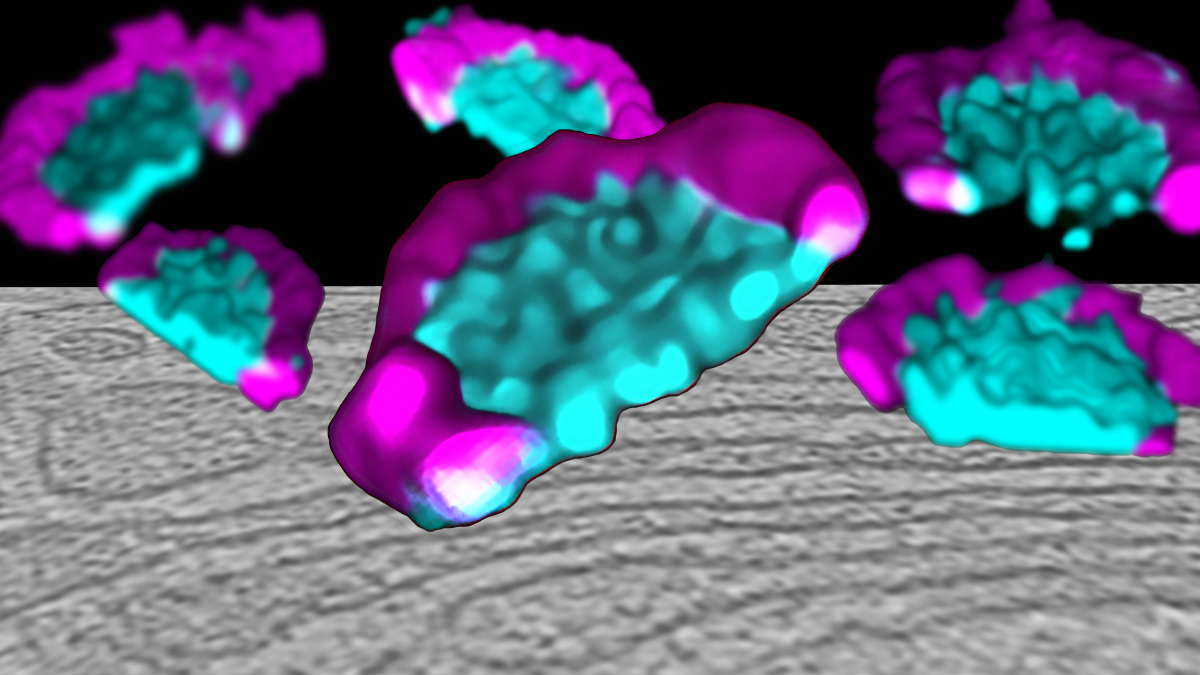
The space available inside cellular compartments helps determine where certain membrane proteins are located.
Looking at the Wider Edges of Golgi Membranes
The team studied GPP130, a protein that preferentially localises to the wider edges of Golgi membranes. They found that this positioning is determined by the length of a rod-like region of the protein that extends into the space inside the Golgi.
Using advanced electron microscopy, the researchers showed that the narrower interiors of Golgi membranes do not provide sufficient space to accommodate this long protein segment, whereas the wider edges can accommodate it.
Similar behaviour was observed in another cellular compartment, the endoplasmic reticulum. These findings suggest that the space available inside membrane-bound compartments helps determine where certain proteins are located.
A Physical Principle Behind Cellular Organisation
The findings reveal how the amount of space available inside cellular compartments helps determine where membrane proteins are located. This provides new insight into how cells organise their internal structures and how different proteins occupy distinct regions of cellular membranes.
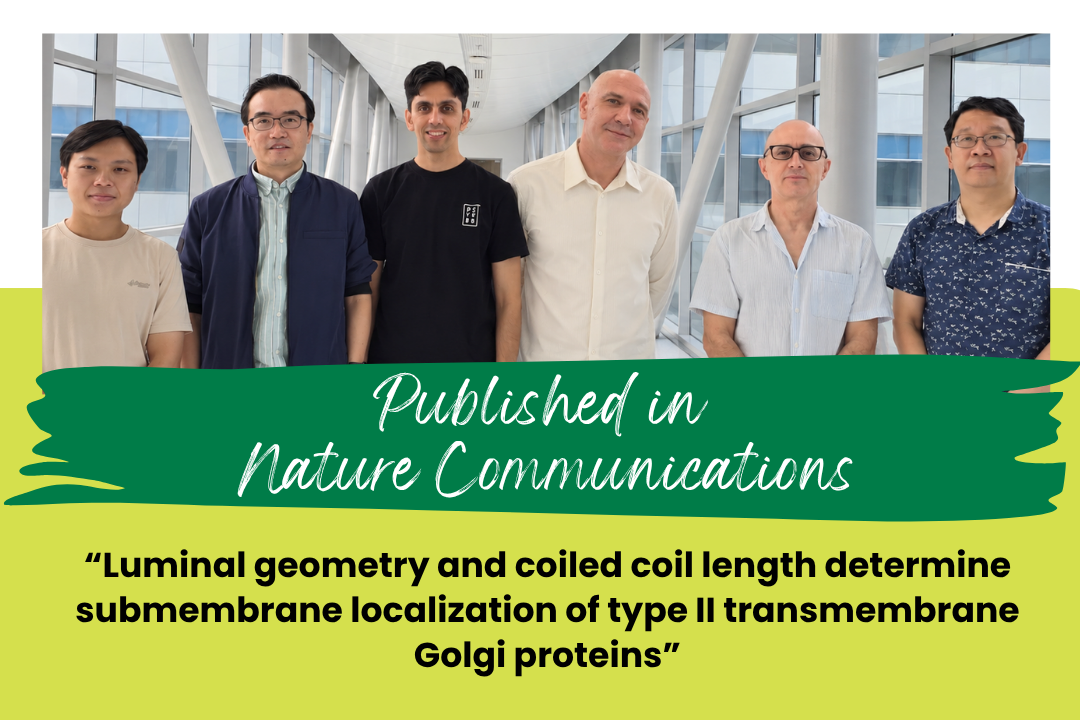
Published in Nature Communications on 14 October 2026, the study features contributions from researchers at SBS and the NTU Institute of Structural Biology (NISB).
The research team comprises Wong Jing Xue, Barbara Hübner, Divyanshu Mahajan, Hieng Chiong Tie, Wahyu Surya, Assoc. Prof. Jaume Torres, Asst. Prof. Alexander Ludwig and Assoc. Prof. Lu Lei. All eight authors are affiliated with SBS, while Barbara Hübner and Asst. Prof. Alexander Ludwig are also affiliated with the NTU Institute of Structural Biology (NISB).”
Congratulations to Assoc. Prof. Lu Lei, PhD student Wong Jing Xue and the entire research team on this publication!
Read the full paper here.