Cracking the Code of a Drug-Resistant Bacterium with a Promising New Inhibitor

Revealing the Bacterium’s Energy Machinery
A study led by first author Vikneswaran Mathiyazakan and Professor Gerhard Grüber, together with colleagues from the research team, has uncovered the detailed structure of a key enzyme in Mycobacterium abscessus, a bacterium responsible for chronic lung infections and known for its high levels of antibiotic resistance.
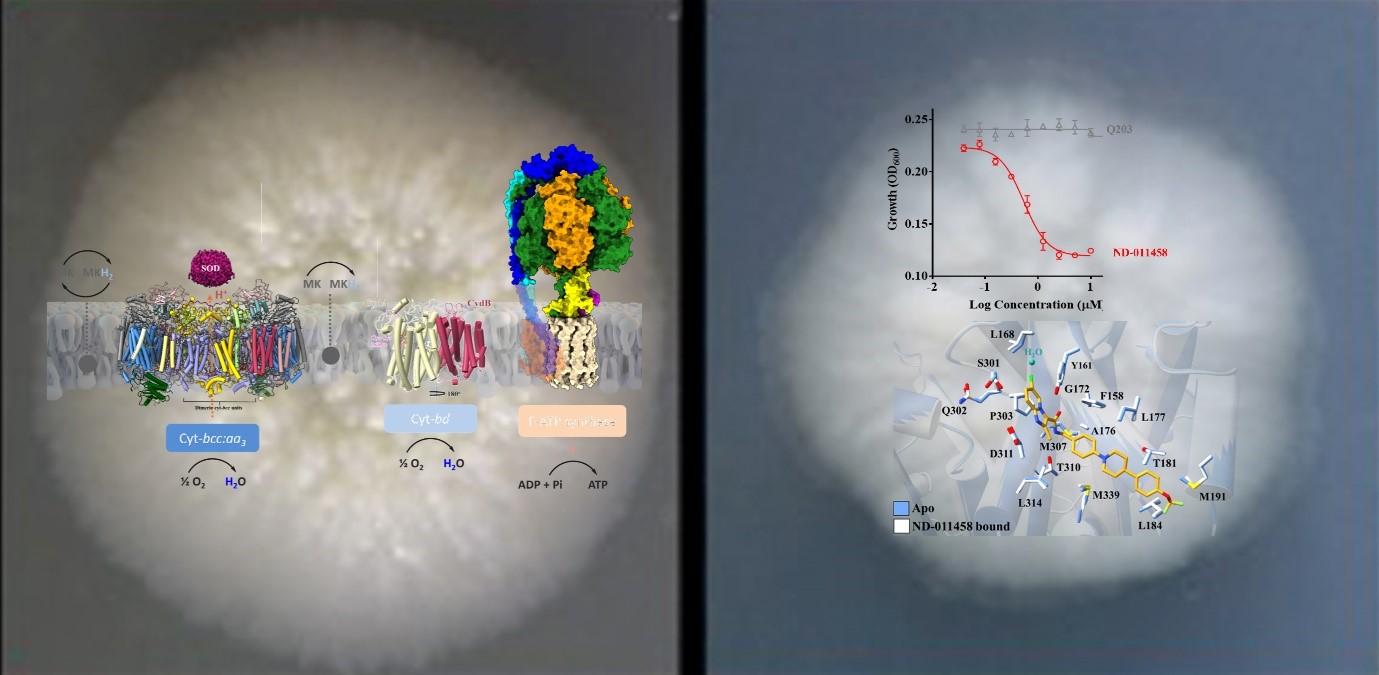
Using high-resolution cryo-electron microscopy, the team determined the structure of the cytochrome bcc:aa3 oxidase supercomplex, a critical component of the bacterium’s energy metabolism. This enzyme is also a known drug target in Mycobacterium tuberculosis, where it can be inhibited by telacebec. However, the structure revealed why telacebec is ineffective against M. abscessus, highlighting key differences in the QcrB menaquinol-binding cavity that prevent effective drug binding.
From Structure to Inhibitor Design
Building on these structural insights, the researchers performed structure-guided analysis that led to the design of a new QcrB inhibitor, ND-011458, with potent activity against M. abscessus.
The team also determined a 2.26 Å inhibitor-bound structure, which revealed the binding mode of ND-011458 and provides a detailed framework for the development of next-generation inhibitors targeting this enzyme. Importantly, ND-011458 was shown to be bactericidal when used in combination with Clofazimine.
Translational Impact and Collaboration
This work reflects a strong collaborative effort across the team, bringing together expertise in structural biology, drug design, and infectious disease research. The findings have been patented and are currently in licensing negotiations with a US-based company, highlighting the translational potential of the discovery for future therapeutic development.
Looking Ahead
By resolving the structure of the cytochrome bcc:aa3 oxidase supercomplex and identifying key differences in the QcrB binding site, this study provides a structural framework for understanding drug resistance in Mycobacterium abscessus. It also supports the rational design of improved therapeutic strategies for treating persistent and drug-resistant lung infections.
Congratulations to the team on this important publication, which advances understanding of drug resistance in M. abscessus and opens new avenues for therapeutic development.
Read the full paper here.