How Epithelial Cells Build a Lumen
How do epithelial cells build a lumen, the hollow space that forms the defining feature of many epithelial tissues?
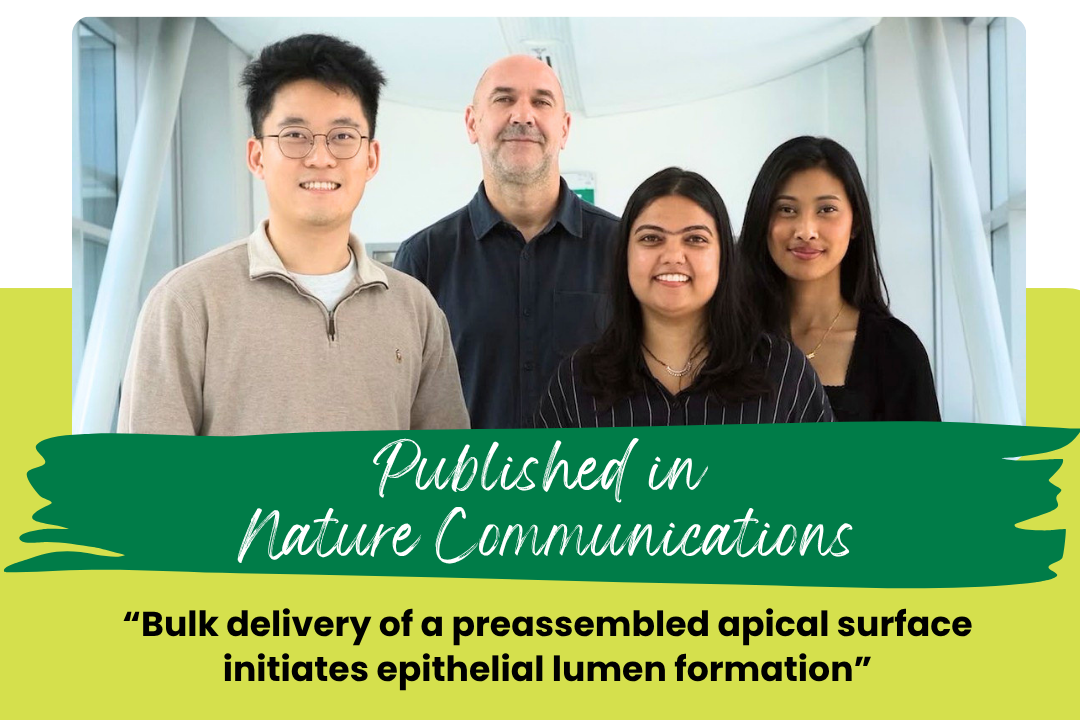
A new study led by Asst. Prof. Alexander Ludwig from NTU’s School of Biological Sciences has uncovered a surprisingly efficient mechanism behind epithelial lumen formation. The study is published in Nature Communications.
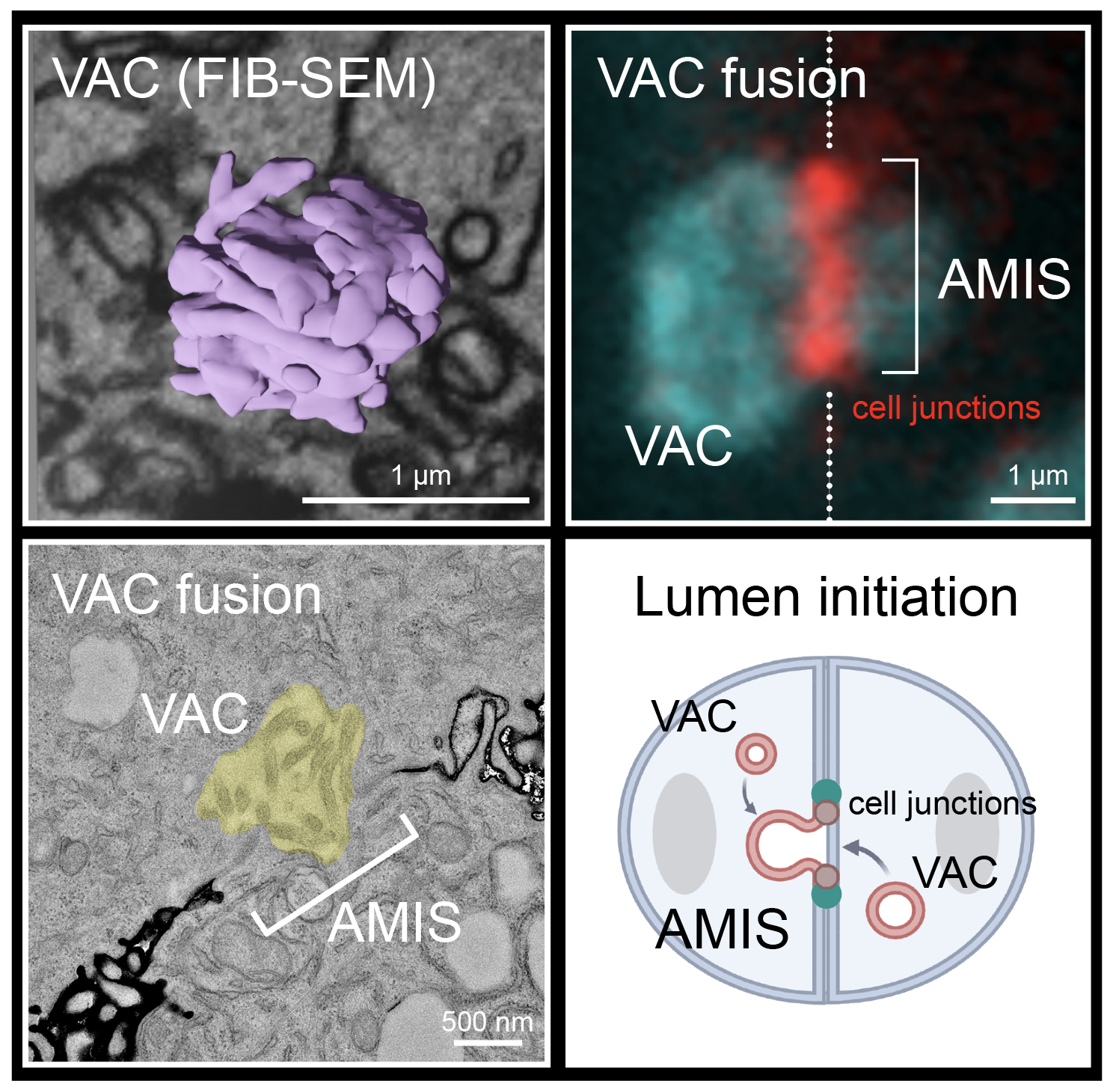
The researchers found that, rather than transporting individual proteins to the cell boundary one by one, epithelial cells can prepare and deliver a large package containing an already assembled apical surface.
These packages are known as vacuolar apical compartments (VACs). They contain a microvilli-rich surface and are delivered to the apical membrane initiation site (AMIS), where they fuse to rapidly establish a nascent lumen.
Delivering an Apical Surface in One Package
The findings show that VACs act as specialised transport organelles during lumen formation.
Instead of building the apical surface piece by piece at the site where the lumen will form, the cells deliver a preassembled surface through the VAC. This allows the lumen to be initiated rapidly and efficiently.
The researchers used quantitative light and electron microscopy together with proximity proteomics to examine how this process takes place.
PatJ Helps Coordinate Lumen Formation
The team also identified PatJ, a protein of the Crumbs complex, as a key regulator of lumen formation.
Lumen initiation was closely coordinated with the assembly and rearrangement of apical cell junctions. The findings indicate that PatJ plays an important structural role at the interface between the apical and lateral regions of the cell.
Together, the results show how the delivery of a preassembled apical surface and the organisation of cell junctions are coordinated during the early stages of lumen formation.
New Insights into Epithelial Tissue Formation
The study provides new insights into how epithelial cells organise themselves to form a lumen.
The research was led by Asst. Prof. Alexander Ludwig from NTU’s School of Biological Sciences and the NTU Institute of Structural Biology. Sujasha Ghosh, Eleanor Martin and Yuhong Chen contributed equally to the study, together with researchers from NTU, the National University of Singapore, Luxembourg Institute of Health and the University of Luxembourg.
Read the full paper here.