Bridging Courses in Integrated Circuit Design
The 2 bridging courses are conceived and developed by Nanyang Technological University (NTU Singapore) and fabless semiconductor companies in Singapore in collaboration with the Singapore Semiconductor Industry Association (SSIA) to train and develop more integrated circuit (IC) design talent with industry-ready skill sets.
The bridging courses aim to prepare students with no relevant knowledge in digital IC design to build up a strong foundation before they continue with the basic level courses under FlexiMasters in Integrated Circuit Design. Digital IC design is an important foundation for professionals to create cutting-edge semiconductor innovations and power the next generation of smart, high-performance technologies.
- Master In-Demand IC Design Skills: Bridges the gap between academic learning and current industry practices. It prepares students for Singapore’s growing semiconductor sector by providing practical skills across the complete digital IC design flow.
- Industry-Relevant: Courses are designed in collaboration with industry partners to meet the specific skills needed in the semiconductor industry.
- Practical Curriculum: Meticulously crafted and tailored for engineers and professionals poised to excel in the manufacturing, digital electronics, integrated circuit (IC) Design, and design automation realms.
- Boost Career Prospects: These courses stand as a beacon for individuals aspiring to carve their niche in entering or transitioning within the electronics sector in the digital electronics industry.
| Course | Objectives |
Digital IC Design Theory  | Step into the future with our meticulously crafted course, tailored for engineers and professionals poised to excel in the manufacturing, digital electronics, integrated circuit (IC) Design, and design automation realms. Equally relevant for diverse industries, this course ignites your potential for career growth and transformation. With a focus on acquiring basic knowledge in digital electronics and design, the course focuses on combinational and sequential schemes using regular ICs, programmable logic devices (PLDs), application specific ICs (ASICs), and very large-scale integration (VLSI). The design of digital units, memory modules and other sequential circuits shall equip learners with the necessary concepts and know-how in the design of logic circuits. Immersing yourself in this course comprising 39 hours of lectures ensure mastery at both conceptual and application levels. This transformative experience moulds you into a proactive and adaptive thinker, primed for the challenges and innovation-driven demands of advanced manufacturing. This course, perfectly aligned with the Industry 4.0 wave, stands as a beacon for individuals aspiring to carve their niche in entering or transitioning within the electronics sector in the digital electronics industry. Join us and emerge not just with knowledge but with the mindset to thrive in a rapidly evolving landscape. At the end of the course, learners will be able to:
|
Digital IC Design with CAD  | This course expands digital IC design training in EEE and bridges the gap between academic learning and current industry practices. It prepares students for Singapore’s growing semiconductor sector by providing practical skills across the complete digital IC design flow. Topics include IC design methodologies, digital design flow challenges, Linux fundamentals, scripting for automation, static timing analysis, timing closure strategies, and design verification. Students gain hands-on experience interpreting timing reports, applying constraints, and optimising design performance. The course concludes with an integrated view of ensuring design quality and efficiency. By the end, students will understand the RTL-to-GDSII flow and be equipped with essential skills for modern digital IC design roles. At the end of the course, learners will be able to:
|
Digital IC Design Theory
This programme is suitable for individuals who wish to join or progress within the Engineering Services in the manufacturing/digital electronics industry. Prior knowledge in basic electronics and circuit theories, and in at least one programming language will be an advantage.
Digital IC Design with CAD
This programme is suitable for participants working/intending to work in the IC design industry.
Venue: TBD
Duration: TBD
| Course | Dates |
|---|---|
Digital IC Design Theory | TBD |
| Digital IC Design with CAD | TBD |
Apply Now
Note: NTU reserves the right to change the date, venue, and mode of delivery due to unforeseen circumstances.
 | Upon course completion and fulfilling all requirements, participants will be awarded an NTU e-Certificate of Completion, demonstrating their proficiency in the essential areas of the course. |
Per Course Fee: S$5,615.68
(inclusive of GST)
| Funding Support | BEFORE funding & GST Course Fee | AFTER funding & 9% GST Course Fee Payable |
| Singapore Citizen (SC) and Permanent Resident (PR) (70% funding) | S$5,615.68 | S$1,684.70 |
- NTU/NIE alumni may utilise their $1,600 Alumni Course Credits for each course. Click here for more information.
Instructor for: Digital IC Design Theory | Dr. Jong Ching Chuen obtained his BSc(Eng) and PhD in Electronic Engineering from Queen Mary, University of London, U.K. He has worked in the area of high-level synthesis of digital systems for more than 3 years both in the academics and the industries in the U. K. before he joined Nanyang Technological University as a faculty member. He is now an Associate Professor in the School of Electrical & Electronic Engineering. Dr. Jong is a Chartered Engineer (CEng), a Chartered IT Professional (CITP) and a member of the British Computer Society (BCS). His current technical interest includes arithmetic circuits, VLSI architectures, digital IC design and fast-prototyping of digital systems with FPGA. |
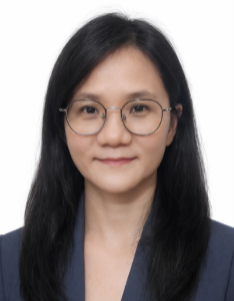
Natalie Kong Zhi Hui Instructor for: Digital IC Design with CAD | Dr. Natalie Kong Zhi Hui is currently a Senior Lecturer in the School of EEE, NTU. She has over 15 years of experience in higher education. She obtained her PhD from Nanyang Technological University, and her Bachelor of Engineering (BEng) from Universiti Teknologi Malaysia (UTM). Prior to her current appointment, Dr. Natalie served as an Assistant Professor, contributing actively to teaching, research, and academic service. Dr. Kong continued to engage in part-time university teaching and remote research work, maintaining close ties with academia while balancing family commitments. She remains deeply committed to high-quality teaching, curriculum development, and student mentoring, and is passionate about bridging theory and practice to prepare graduates for evolving industry and societal needs. |
 Jong Ching Chuen