
Metallurgical Renaissance in Steels toward 2050 Net-Zero Carbon Emission by Professor Hung-Wei (Homer) Yen
28 Jan 2026
02.00 PM - 03.00 PM
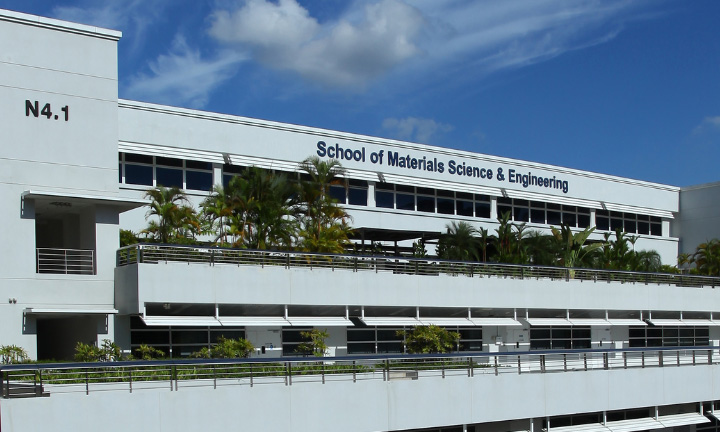
MSE Meeting Room (N4.1-01-28)
Alumni, Current Students
NTU MSE Seminar Hosted by Assistant Professor Eason Chen
Abstract
Steel is frequently regarded as incompatible with environmental sustainability because of its carbon-intensive production. This perception is incomplete. Steels underpin modern infrastructure, transportation, energy systems, and manufacturing, and any realistic strategy toward net-zero carbon emission by 2050 must therefore account for their continued and essential use.
This presentation discusses metallurgical renaissance in steels through three representative research themes. The first, Green Processing, addresses usages of energy-efficient manufacturing without compromising property target. The second, Life-Cycle Design, demonstrated the design of better steels for carbon reduction in life cycle. The third, Clean Energy Applications, provides new pathways to mitigate hydrogen embrittlement, a critical limitation in infrastructures of hydrogen energy. Central to these advances is the ability to understand the inner space of materials at the nano- and microscale. Examples here reveals the mechanisms by which microstructure governs properties and failure, and allows metallurgical design to proceed on nano/microstructure-based foundation.
In conclusion, steels should not be viewed as an obstacle to sustainability, but as a material system capable of continuous reinvention. A rigorous metallurgical approach is essential if steels are to contribute effectively and credibly to the goal of net-zero carbon emission by 2050.
Biography
-yen---mse-seminar-speaker.jpg?sfvrsn=49cd28eb_1)
Hung-Wei (Homer) Yen
Young Chair Professor & Deputy Chair
Dept. of Materials Science & Engineering, National Taiwan University
Executive Director of International Affairs
College of Engineering, National Taiwan University
Hung-Wei (Homer) Yen is a materials scientist and microscopist based in Taiwan and currently leads the Microstructure & Defects Physics Group at National Taiwan University. His research focuses on microstructure–property relationships in advanced structural materials, including advanced high-strength steels, biomedical titanium alloys, and high-entropy alloys. Homer applies state-of-the-art materials characterization techniques to probe the inner space of materials and devices, aiming to uncover fundamental mechanisms governing their property and performance. His recent research focuses on hydrogen-related phenomena in materials and devices, particularly hydrogen storage alloys and hydrogen embrittlement. He established Taiwan’s first local electrode atom probe and has developed the facility with a strong emphasis on semiconductor research. To date, Homer has authored over 140 SCI-indexed journal papers (h-index: 38), holds 10 patents, and has delivered more than 50 invited talks at academic and industrial events worldwide. His research is supported by extensive international collaborations with teams in the United States, United Kingdom, China, Hong Kong, Japan, Korea, Singapore, Australia, Austria, Germany, and Spain.
Dept. of Materials Science & Engineering, National Taiwan University
Executive Director of International Affairs
College of Engineering, National Taiwan University
Hung-Wei (Homer) Yen is a materials scientist and microscopist based in Taiwan and currently leads the Microstructure & Defects Physics Group at National Taiwan University. His research focuses on microstructure–property relationships in advanced structural materials, including advanced high-strength steels, biomedical titanium alloys, and high-entropy alloys. Homer applies state-of-the-art materials characterization techniques to probe the inner space of materials and devices, aiming to uncover fundamental mechanisms governing their property and performance. His recent research focuses on hydrogen-related phenomena in materials and devices, particularly hydrogen storage alloys and hydrogen embrittlement. He established Taiwan’s first local electrode atom probe and has developed the facility with a strong emphasis on semiconductor research. To date, Homer has authored over 140 SCI-indexed journal papers (h-index: 38), holds 10 patents, and has delivered more than 50 invited talks at academic and industrial events worldwide. His research is supported by extensive international collaborations with teams in the United States, United Kingdom, China, Hong Kong, Japan, Korea, Singapore, Australia, Austria, Germany, and Spain.