
Exploring the "Matterverse" through High-throughput Techniques and Data-driven Approaches for Clean Energy Applications by Assistant Professor Bo Shen
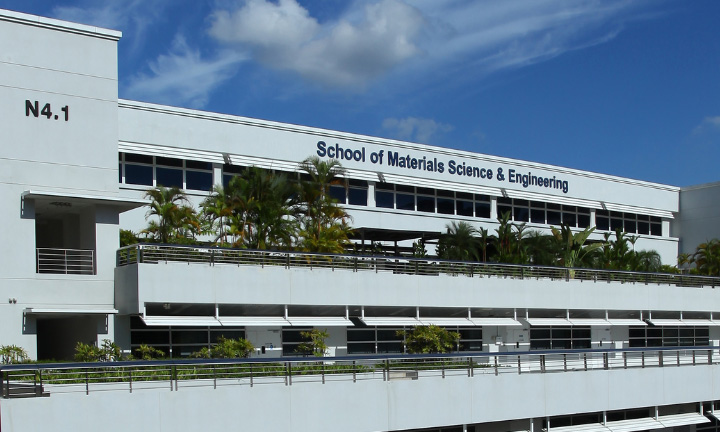
NTU MSE Seminar Hosted by Professor Jason Xu Zhichuan
Abstract
Developing new materials is essential for the advancement of clean energy technologies. Given the vast parameter space involved in materials design, which includes chemical composition, shape, size, and structure, approaches are needed to rapidly optimize all parameters in polyelemental materials for desired properties. My research addresses this challenge by utilizing a systematic method that combines solid-state synthesis, nanolithography, and computational simulations. This method has enabled us to generate large and high-quality datasets that can train artificial intelligence and machine learning algorithms to predict novel materials, which accelerates our exploration of the materials universe - the "Matterverse". Based on this high-throughput methodology, we have not only uncovered the design rules of nanomaterials with unusual shapes but also identified promising candidates for a range of clean energy applications, such as the electrooxidation of liquid fuels and the electroreduction of CO₂. These innovative approaches are setting a new pace in the discovery of novel materials and their structure/function correlations.
Biography
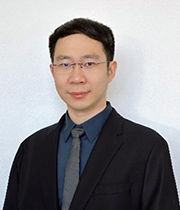
Assistant Professor Bo Shen
City University of Hong Kong
Dr. Bo Shen is a Presidential Assistant Professor in the Department of Materials Science and Engineering at City University of Hong Kong. He obtained his Ph.D. in Chemistry from Brown University in 2019 under the supervision of Prof. Shouheng Sun, and subsequently conducted postdoctoral research in the group of Prof. Chad Mirkin (Foreign Academician of the Chinese Academy of Sciences) and Prof. Chris Wolverton at Northwestern University, United States. Dr. Shen’s research focuses on the “materials genome”, with the goal of accelerating the discovery of new materials for clean energy applications. He has published papers as first or corresponding author in leading journals such as Nature Synthesis, Nature Communications, PNAS, JACS, and Angewandte Chemie. In addition, he received the Outstanding Research Award from the International Institute for Nanotechnology and the Dwight A. Sweigart Award in Inorganic Chemistry, and holds two U.S. patents.