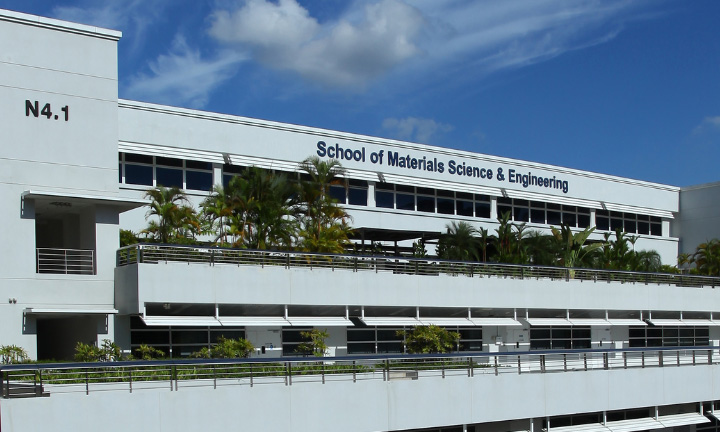
NTU MSE Seminar Hosted by Associate Professor Tan Lay Poh
Abstract
Skeletal muscle accounts for approximately 30–40% of total body mass and plays essential roles in respiration, locomotion, and mastication. However, when more than 30% of the muscle volume is lost due to trauma or surgical resection, the intrinsic regenerative capacity becomes insufficient, a condition referred to as volumetric muscle loss (VML). Among various strategies for VML treatment, 3D bioprinting has gained significant attention due to its ability to recreate patient- and defect-specific architectures with spatial precision.
In this presentation, I will introduce recent advances in constructing engineered skeletal muscle tissues through the development of 3D bioprinting processes and bioinks optimized for muscle regeneration. The discussion will focus on the design of bioinks that enable high-resolution print fidelity, robust printability, and the recreation of tissue-specific extracellular matrix environments to support myogenic differentiation and maturation.
Additionally, I will highlight applications beyond VML repair, including skeletal muscle–based microphysiological systems (MPS) for drug response assessment and patient-specific disease modeling. These approaches further expand the relevance of engineered muscle platforms to areas such as neuromuscular disease research, including amyotrophic lateral sclerosis (ALS), and space bioengineering contexts.
Biography
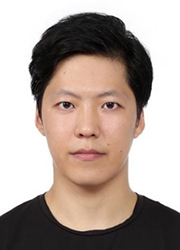
Associate Professor Yeong-Jin Choi
Korea Institute of Materials Science (KIMS)
Korea National University of Science and Technology (UST)
Yeong-Jin Choi is a Senior Researcher at the Korea Institute of Materials Science (KIMS) and an Associate Professor at the Korea National University of Science and Technology (UST). His research focuses on 3D bioprinting process development, bioink and hydrogel-based biomaterials, and ceramic/bioceramic additive manufacturing. He applies these platforms to tissue regeneration and tissue microenvironment modeling, particularly in skeletal muscle, nerve, vascular, bone, and cartilage systems. He has published extensively in biofabrication and additive manufacturing and is actively involved in academic service as a board member in societies related to 3D printing and biomaterials.