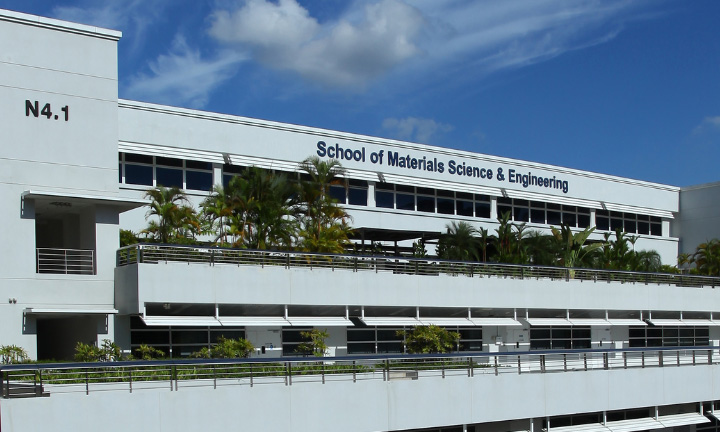
NTU MSE Seminar Hosted by Associate Professor Tan Lay Poh
Abstract
Bioprinting enables the use of cells and biomaterials as building blocks, offering significant advantages in 3D tissue construction by aligning cells with biomaterials to better mimic native tissue characteristics. However, challenges remain in enhancing bioink chemistry and tissue architecture-building technologies to ensure that various cell types, positioned within desired structures, can perform their innate functions and interact effectively with neighboring cells, as observed in native tissues. In particular, the diverse geometry, size, composition, and functions of the vascular system in the human body necessitate further advancements in biofabrication to achieve greater physiological relevance between engineered vascular tissues and their native counterparts.
To address this challenge, our team has developed multiple advanced bioprinting technologies, including microfluidic bioprinting, light-assisted bioprinting, and bioelectronic sensor-interfacing bioprinting, as well as various reinforced bioinks based on extracellular matrix (ECM)-mimicking hydrogels such as collagen, gelatin, fibrin, and decellularized ECM. By leveraging different combinations of these advanced bioprinting technologies and reinforced bioinks, we have engineered multi-scale vascular structures ranging from capillary-like networks to human-sized coronary arteries, successfully recapitulating essential biological characteristics and functions for applications in transplantation and in vitro testing platforms.
In recent years, our research interests have expanded to include the development of various types of vascular tissues for applications such as facilitating transport functions in interaction with skeletal muscle or modeling vascular diseases, such as atherosclerosis. Additionally, our bioprinting technologies have evolved to not only engineer physiologically relevant tissues with high complexity in a single batch but also fabricate multiple simplified tissue constructs to improve throughput.
Furthermore, the development of diverse approaches to refine multi-material bioprinting processes and reinforce decellularized ECM bioinks has enabled us to create more complex and diverse engineered human tissue constructs that mimic both anatomical and physiological features. Leveraging the benefits of bioprinting, our group has pursued the development of novel technologies for biomedical applications. We hope that advancements in bioprinting will continue to drive innovation in medicine, biotechnology, and life sciences, ultimately leading to better solutions for the future.
Biography
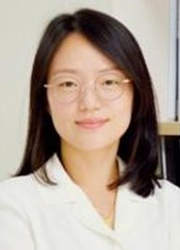
Associate Professor Hee-Gyeong Yi
Department of Convergence Biosystems Engineering
Chonnam National University, Gwangju, Korea
Hee-Gyeong Yi is currently an Associate Professor at Chonnam National University. She received her M.S.-Ph.D. integrated degree from the Department of Mechanical Engineering at Pohang University of Science and Technology (POSTECH), Korea. Her Ph.D. research, titled “Development of Glioblastoma-on-a-chip with Cell-printing Technology and Its Application to Personalized Medicine,” was conducted under the supervision of Professor Dong-Woo Cho.
During her doctoral studies, she developed brain decellularized extracellular matrix (dECM) bioinks and established personalized glioblastoma, brain cancer, models with collaboration with the Department of Neurosurgery of the Seoul National University Hospital (SNUH) for exploring personalized anti-cancer therapeutic strategies. In addition, she also developed various types of dECM bionks derived from spine and skeletal muscle, and led the projects engineering cartilage, bone, skeletal muscle, neural tissues.
Following her Ph.D., she continued postdoctoral research at the Medical Research Institute at Seoul National University, focusing on the integration of bioprinted tissue models and soft lithography-based microfluidic devices for precise in vitro tissue culture.
In September 2020, she joined the Department of Convergence Biosystems Engineering at Chonnam National University. Her laboratory, Bio-Manufacturing Systems Lab. (BMS Lab), is currently developing advanced biofabrication technologies to enhance physiological relevance of engineered living tissues, including coronary and cerebral arteries, microvasculature, neurovascular unit, and cardiac and skeletal muscles, for both in vitro and in vivo applications. More recently, her research interests have been expanded to include the production of edible medicinal and plant-based products, aiming to contribute innovative solutions to the field of agricultural biotechnology.