
From LTJT to Ag–Cu Sintering for SiC and GaN Power Devices by Associate Professor Siow Kim Shyong
25 Nov 2025
10.30 AM - 11.30 AM
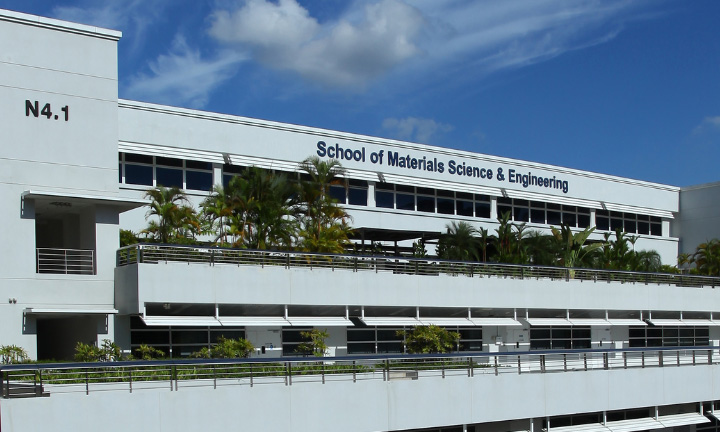
MSE Meeting Room (N4.1-01-28)
Alumni, Current Students
NTU MSE Seminar Hosted by Professor Hng Huey Hoon
Abstract
The modern sintering era in power electronics began in 1987, when Siemens (Germany) introduced the Low-Temperature Joining Technique (LTJT) for bonding power thyristors onto molybdenum substrates. Using pressure-assisted sintering equipment capable of applying ~40 MPa at ~240 °C, LTJT achieved joints with exceptional thermal and mechanical integrity.
This process—once limited to silver—laid the foundation for today’s pressure and pressureless sintering technologies, optimized for high-power SiC and GaN modules. Recent advances focus on paste formulations, evolving from pure Ag flakes to Cu-based and Ag–Cu hybrid (possibly) systems enhanced with transient liquid phase sintering and functional additives. These developments combine high conductivity, oxidation resistance, and cost efficiency.
The presentation also traces this evolution from LTJT equipment and process to modern Ag–Cu sintering pastes, showing how a 1980s innovation now enables reliable, lead-free packaging for next-generation power electronics.
Biography

Associate Professor Siow Kim Shyong
Institute of Microengineering and Nanoelectronics
Universiti Kebangsaan Malaysia
Kim S. Siow is a Senior Research Fellow and Associate Professor at the Institute of Microengineering and Nanoelectronics, UKM. His research focuses on sintered metal bonding, plasma surface modifications for bonding, biomaterials, agricultures and electronics packaging. He has held roles at Infineon Technologies, On Semiconductor, the National University of Singapore, and A*STAR technology transfer office in Singapore. He earned his PhD in Engineering from the University of South Australia under the UniSA President Scholarship, and also holds Bachelor and Master degrees in Materials Engineering from Nanyang Technological University and a Master of Laws in Intellectual Property from the University of Turin–WIPO. A certified PMP® since 2009 and a Level 3 MATRiZ Practitioner, Kim integrates technical expertise with patent law.