
Hard X-ray imaging from quantum materials to brains on 4th generation synchrotron sources by Dr Tobias Schülli
29 Oct 2025
02.00 PM - 03.00 PM
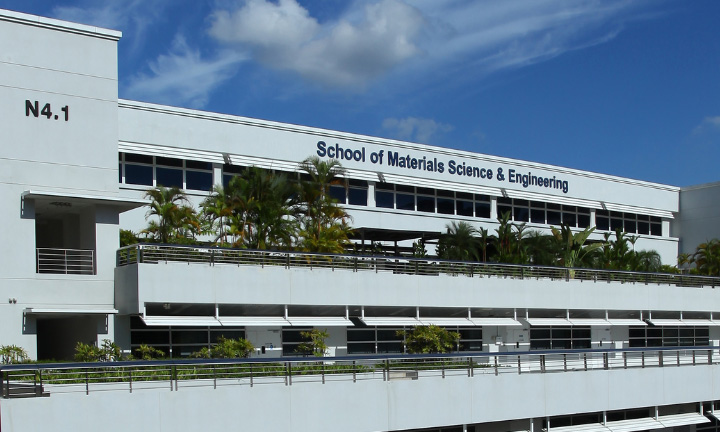
MSE Meeting Room (N4.1-01-28)
Alumni, Current Students
NTU MSE Seminar Hosted by Professor Tim White
Abstract
This lecture will introduce synchrotron radiation, followed by examples of the most recent instrumentation that exploits the unrivaled brilliance of hard X-rays. These sources now outperform laboratory sources by over ten orders of magnitude.
With the start of the first hard X-ray 4th generation synchrotron source at The European Synchrotron (ESRF), flux and brilliance-hungry methods, typically exploiting nanobeams and coherence, are gaining momentum in the materials science community. Spatially resolving X-ray methods have gained significant attraction over the last few years, largely due to the dramatic improvement of X-ray sources. Beyond the improvement of resolution and throughput in tomographic imaging, other traditional X-ray methods like diffraction or spectroscopy have merged with imaging techniques. This trend provides new and better imaging techniques to scientists from fields spanning materials research to neurosciences, opening new avenues of research and synergy between different fields.
Most recent fields and examples of research will be presented, covering material science, device physics, and biomedicine.
Biography
Dr. Tobias Schülli
ESRF, The European Synchrotron
Dr. Tobias Schülli is a Physicist & Material Scientist with expertise in the management and conception of large-scale instrumentation and the exploitation of X-ray nanobeams for the study of applied materials. After studies of Physics and Mathematics at the University of Stuttgart/ Germany he obtained his PhD at the University of Linz/ Austria at the Institute for semiconductor physics in 2003 for the development of anomalous (resonant) x-ray diffraction from semiconductor nanostructures and multilayers, working with Prof. Guenther Bauer. After a post doc at the CEA Grenoble/ France where he established in situ X-ray studies of silicon germanium molecular beam epitaxy he joined XENOCS Company (X-ray optics) in 2005-2006 to work in end customer and B2B marketing in Central Europe and North America. From 2006-2009 he developed in situ x-ray scattering methods during UHV-CVD growth of semiconductors for the CEA Grenoble. In 2009 Tobias Schülli was hired at The European Synchrotron (ESRF) as staff scientist for his proposal of the conceptual and technical design and subsequent construction of the nano diffraction imaging Beamline ID01. From 2015 to 2022 he has been the head of the X-ray Nanoprobes group of the ESRF. He spend one year at the University of Queensland in Brisbane/ Australia as a visiting scientist in 2019. Since 2025 he is in charge of the X-ray Imaging and Microscopy group at the ESRF, in charge of ten beamlines and ~ 80 staff. Tobias Schülli has been teaching applied x-ray diffraction and x-ray physics in English, French and German at the University of Linz, the University of Queensland and at various topical schools.