
Sustainable Carbon Materials for Catalytic Applications By Professor CHEN Yuan
27 Oct 2025
01.30 PM - 02.30 PM
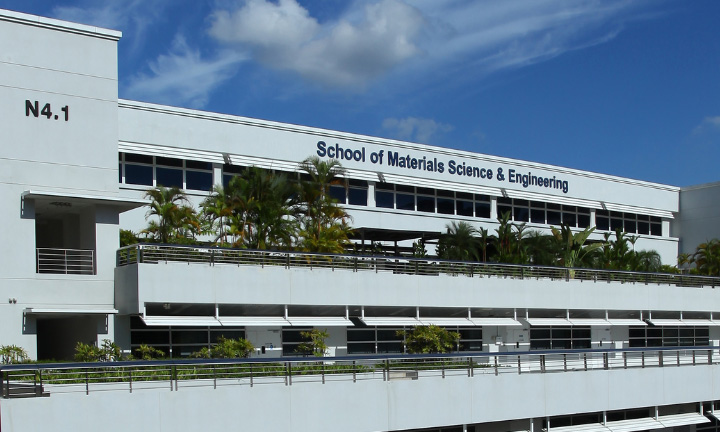
MSE E-Studio (N4.1-B2-02)
Alumni, Current Students
NTU MSE Seminar Hosted by Professor Li Shuzhou
Abstract
Carbon materials can play a crucial role in creating a more sustainable future. This talk will first give a general introduction to the research activities in the Advanced Carbon Research Lab at the University of Sydney. Next, I will highlight two of our recent research topics related to the catalytic applications of carbon materials.
First, carbon catalysts are promising for a range of essential reactions. However, carbon catalysts have inhomogeneous structures, making it challenging to understand and control their catalytic behaviors. We have designed various heterogeneous molecular catalysts with well-defined structures to understand the mechanisms of carbon catalysts. We created coaxial 1D van der Waals heterostructures comprised of a carbon nanotube (CNT) core and a thickness-tunable covalent organic framework (COF) shell. The coaxial structure enables controllable n-doping, enhancing catalytic activity.[1] We introduced β-substituents onto cobalt porphyrins on CNT substrates, thereby synergistically modulating cobalt’s catalytic activity. An octafluoro-substituted catalyst exhibited >94% H2O2 selectivity.[2] We mapped the degradation of the Fe–N–C catalyst in acidic electrolytes and quantified five degradation paths.[3] A Fe–N–C catalyst with an iron polyphthalocyanine shell surrounding CNTs exhibits a unique self-renewal mechanism.[4] Sonicated CNT catalysts show high activity for efficient point-of-use water treatment.[5] Furthermore, we utilized carbon catalysts derived from ZIF-8 via two distinct carbonization methods to demonstrate that balancing the heteroatom coordination environment and the graphitization degree of carbon structures is crucial for achieving high-performance carbon catalysts.[6-7]
Second, methane pyrolysis (CH4 → 2H2 + C) is a promising method for H2 production with low CO2 emissions. Utilizing its solid carbon co-products is critical for its economic competitiveness.[8] Catalytic methane pyrolysis with low-cost iron ore catalysts yields carbon nano-onions encapsulating magnetic iron cores. We demonstrate that they can serve as efficient and recyclable Fenton catalysts for the degradation of pollutants.[9] Further, carbon nano-onions have a high adsorption capacity for antibiotics in wastewater. Surface-oxidized carbon nano-onions also exhibit high catalytic activity for in situ electrochemical H2O2 production. An integrated wastewater treatment process was demonstrated.[10] Purified carbon nano-onions have also been found useful in various battery applications.[11-13] These open the opportunity to turn carbon co-products from H2 production into value-added applications.
Ref: [1] C. Liu et al., ACS Nano 2021, 15, 3309. [2] C. Liu et al. Energy Environ. Sci. 2023, 16, 446. [3] F. Liu et al., ACS Catal. 2024, 14, 9176. [4] F. Liu et al., EES Catal. 2025, 10.1039/D5EY00092K. [5] X. Yang et al., Adv. Mater. 2025, 2504618. [6] L, Lai et al., Carbon 2025, 234, 120038. [7] L. Lai et al. ChemistryEurope 2025, 202500136. [8] J. Prabowo et al., Carbon 2024, 216, 118507. [9] Y. Yao et al., J. Hazard. Mater., 2022, 437, 129328. [10] Y. Yao et al., Appl. Catal. B 2024, 342, 123380. [11] Y. Pan et al., Carbon 2022, 192, 84. [12] Y. Pan et al., Adv. Energy Mater. 2023, 13, 2300495. [13] J. Prabowo et al., Carbon 2025, 234, 120038.
Biography
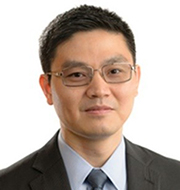
Professor CHEN Yuan
University of Sydney
School of Chemical and Biomolecular Engineering
Dr. Yuan Chen received a Bachelor’s degree from Tsinghua University in China and a Ph.D. from Yale University in the USA. He was an Assistant and Associate Professor at Nanyang Technological University in Singapore from 2005 to 2015. He has been a Professor at The University of Sydney in Australia and the director of the Advanced Carbon Research Lab since 2016. His research focuses on carbon materials and their applications in sustainable energy and environmental fields, including batteries, supercapacitors, electrocatalysts, membranes, and antibacterial coatings. He received the Singapore Young Scientist Award from the Singapore National Academy of Science in 2011, an Australian Research Council Professorial Future Fellowship in 2017, and an Australian Research Council Industry Fellowship in 2024. He is a Fellow of the Royal Society of Chemistry (UK), Royal Australian Chemical Institute, and Institution of Chemical Engineers (UK). He is currently an editor for Carbon and Journal of Alloys and Compounds.
Dr. Yuan Chen received a Bachelor’s degree from Tsinghua University in China and a Ph.D. from Yale University in the USA. He was an Assistant and Associate Professor at Nanyang Technological University in Singapore from 2005 to 2015. He has been a Professor at The University of Sydney in Australia and the director of the Advanced Carbon Research Lab since 2016. His research focuses on carbon materials and their applications in sustainable energy and environmental fields, including batteries, supercapacitors, electrocatalysts, membranes, and antibacterial coatings. He received the Singapore Young Scientist Award from the Singapore National Academy of Science in 2011, an Australian Research Council Professorial Future Fellowship in 2017, and an Australian Research Council Industry Fellowship in 2024. He is a Fellow of the Royal Society of Chemistry (UK), Royal Australian Chemical Institute, and Institution of Chemical Engineers (UK). He is currently an editor for Carbon and Journal of Alloys and Compounds.