
Phonon-Glass Electron-Crystal like High Performance Thermoelectrics by Professor Kanishka Biswas
17 Oct 2025
11.00 AM - 12.00 PM
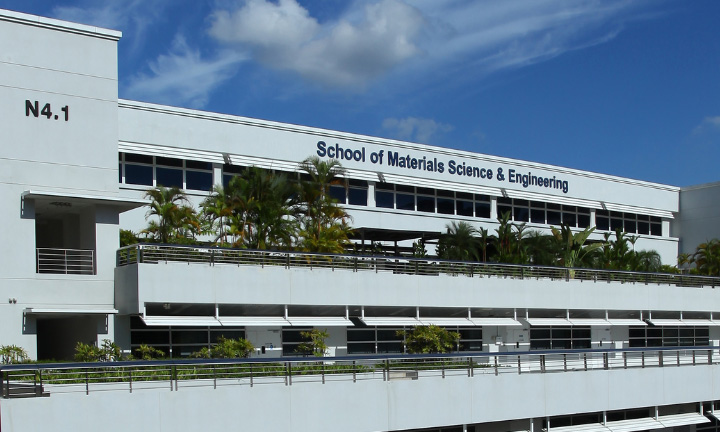
MSE Meeting Room (N4.1-01-28)
Alumni, Current Students
NTU MSE Seminar Hosted by Associate Professor Kedar Hippalgaonkar
Abstract
With about 2/3 of all utilized energy is being lost as heat. Thermoelectric materials can convert waste heat to electrical energy, and it will have significant role in future energy management. Achieving glass-like ultra-low thermal conductivity in crystalline solids with high electrical conductivity, a crucial requirement for high-performance thermoelectrics, continues to be a grand fundamental challenge. Despite this inherent trade-off, the experimental realization of an ideal thermoelectric material with a phonon-glass electron-crystal (PGEC) nature has rarely been achieved. We demonstrated high thermoelectric performance with a near room-temperature figure of merit, zT ~1.5 and a maximum zT ~2.6 at 573 K by optimizing atomic disorder in Cd doped AgSbTe2.1- 3 Cd doping in AgSbTe2 enhances cationic ordering, which simultaneously improves electronic properties by tuning disorder-induced localization of electronic states and reduces lattice thermal conductivity via spontaneous formation of nanoscale (~2-4 nm) superstructures. Further, we showed that isovalent Yb-doping induced enhanced atomic ordering decreases the overlap between the hole and phonon mean free paths and consequently leads to a PGEC-like transport in AgSbTe2. A twofold increase in electrical mobility is observed while keeping the position of the Fermi level nearly unchanged, which leads to zT ~2.4 at 573 K.4 Recently, we discovered PGEC-like thermoelectric transport in entropy stabilized new telluride single crystal, AgGeSnSbTe4. Local distortion caused by the off-centering of Ge atoms, driven by a stereochemically active 4s2 lone pair in a globally symmetric rock-salt structure, plays a key role in suppressing thermal conductivity to its glass limit while maintaining good electrical transport.
- S. Roychowdhury, T. Ghosh, R. Arora, M. Samanta, L. Xie, N. K. Singh, A. Soni, J. He, U. V. Waghmare and K. Biswas, Science, 2021, 371, 722.
- T. Ghosh, S. Roychowdhury, M. Dutta and K. Biswas, ACS Energy Lett., 2021, 6, 2825.
- A. Bhui, S. Das, R. Aurora, U. Bhat, P. Dutta, T. Ghosh, R. Pathak, R. Datta, U. V. Waghmare and K. Biswas, J. Am. Chem. Soc. 2023, 145, 25392.
- V. Taneja, S. Das, K. Dolui, T. Ghosh, A. Bhui, U. Bhat, D. K. Kedia, K. Pal, R. Datta and K. Biswas, Adv. Mater. 2024, 36, 2307058.
- A. Bhui, S. Biswas, S. Paul, S. Das, A. Ghosh, D. Swain, T. K. Maji, S. K. Pati and K. Biswas. J. Am. Chem. Soc., 2025, 147, 29542.
Biography
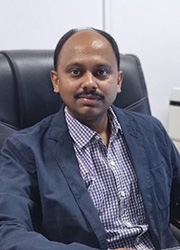
Professor Kanishka Biswas
Jawaharlal Nehru Centre for Advanced Scientific
Prof. Biswas is an Indian scientist recognized for his contributions to solid-state chemistry and materials science, with a research focus on thermoelectric energy conversion, two-dimensional materials, topological quantum materials, and halide perovskites. He obtained his M.S. and Ph.D. degrees (Integrated Ph.D, Advisor: Prof. C. N. R. Rao) in Chemistry from the Indian Institute of Science (IISc), Bengaluru, in 2009, followed by postdoctoral research (Advisor: Prof. Mercouri G. Kanatzidis) at Northwestern University, USA (2009–2012). He currently serves as a Professor at the Jawaharlal Nehru Centre for Advanced Scientific Research (JNCASR), India. He is also the head of the Placement, Alumni and International Relations (PAIRs) office of JNCASR.
He is a Fellow of the Indian Academy of Sciences (elected in 2022) and an invited Fellow of the Royal Society of Chemistry (FRSC), London (2021). His research excellence has been recognized with numerous national and international honors, including the Khosla National Award in Science from IIT Roorkee (2022), the Shanti Swarup Bhatnagar Prize in Chemical Sciences by the Government of India (2021), the Materials Science Annual Prize of the Materials Research Society of India (2020), the Swarna-Jayanti Fellowship from the Department of Science and Technology, Government of India (2019), the Bronze Medal of the Chemical Research Society of India (2019), the Wiley Young Scientist Award by IUMRS-ICAM, Japan (2017), the MRS Singapore Young Researcher Merit Award (2016), and Young Affiliate of The World Academy of Sciences (TWAS) in 2015.
He serves as an Executive Editor of ACS Applied Energy Materials (American Chemical Society) and on the advisory boards of several leading journals, including Advanced Materials (Wiley), Inorganic Chemistry (ACS), Journal of Solid State Chemistry (Elsevier), Journal of Materials Chemistry A (Royal Society of Chemistry), iScience (Cell Press), Materials Horizons (Royal Society of Chemistry), and JACS Au (ACS).
With over 240 publications and 5 patents, he continues to demonstrate how targeted elemental selection; and chemical bonding and structural tuning rooted in the principles of inorganic solid-state chemistry can unlock exceptional material functionalities.