
Ultra-clean Interfaces in Atomically Thin Materials for Electronics by Professor Manish Chhowalla
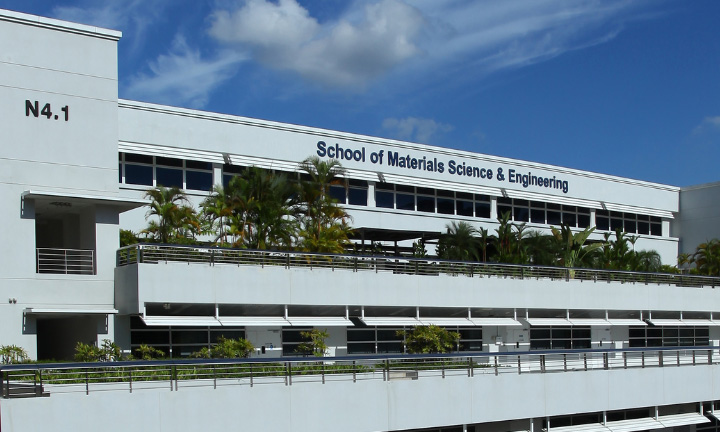
MSE Distinguished Speaker Series 2025 Hosted by Associate Professor Kedar Hippalgaonkar
Abstract
In this presentation I will summarise our work on ultra-clean van der Waals (vdW) contacts on atomically thin semiconductors. We have demonstrated that vdW contacts on two dimensional transition metal dichalcogenides (2D TMDs) enables the realisation of field effect transistors with low contact resistance and high mobility. We have also adopted the strategy of vdW contacts for efficient spin injection and collection. We show that the vdW gap between magnetic metal electrodes and graphene is an efficient tunnel barrier for spin injection. Very recently, we have demonstrated high efficiency WSe2 solar cells with vdW contacts. Specifically, we can achieve near ideal diodes with vdW
contacts with high on/off ratio and an ideality factor of 1.1. These diodes results in solar cells with very high current density and open circuit voltage resulting in efficiency values of > 10%. My presentation will summarise methods for achieving vdW contacts and their fundamental properties that enable the high performance devices described above.
Biography
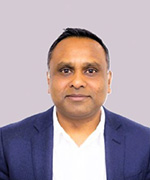
Professor Manish Chhowalla
Department of Materials Science & Metallurgy
University of Cambridge
Professor Manish Chhowalla, FREng is a globally recognized leader in the phase engineering of lowdimensional materials. His pioneering research has reshaped the understanding and application of materials such as atomically thin transition metal dichalcogenides (TMDs), graphene oxide, and diamond-like carbons. Over the course of his career, he has established new research directions, developed novel techniques for realizing electronic and energy devices, and consistently translated scientific discoveries into real-world technologies. His influence is reflected not only in his scholarship— ~ 320 publications in prestigious journals, more than 113,500 citations, and an H-index of 124 — but also in his industrial impact, global leadership, and mentorship of the next generation of scientists.