
Tuning Water Structure and Reactivity at Electrified Interfaces: Towards Nanostructured Aqueous Electrolytes by Professor Mathieu Salanne
07 Oct 2025
10.00 AM - 11.00 AM
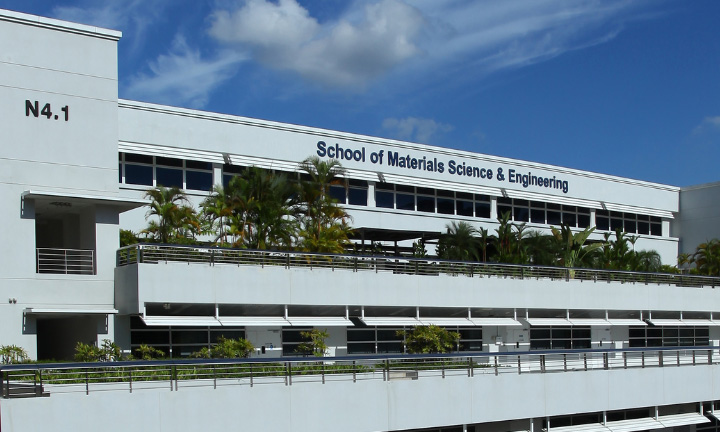
MSE Meeting Room (N4.1-01-28)
Alumni, Current Students
NTU MSE Seminar Hosted by Professor Li Shuzhou
Abstract
Water, traditionally viewed as a passive solvent, is increasingly recognized as a dynamic reactant in electrochemical systems. The advent of "water-in-salt" electrolytes (WiSEs) and hybrid organic/water mixtures has revolutionized aqueous batteries, electrocatalysis, and electrosynthesis by expanding electrochemical windows, modulating reactivity, and enabling selective transformations. This seminar explores how the speciation, confinement, and nanostructuring of water in ionic and organic solvents can be harnessed to control its reactivity and selectivity at electrified interfaces.
I will first discuss the physicochemical properties of WiSEs, where water molecules are predominantly coordinated to cations, forming quasi-solvate ionic liquids and nanodomains. This unique environment alters water’s hydrogen-bonding network, in particular at the interface with the electrodes, which impacts strongly the electrochemical stability and enables high-voltage aqueous batteries [1,2]. Based on a similar idea, electrolytes were developed by confining water within organic matrices (e.g., acetonitrile, DMF, THF). This approach revealed how short- and long-range interactions—dictated by cation hydrophilicity, anion identity, and nanodomain formation—can fine-tune water’s electrochemical reactivity [3]. Recently, molecular dynamics (MD) simulations combined with small-angle X-ray scattering (SAXS) have demonstrated that the size and composition of aqueous nanodomains in hybrid electrolytes can be controlled by modulating the organic solvent [4,5]. The nanostructure directly impacts the reactivity of water for reactions such as electrocatalytic epoxidation.
[1] Bouchal et al., Angew. Chem., Int. Ed., 59, 15913-15917 (2020)
[2] Gomez Vazquez et al., J. Am. Chem. Soc., in press (2025)
[3] Dubouis et al., Nature Catalysis, 3, 656-663 (2020)
[4] Dorchies et al., J. Am. Chem. Soc., 144, 22734–22746 (2022)
[5] Dorchies et al., J. Am. Chem. Soc., 145, 17495–17507 (2024)
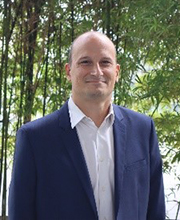
Professor Mathieu Salanne
Sorbonne University (France)