
From Bench to Bedside: Polyion Complex Nanocarriers for Nucleic Acid Therapy and Beyond by Professor Kazunori Kataoka
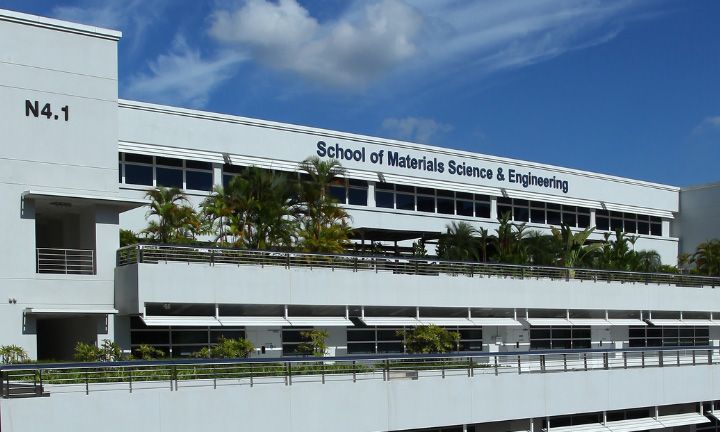
NTU MSE Seminar Hosted by Professor Chen Xiaodong
Abstract
Polyion complex (PIC) nanocarriers constitute a powerful platform for nucleic acid therapeutics. We have established a clinically translatable system, the unit polyion complex (uPIC), built from a block copolymer consisting of two-arm PEG linked to short oligocations such as oligolysine or oligoornithine. By simply mixing with oligonucleotides, uPICs spontaneously self-assemble into well-defined nanostructures. A unique feature of this system is its dynamic pairing capability: circulating block copolymers can capture complementary oligonucleotides in the bloodstream, forming functional complexes in situ—an event reminiscent of a “rugby pass.” This enables flexible formulation strategies, including the option of separately administering drug and carrier components.
The resulting complexes display high physicochemical stability in circulation, which improves pharmacokinetics and biodistribution, thereby ensuring efficient and reliable delivery to target tissues. Crucially, the entire uPIC formulation process is readily scalable under GMP-compliant conditions. It requires only aqueous mixing—without organic solvents, specialized equipment, or covalent modification—making it particularly well suited for seamless transition from laboratory research to clinical production.
Two uPIC-based drug candidates have already advanced into Phase I clinical trials in Japan: one delivering siRNA for HER2-negative metastatic breast cancer and the other an antisense oligonucleotide (ASO) for glioblastoma. Both demonstrated excellent safety with no significant adverse effects, underscoring the translational viability of this approach.
Beyond nucleic acid delivery, we have repurposed the same two-arm PEG-oligolysine/oligoornithine block copolymer as a transient stealth coating for liver sinusoidal endothelium. This strategy suppresses non-specific hepatic capture and redirects nanocarriers to extrahepatic tissues such as tumors. The coating is selective, reversible, and naturally cleared via biliary excretion.
Together, these advances position PEG-oligolysine/oligoornithine block copolymers as a versatile and clinically practical platform for overcoming long-standing delivery barriers in molecular medicine.

Professor Kazunori Kataoka
Innovation Center of NanoMedicine
Kawasaki Institute of Industrial Promotion
Prof. Kazunori Kataoka is a Professor Emeritus at the University of Tokyo and the Center Director of the Innovation Center of NanoMedicine (iCONM) at the Kawasaki Institute of Industrial Promotion. Over the past 40 years, Prof. Kataoka has made significant contributions to the field of biomaterials, particularly in drug delivery, drug targeting, non-viral gene delivery, and nanomedicine. He has published over 600 peer-reviewed articles, garnered over 100,000 citations, achieving an h-index of 168. He has been recognized as a Highly Cited Researcher by Clarivate Analytics 9 times since 2014. He holds over 600 issued patents and has founded five start-ups. Prof. Kataoka's numerous awards include the Clemson Award from the Society for Biomaterials (2004), the Founder’s Award from the Controlled Release Society (2006), the NIMS Award from the National Institute of Materials Science, Japan (2009), the Humboldt Research Award (2012), the Leo Esaki Prize (2012), the Gutenberg Research Award (2015), the Princess Takamatsu
Cancer Research Fund Prize (2017), the Biomaterials Global Impact Award (2023), and the Clarivate Citation Laureate in Chemistry (2023). He has also been elected as a Member of the Engineering Academy of Japan (2011), an International Member of the U.S. National Academy of Engineering (2017), and a Fellow of the U.S. National Academy of Inventors (2017).