
From Photocatalysis to Photon-Phonon Co-driven Catalysis forInert Molecules Activation by Professor Junwang Tang
05 Aug 2025
03.30 PM - 04.30 PM
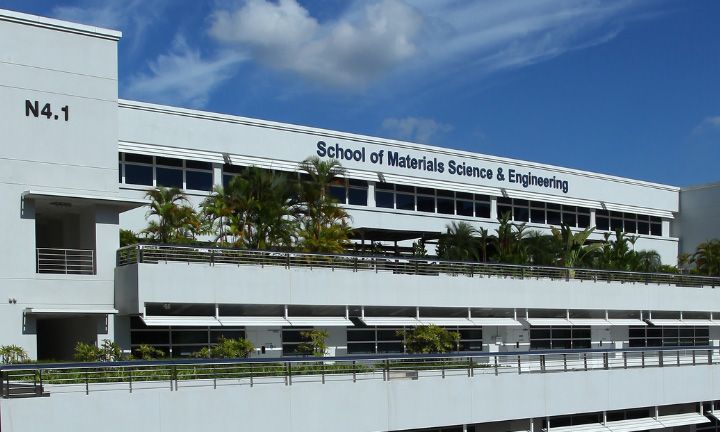
MSE E-Studio (N4.1-B2-02)
Alumni, Current Students
NTU MSE Seminar Hosted by Professor Chen Xiaodong
Abstract
Photon-driven small molecules activation, eg. H2O splitting, is scientifically and industrially of significance as it promises an efficient pathway for green H2 production. However it is kinetically very challenging due to a multi-electron process [1]. For green chemicals synthesis, other inert molecules activation (e.g. N2, CO2 and CH4 etc) are equally important while rather challenging.
Our early study on charge dynamics in inorganic catalysts reveals that the current low solar to fuel/chemical conversion efficiency is due to both fast charge recombination and sluggish oxidation reaction [2], we thus developed effective material strategies to improve the activities of catalysts. Typically, we found that photon-phonon codriven process over single atom catalysts could dramatially improve H2 production [3]. Then the first polymer-based Z-sheme for H2O splitting was demonstrated by us [4]. Such progress also stimulated us to store green H2 in NH3 by photon-driven activation of both H2O and N2 [5]. Furthermore, we coupled photons with phonons to co-drive catalytic methane conversion to C2 over Au loaded TiO2,
achieving the benchmark results in this area [6]. Such photon-phonon co-driven catalysis was again demonstrated for methane to formaldehyde synthesis [7]. Very recently, we developed a new concept of an intramolecular junction, which is composed of alternate benzene and triazine motifs in CTF polymer. Such structure can facilitate fast charge separation and is characterised by spatially separated reduction and oxidation sites in one molecular unit, thus substantially improving the methane conversion to ethanol and mitigating the overoxidation to CO2, resulting in an unprecedented ethanol yield and selectivity of 80% operated under ambient condition [8].
Biography
Professor Junwang Tang
Prof. Junwang (John) Tang is a Member of the Academia Europaea, a Royal Society Leverhulme Trust Senior Research Fellow, Fellow of the European Academy of Sciences, Fellow of the Royal Society of Chemistry, Fellow of IMMM and Honorary Fellow of CCS. He had been the Director of UCL Materials Hub and Chair of Materials Chemistry and Engineering in the department of Chemical Engineering at UCL, UK.He is currently the Director of Industrial Catalysis Center in the Department of Chemical Engineering and Chair Professor of Materials Chemistry and Catalysis at Tsinghua University, China and Visiting Professorat UCL, UK. Tang has pioneered in coupling photons with phonons for small molecule (H2O, CO2, N2, CH4 etc.) activation to produce zero-carbon fuels and green chemicals.
Biography
Professor Junwang Tang
Department of Chemical Engineering
Tsinghua University, Beijing China
Prof. Junwang (John) Tang is a Member of the Academia Europaea, a Royal Society Leverhulme Trust Senior Research Fellow, Fellow of the European Academy of Sciences, Fellow of the Royal Society of Chemistry, Fellow of IMMM and Honorary Fellow of CCS. He had been the Director of UCL Materials Hub and Chair of Materials Chemistry and Engineering in the department of Chemical Engineering at UCL, UK.He is currently the Director of Industrial Catalysis Center in the Department of Chemical Engineering and Chair Professor of Materials Chemistry and Catalysis at Tsinghua University, China and Visiting Professorat UCL, UK. Tang has pioneered in coupling photons with phonons for small molecule (H2O, CO2, N2, CH4 etc.) activation to produce zero-carbon fuels and green chemicals.