
Emerging materials for indoor photovoltaics: Discovery and AI-driven Optimisation by Assoc Prof Robert L. Z. Hoye
07 Jul 2025
01.00 PM - 02.00 PM
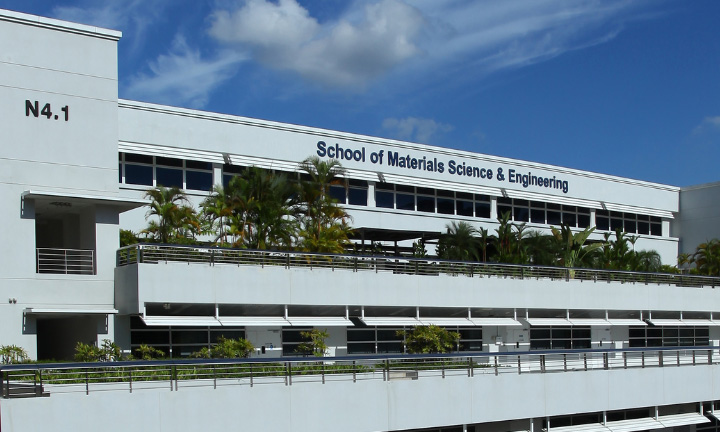
MSE Meeting Room (N4.1-01-28)
Alumni, Current Students
NTU MSE Seminar Hosted by Professor Lydia Helena Wong
Abstract
Inorganic compounds based on heavy pnictogens have recently gained substantial attention for indoor photovoltaics to sustainably power Internet of Things electronics [1]. Such materials include Bi- and Sb-based compounds, such as Sb2S3, Ag-Bi-I materials and BiOI. These materials have qualitatively similar electronic features at their band-edges as lead-halide perovskites, which are considered conducive towards defect tolerance, but are comprised of RoHS-compliant elements and are substantially more stable in air [2]. The bandgaps of these materials are close to 1.9 eV, which is ideal for harvesting white LED lighting, and have high optical limits in efficiency [1].
This talk discusses the discovery and accelerating the optimisation of these emerging materials. For the first topic, we focus on a recently proposed material, CsBiSCl2. This material was recently reported to achieve >10% power conversion efficiency under 1-sun illumination, with a stable bandgap of 2.012 eV [3]. If this were true, then CsBiSCl2 could present a revolution in the perovskite-inspired materials field, particularly for indoor photovoltaics. Unfortunately, the Dion-Jacobson structure proposed is inconsistent with the stoichiometry claimed for this material. We conduct ab-initio random structure search to identify the ground state structure of this material, finding phases much lower in energy than the perovskite phase. In examining the reported synthesis method reported [3], we identify a critical challenge is the presence of I contamination, which causes the formation of Cs3Bi2I9 instead. Solid-state synthesis without I did not give rise to the desired phase, showing that it is non-trivial to obtain this material and casting doubt that >10%-efficient CsBiSCl2 photovoltaics have been achieved.
The second section of the talk focuses on using AI-driven optimisation of morphology, in this case focussing on AgBiI4. In the early development of materials for photovoltaics, achieving pinhole-free morphology is crucial, requiring time-intensive, iterative optimisation. Here, we develop the Daisy Visual Intelligence Framework, which automates the analysis of scanning electron microscopy (SEM) images to identify pinholes and quantify their density 120 faster than manual methods. By developing an offline reinforced learning agent, we accelerated the identification of optimal synthesis conditions by 87, trained on a set of 200 SEM images. Combining the image interpreter and synthesis planner, we expect that Daisy can
- Grandhi, …, Hoye, Vivo,* Nat. Rev. Clean Technol., 1, 132 (2025)
- Mosquera-Lois, Huang, Lohan, Ye, Walsh,* Hoye,* Nat. Rev. Chem., 9, 287 (2025)
- Huang et al. J. Phys. Chem. Lett., 15, 3383 (2024)
- Nandishwara, …, Hoye,* Sun,* npj Comput. Mater., In Press (2025). Preprint: 10.26434/chemrxiv-2025-q53n2
Biography
Associate Professor Robert L. Z. Hoye
Inorganic Chemistry Laboratory, University of Oxford, UK
Robert Hoye is an Associate Professor of Materials Chemistry at the University of Oxford, where he is also a Fellow of St. John’s College and a Royal Academy of Engineering Senior Research Fellow. Prof. Hoye completed his PhD at the University of Cambridge (2012-2014), followed by a postdoc at MIT (2015-2016), before returning to the University of Cambridge as a College Research Fellow (2016-2019). In 2020, he moved to Imperial College London as a Lecturer, then Senior Lecturer (Aug. 2022 -). In Oct. 2022, he moved to Oxford as Associate Professor. Prof. Hoye’s group focuses on developing inorganic semiconductors for energy applications, including metal-halide perovskite nanocrystals, and discovery of lead-free perovskite-inspired materials. His group’s research spans from fundamentals (including spectroscopy and computations) to materials synthesis and applications in photovoltaics, light-emitting diodes and detectors. More information: hoyegroup.web.ox.ac.uk
Prof. Hoye was awarded the 2021 Imperial President’s Award for Outstanding Early Career Researcher, as well as the 2024 RSC Beilby Medal and Prize. He is CTO of NanoPrint Innovations Ltd.