
From Big Data to Big Materials: Autonomous Multimodal Microscopy for Materials and Physics Discovery by Professor Sergei V. Kalinin
03 Jul 2025
03.00 PM - 04.00 PM
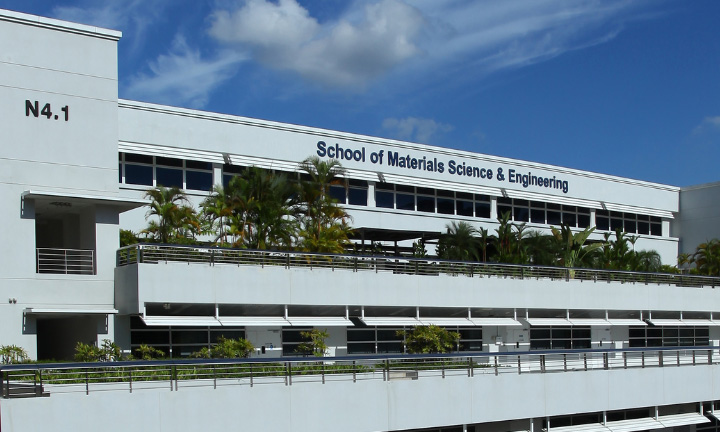
MSE Meeting Room (N4.1-01-28)
Alumni, Current Students
NTU MSE Seminar Hosted by Associate Professor Kedar Hippalgaonkar
Abstract
Materials discovery remains central to technological progress—from energy and quantum devices to sustainable manufacturing. Over the past two decades, theoretical workflows for high-throughput screening and predictive modeling have matured significantly, ushering in the era of “big data” and now ML in computational materials science. However, the true test of these predictions lies in experimental realization. In the last five years, experimental synthesis has undergone rapid transformation through lab robotics and scalable platforms such as combinatorial libraries. Yet, the critical bottleneck remains characterization. This is particularly the case for self-driving laboratories, where scaling demands rapid, quantitative insight into structure and function at sub-micron length scales and sub-second timescales.
In this presentation, I will describe our work in closing this loop by developing autonomous workflows for comprehensive mapping of composition–structure–property relationships. As a first example, I will demonstrate how scanning probe microscopy (SPM) can be quantified and fully automated for the exploration of combinatorial libraries of ferroelectric, photovoltaic, and electrochemical materials. These workflows are inherently non-myopic, involving multi-step sequences of spectroscopy optimization, adaptive experiment design, and structure–function discovery. All these capabilities are implemented through real-time feedback and decision-making loops on ML-enabled SPM, and are benchmarked against human operator baseline. We then extend these concepts to scanning transmission electron microscopy (STEM), which enables atomic-scale insights into structure, chemistry, and local functional properties. To address the sample preparation bottleneck inherent to STEM, we introduce the concept of random libraries: large and diverse sets of local environments enabling the exploration of complex, high-dimensional materials design spaces using statistical methods. To summarize, 20 years ago, the rise of big data revolutionized theory in materials science. Today, we are entering the era of “big materials”, where we start the same scale-up for synthesis and characterization. Autonomous and intelligent characterization is the final step in realizing the vision of closed-loop, ML-driven materials discovery.
Biography
Professor Sergei V. Kalinin
Sergei Kalinin is a Weston Fulton chair professor at the University of Tennessee, Knoxville. In 2022 – 2023, he has been a principal scientist at Amazon special projects (moon shot factory). Before then, he has spent 20 years at Oak Ridge National Laboratory where he was corporate fellow and group leader at the Center for Nanophase Materials Sciences. He received his MS degree from Moscow State University in 1998 and Ph.D. from the University of Pennsylvania (with Dawn Bonnell) in 2002. His research focuses on the applications of machine learning and artificial intelligence methods in materials synthesis, discovery, and optimization, automated experiment and autonomous imaging and characterization workflows in scanning transmission electron microscopy and scanning probes for applications including physics discovery, atomic fabrication, as well as mesoscopic studies of electrochemical, ferroelectric, and transport phenomena via scanning probe microscopy. When at ORNL, he led several major programs integrating the ML and physical sciences and instrumentation, including the Institute for Functional Imaging of Materials (IFIM 2014-2019), the first program in DOE integrating ML and physical sciences, and the microscopy effort in INTERSECT program that realized first ML-controlled scanning probe and electron microscopes. At UTK MSE, he participated in building one of the first efforts in the country on ML-driven materials exploration. At UTK, his team has now realized fully AI-controlled SPM and STEM systems and co-orchestration workflows between multiple characterization tools for scientific discovery. He has also taught multiple courses on the ML for materials science and microscopy including Bayesian optimization methods. Sergei has co-authored >650 publications, with a total citation of ~58,000 and an h-index of ~118. He is a fellow of NAI, Academia Europaea, AAAS, RSC, AAIA, MRS, APS, IoP, IEEE, Foresight Institute, and AVS; a recipient of the Adler Lectureship (APS 2025), Duncumb Award (MSA 2024), Medard Welch Award (AVS 2023), Orton Lectureship (ACerS 2023), Feynmann Prize of Foresight Institute (2022), Blavatnik Award for Physical Sciences (2018), RMS medal for Scanning Probe Microscopy (2015), Presidential Early Career Award for Scientists and Engineers (PECASE) (2009); Burton medal of Microscopy Society of America (2010); 5 R&D100 Awards (2008, 2010, 2016, 2018, and 2023); and a number of other distinctions. As part of his professional services, he organized many professional conferences and workshops at MRS, APS and AVS; for 15 years organized workshop series on PFM, and served/s on multiple Editorial Boards including NPJ Comp. Mat., J. Appl. Phys, and Appl. Phys Lett.
Professor Sergei V. Kalinin
University of Tennessee, Knoxville and Pacific Northwest National Laboratory