A Rainwater-Based Aqueous Stationary Rechargeable Energy Storage System
Synopsis
Introducing a rainwater-based aqueous electrolyte for stationary rechargeable energy storage, paving the way for an aqueous battery for enhanced fire safety, rapid charging, and exceptional cycle longevity, contributing to sustainable power solutions.
Opportunity
To achieve a net-zero carbon emission goal, energy derived from fossil fuels are increasingly being replaced with green renewables such as solar and wind power. These renewable energies, being intermittent in nature, require reliable and sustainable energy storage systems.
Batteries based on lithium-ion and lead-acid are widely used as energy storage systems. Concerns arise over fire safety with conventional lithium-ion batteries, attributed to their highly volatile and flammable electrolytes. Similarly, the acidic electrolytes and carcinogenic lead in lead-acid batteries pose threats to both human health and the environment. To address these issues, a safe rechargeable water-based battery based on a unique green aqueous electrolyte formulation with near-neutral pH is proposed.
This formulation widens the electrochemical stability window and enhances ionic conductivity, resulting in superior electrochemical performance of electrode materials. These advancements make it ideal for large-scale energy storage applications.
Technology
This invention relates to a rainwater-based aqueous electrolyte intended for stationery rechargeable energy storage systems, essentially forming an aqueous battery where water is the main electrolyte. This innovative battery technology enhances fire safety. By incorporating environmentally friendly electrolyte compositions, the battery cells, featuring readily available sodium- and zinc-based electrodes, not only enable rapid charging but also demonstrate exceptional cycle longevity.
This combination ensures an efficient and reliable energy storage for intermittent renewable sources, contributing to sustainable power solutions. Additionally, additives have been incorporated to create aqueous hybrid electrolytes with varied mass ratios, ensuring the prepared electrolyte remains unfrozen even at -20°C.
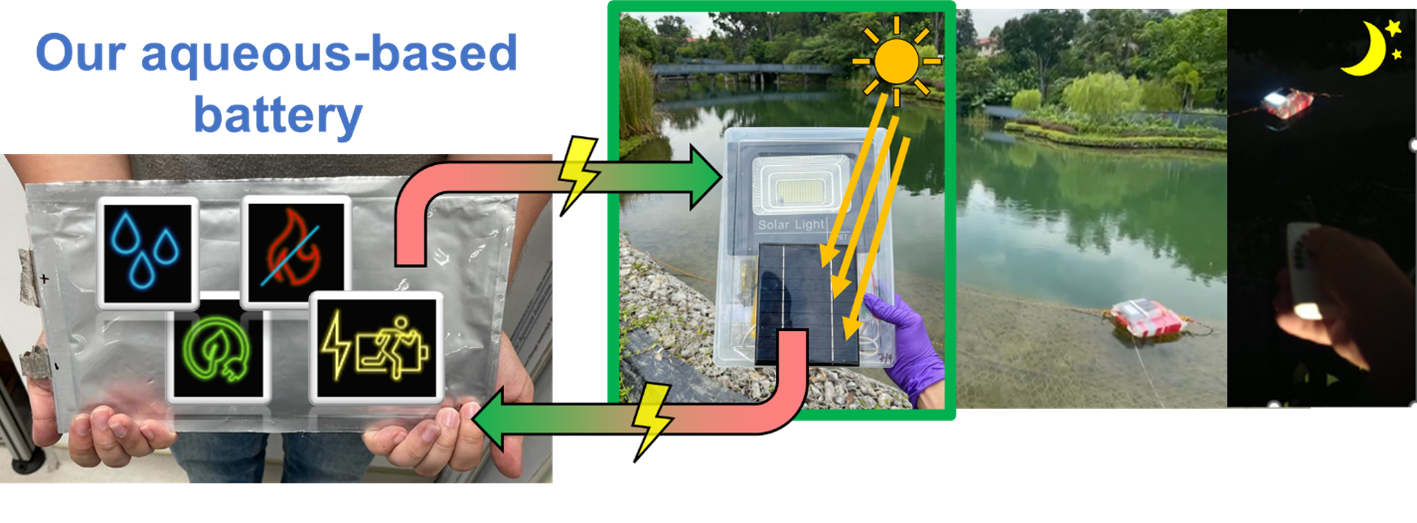
Figure 1: Rainwater-based aqueous electrolyte for rechargeable energy storage systems
Applications & Advantages
- Sustainable energy storage: ideal for storing renewable energies like solar and wind power.
- Cost-effective energy: provides provides low-cost energy for household, industrial, commercial and EV charging needs.
- Reliable backup power: ensures a safe and stable energy system for high-security buildings such as data centres.
- Safe energy storage system: No fire/explosion, using non-toxic and non-corrosive materials.
- Sustainable power solution: environmentally friendly system based on earth abundant resources.
- High performance: offers high-rate capability with superior cell energy density.
- Ease of assembly and maintenance: Operable in ambient environments.


.tmb-listing.jpg?sfvrsn=5b527752_2)
.tmb-listing.jpg?sfvrsn=6307022a_2)

.tmb-listing.jpg?sfvrsn=9b7345be_2)