Novel IC Scheme Based on Magnetic Logic Device – Spin-Orbit Torque (SOT) Driven Logic
Synopsis
Embedded systems integrate magnetic-RAM to reduce data processing latency, challenging silicon-based CMOS. Spin-orbit torque enables multi-stage logic operations, enhancing performance and reducing power consumption in IC circuitry with embedded magnetic RAM.
Opportunity
In embedded systems, integrating non-volatile memory (NVM) is trending to reduce data processing latency. Magnetic RAM introduces new challenges to silicon-based CMOS, prompting the adoption of magnetic device-based logic and enabling magnetic logic circuitry in tech nodes.
Technology
This invention uses spin-orbit torque (SOT) in magnetic devices for logic processing. A single SOT device enables multi-stage logic operations, such as AND, NAND, XOR, and XNOR, by manipulating three parameters across a nanowire Hall cross-bar structure comprising:
- Magnetic field
- Write current
- “Probing current direction” used in extracting the voltage across Hall cross bar junction
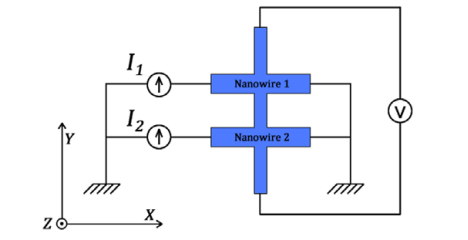
Figure 1: Magnetic device with spin-orbit torque (SOT) driven logic.
Applications & Advantages
The main application areas include embedded systems and IC circuitry featuring embedded magnetic RAM. This technology offers the following advantages:
- Enhances system performance and reduces power consumption by minimising data transfer between memory and processor.
- Enables direct data sensing.

.tmb-listing.jpg?sfvrsn=a9c05adf_2)
.tmb-listing.jpg?sfvrsn=abbd2980_1)
.tmb-listing.jpg?sfvrsn=43b583b8_2)

.tmb-listing.jpg?sfvrsn=57e7d9a3_2)