
Light Detector Without Optical Multiplication for Quantum Technologies, Medical Imaging and Metrology Devices
Synopsis
This technology revolutionises single photon detection, enhances sensitivity, resolution and reduces radiation doses. With a novel distributed detector design, it improves photon number resolution using inefficient constituent detectors like SNSPDs, offering benefits across quantum light detection, secure communication, computing, medical imaging and more. The technology owner seeks co-development and licensing partners.
Opportunity
Single photon detection has led to tremendous improvements in instrumentation and its vast scientific application because of its sensitivity leading to higher contrast, higher resolution and lower doses required. In contrast, technologies such as single-photon avalanche diodes (SPADs), photo multiplier tubes (PMTs), and superconducting nanowire single-photon detectors (SNSPDs) still need further improvement to address current sensing and detection needs. These detectors are limited to only two output signals: light detected (on) and light not detected (off). With the emerging trend for improve sensing and detection, current potential solutions are lacking in registering the presence of light and identifying the number of photons.
This technology offer includes novel device method and design of light detector to effectively solve precise measurement challenges by providing efficient and robust photon number resolving detection of light. In addition, this technology can be applied to a broad range of detector types for increasing efficiency and temporal characteristics for detection of quantum and classical light.
The technology owner is looking for partners in quantum light detection, quantum-secure communication, quantum computing, medical imaging, fluorescence measurement and metrology for further co-development of the quantum technology. The owner is also keen to license this technology.
Technology
This method allows the design and fabrication of distributed detectors for photon number resolution and beyond, where the distributed detector is represented by a special arrangement of constituent detectors, like SNSPDs. The technical features and specifications are:
- Improved efficiency of photon number resolution with inefficient constituent detectors: Conventional methods of photon number resolving (PNR) detector require each constituent detector to be 100% efficient; otherwise, the efficiency of the PNR detection drops exponentially. In contrast, our technology exploits inefficient constituent detectors. For instance, the distributed detector can be assembled out of ten constituent detectors with absorption of 17% each without compromising much on the total efficiency of the distributed detector.
- Lower recovery time and faster detection: In conventional photon detector design, to improve sensitivity, the detector would require longer nanowires for SNSPDs. However, this would be achieved at the expense of longer recovery time. This technology offer exploits weakly absorbing constituent SNSPDs without compromising sensitivity and recovery time, thus allowing swifter detection.
- Robustness against fabrication imperfections and high fabrication yield: The distributed detector is a relatively simple structure with a small number of layers. The structure provides a “compensatory” mechanism. If there is a drop in performance for any single detector, the efficiency of the whole detection will not be compromised due to increased absorption by other detectors within the structure.
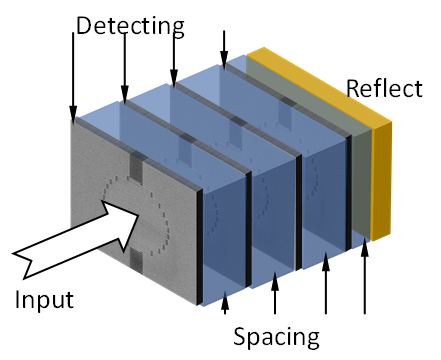
Figure 1: Light detector for quantum technologies and metrology devices.
Applications & Advantages
This technology can be used to improve the current performance of light detection or design new architectures of photon detectors.
The potential applications are in quantum light detection, quantum-secure communication, quantum computing, medical imaging, fluorescence measurement, and metrology, where the technology offer could help in the following manner:
- Modelling and design of photon detector system
- Fabrication technology of photon detector.
Benefits for users:
- Improved security for quantum communication
- Lower rate of errors for quantum computing
- Quantum-enhanced measurement for metrology
- Lower patient dosage for X-ray imaging
- Improved long-range sensing for LiDAR
- Faster imaging and improved resolution for fluorescence measurement
.tmb-listing.jpg?sfvrsn=a9c05adf_2)
.tmb-listing.jpg?sfvrsn=abbd2980_1)

.tmb-listing.jpg?sfvrsn=7a33f2b7_2)
.tmb-listing.jpg?sfvrsn=3b74ec1c_2)