Cheng Yu’s PhD Quest to Redefine Cancer Therapy
How the College of Science Dean’s Merit Award 2026 recipient is leveraging nanotechnology to train the body’s immune system against tumors.
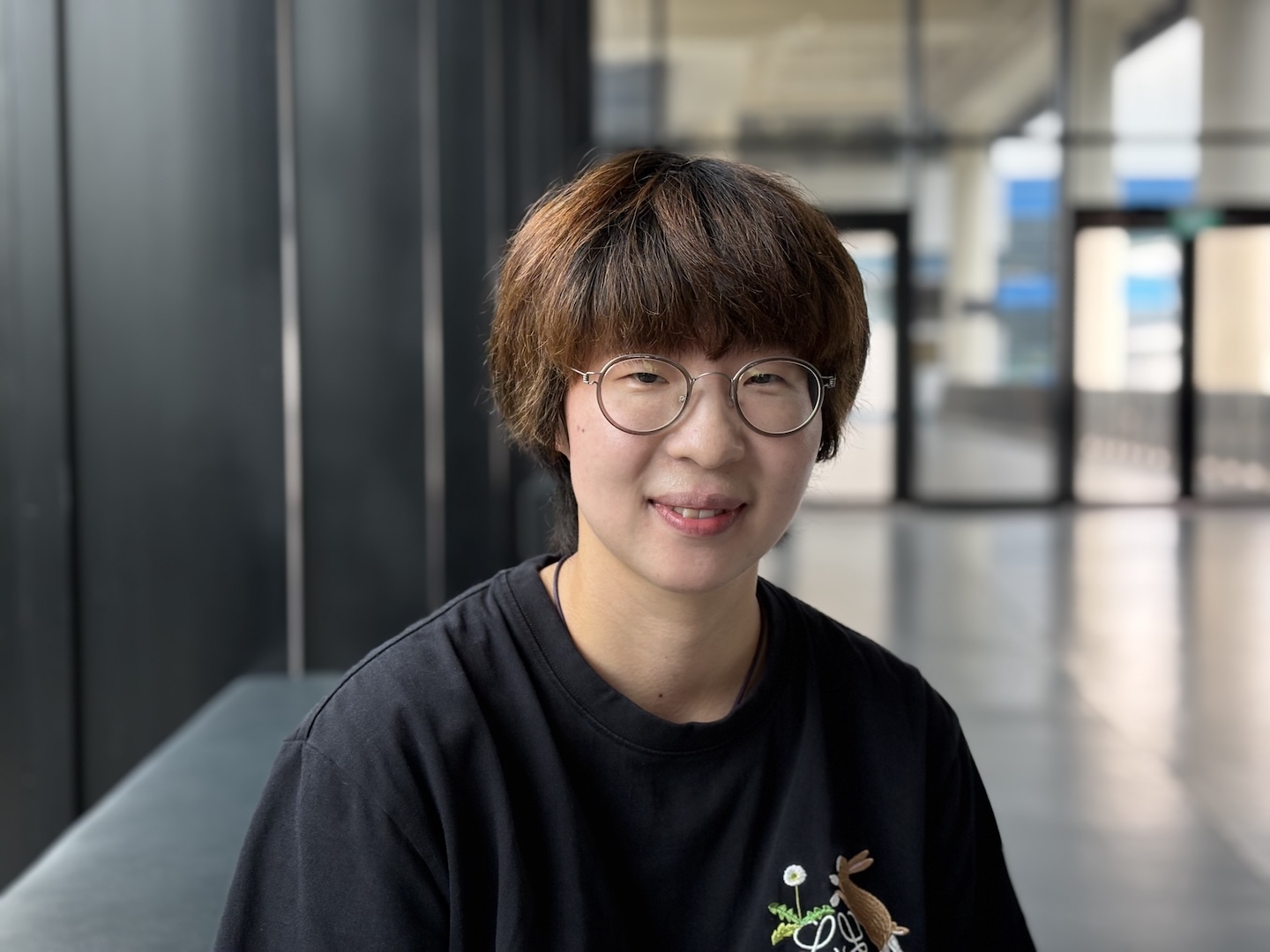
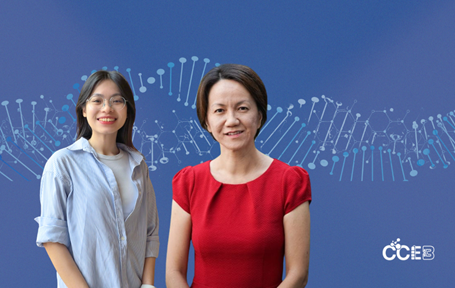
For many, cancer is a complex puzzle solved in fragments. But for Cheng Yu, a PhD graduate from the School of Chemistry, Chemical Engineering and Biotechnology (CCEB), the key to conquering this devastating disease lies in bridging two distinct scientific frontiers: nanotechnology and immunology.
Cheng Yu’s pioneering work in Professor Zhao Yanli’s group on the rational design of nanosonosensitizers has not only earned her deep academic respect but has also distinguished her as a recipient of the prestigious College of Science Dean's Merit Award 2026. Yet, behind the accolades lies a deeply personal story of resilience, intellectual freedom, and a drive to create real-world clinical impact.
Finding Freedom at the Interface of Science
Reflecting on her doctoral journey, Cheng Yu credits the collaborative spirit of the CCEB community and her supervisor’s support as a cornerstone of her growth.
"What I enjoyed most was the people and the vibrant research environment," she shares. "During my PhD, I had the chance to collaborate with individuals from very different backgrounds and learn from researchers with diverse expertise."
Equally vital was the supportive mentorship that allowed her to push scientific boundaries. Cheng Yu notes that having a supervisor who offered trust rather than rigid constraints made all the difference.
"My professor gave me the space to explore the research directions I was most interested in. That freedom allowed me to independently develop my ideas and turn them into meaningful research. Looking back, CCEB was not just where I did my PhD; it was where I truly grew as a researcher and as a person."
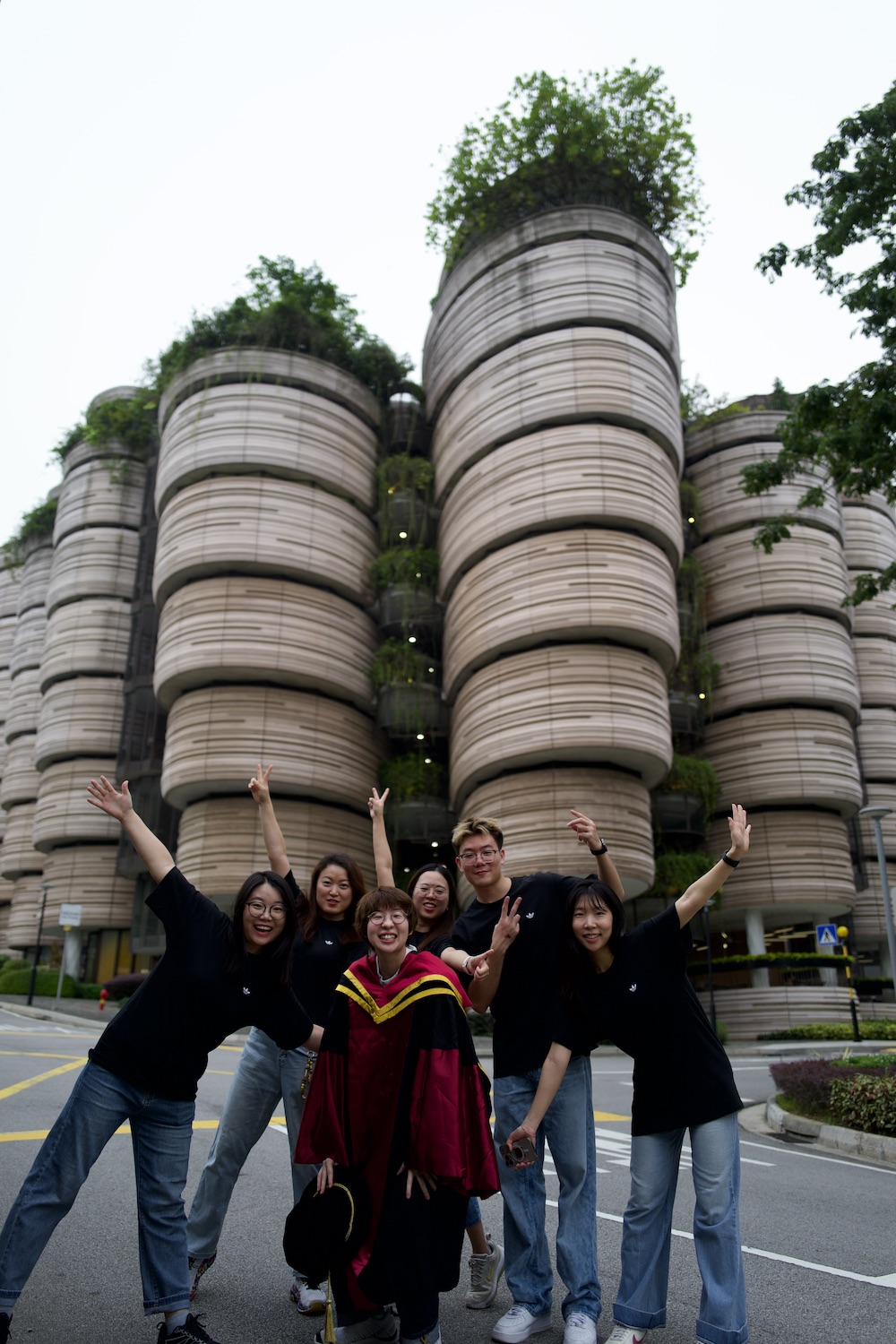
Cheng Yu with her friends (who are also her lab mates) in front of the UOB Innovation Hub after her convocation ceremony
Leveraging on Nanotechnology to Target Cancer Cells
Cheng Yu’s doctoral thesis, titled “Development of Nanosonosensitizers for Cancer Sono-Immunotherapy,” tackles a fundamental limitation of modern cancer treatments.
While localized therapies can destroy primary tumors, cancer remains a systemic threat capable of returning or metastasizing. Cheng Yu’s research asks a bold question: How can we turn a localized treatment into a systemic and durable anti-tumor response?
To solve this, she developed three innovative "nanosonosensitizer" platforms. When introduced to the body, these tiny nanoparticles gather inside tumors. When targeted with ultrasound—which can safely penetrate deep into bodily tissue—the nanoparticles activate, destroying the cancer cells locally.
However, the real magic happens next.
"Rather than simply asking, 'How can we kill more tumor cells?' my thesis asks, 'How can we use localized tumor destruction to teach the immune system to fight cancer throughout the body?'" Cheng Yu explains.
"Ideally, treatment should not only destroy the primary tumor but also train the immune system to recognize and attack cancer cells anywhere else in the body. That is why I focused on designing nanosonosensitizers that bridge these two critical processes."
Embracing Uncertainty: Learning to Fail Forward
Conducting cutting-edge research is rarely a straight line. For Cheng Yu, navigating the inevitable setbacks of laboratory experiments was her greatest trial—and her most valuable lesson.
"One of the biggest hurdles was dealing with the inherent uncertainty of research," she reflects. "There were definitely periods when experiments didn't go as planned, and I would spend weeks or even months trying to understand what went wrong."
Instead of letting failure stall her progress, Cheng Yu developed a highly systematic, collaborative approach. She began breaking problems down to their core, diving back into scientific literature, and bouncing ideas off her colleagues and mentor to test new theories.
"Ultimately, the biggest lesson I learned was resilience. Research rarely gives you immediate answers, so you have to remain curious and keep moving forward, even when things don’t work the first time."
The Daily Anchor: Recharging at the SRC
To maintain the high-octane focus required for her research, Cheng Yu found her sanctuary on campus. Almost every evening, she would leave the lab and head to NTU’s Sports & Recreation Centre (SRC) to decompress.
"After spending the entire day in the lab, it was the perfect way to switch off and recharge," Cheng Yu recalls. "What I especially loved was the atmosphere. There were always people running, playing sports, or just being active. Being surrounded by that energy left me feeling refreshed, and it became an essential part of my daily routine."
An Ambitious Horizon: Moving Beyond the Lab
With her PhD completed and a prestigious Dean’s Merit Award to her name, Cheng Yu is now setting her sights on postdoctoral research. Yet, while publishing papers is a rewarding aspect of academia, her ultimate ambition extends far beyond the pages of scientific journals. Her true goal is clinical translation—ensuring the molecules she engineers in a flask eventually reach the bedsides of the patients who need them most.
"Like many researchers, I am driven by the desire to create something that makes a tangible impact beyond the laboratory," Cheng Yu shares. "What excites me is the prospect of taking a concept that works in the lab and gradually developing it into a therapy that actually benefits patients."
She acknowledges that the road from the lab to the clinic is demanding, but she is ready for the challenge. "I know clinical translation is a long and arduous journey," she reflects. "But in the long term, I want to work on something ambitious, different, and hopefully, something that will eventually change the way we treat complex diseases."
🎓 Find out more about CCEB's postgraduate programmes here.
💬 Stay connected! Follow CCEB on LinkedIn, Instagram, and Facebook to keep up with our latest research highlights, student stories, and campus happenings.
Story by Sumita Thiagarajan, NTU CCEB