PACE Impact Lab
Driving Enterprise Transformation in a SME through Mentorship and Digital Capability Building
NTU PACE × IDAS Technology Pte Ltd
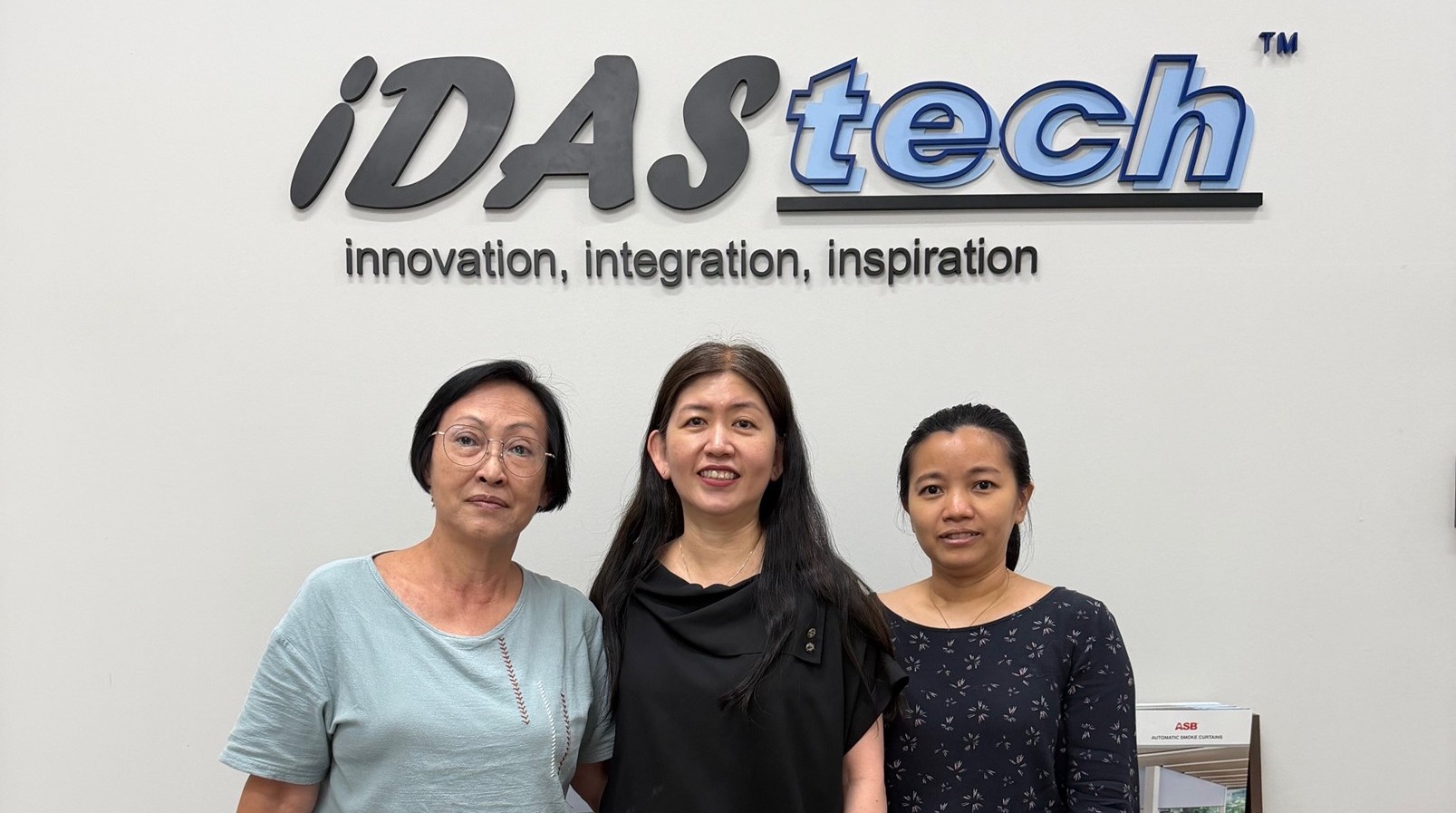
Enterprises face increasing pressures to navigate digital transformation in ways that deliver meaningful impact as AI adoption accelerates across industries. Recognising this, Skills & Workforce Development Agency (SWDA) and Nanyang Technological University Academy for Professional and Continuing Education (NTU PACE) provide targeted support mechanisms that help organisations build capabilities while driving real organisational change. One such initiative is the Mentorship Support Grant (MSG) which enables enterprises to tap into funded mentorship support to guide and implement transformation projects at heavily subsidised rates.
For enterprise leaders, programmes such as the Executive Certificate in AI-led Enterprise Transformation provides a critical foundation by equipping them with the strategic frameworks and conceptual grounding needed to fully leverage the applied learning opportunities within MSG projects. As a training and learning solutions provider, NTU PACE plays a pivotal role in facilitating organisations to move beyond isolated skills training towards holistic enterprise transformation in the age of AI.
The experience of IDAS Technology Pte Ltd illustrates how this integrated approach can enable small and medium enterprises (SMEs) to tackle operational challenges while building scalable capabilities for the future.
.jpg?sfvrsn=1cf21999_1 "IDAS Technology clients")
A portfolio highlight of IDAS Technology’s major client projects in Singapore.
Client context
IDAS Technology Pte Ltd is a Singapore-based engineering and technology company specialising in engineered smoke control, fire protection systems and sustainable building solutions. Supporting complex environments such as commercial developments, transport infrastructure and industrial facilities, IDAS Technology operates in a highly regulated, safety-critical industry where reliability and compliance are paramount.
As the company expands its project portfolio and service scope, IDAS Technology recognised the need to strengthen not just technical delivery, but also its enterprise AI capabilities to support sustainable growth. A key priority is to enhance project governance, streamline operational processes and improve overall organisational efficiency.
Problem statement
In the construction industry, finance and project managers require timely access to contractual and progress-related information to effectively manage project costs, cash flow and timelines. However, this information is typically embedded within lengthy contracts, progress reports and invoices, often written in complex legal and construction-specific terminology, making manual review inefficient, error-prone and difficult to track across multiple projects.
The absence of a centralised and structured data repository means teams must repeatedly extract the same information from source documents for different purposes, including claims processing, financial reporting and management review. As project volumes increase, this results in duplicated effort, limited real-time visibility into work completed, and delays in progress claim certification and approvals. Invoices stored in unstructured formats further complicate reconciliation against contractual entitlements and actual project progress.
As a result, stakeholders lack a single, reliable and up-to-date view of project status and associated claim values across portfolios. This constrains timely decision-making, introduces avoidable risk of billing disputes and cash flow delays, and highlights the need for scalable, data-enabled and AI-supported workflows that enable consistent information extraction, reuse and analysis as the organisation grows.
Mentorship Support Grant (MSG)
To address these challenges, IDAS Technology partnered with NTU PACE for MSG.
MSG increases accessibility to upgrading digital capabilities in SMEs by making expert guidance and structured support more readily available. Many SMEs face challenges not only in identifying the right digital tools, but also in understanding how to integrate them effectively into existing workflows. Through mentorship-driven projects, the grant connects businesses with customised applied learning services from Institutes of Higher Learning which provide tailored business solutions, hands-on implementation support and workplace-based training. This structured and cohesive approach builds internal confidence in working with AI and ensures that digital upgrades are aligned with actual business needs and outcomes rather than generic solutions.
NTU PACE worked closely with IDAS Technology’s leadership team to understand the organisation’s operating context, identify business gaps and define a focused transformation roadmap. The objective was just to deploy technology indiscriminately but to enable faster access to insights, enhance digital capabilities and reduce administrative man hours through a combination of mentorship, capability building and AI-driven solutions.
The programme was delivered in 4 integrated phases across 6 months.
.jpg?sfvrsn=e55ba2bd_1 "IDAS Infographics (2)")
Solution overview
In the context of a Singaporean SME operating in a competitive environment with high manpower costs, scaling up business operations cannot rely solely on increasing headcount to manage rising project loads. Implementing AI-driven workflows allows SMEs to automate repetitive and time consuming administrative tasks, freeing up employees to focus on higher-value activities like client engagement, innovation, and strategic planning. By leveraging AI to streamline processes and reduce operational bottlenecks, SMEs can scale their capabilities without proportionally increasing manpower, ultimately building a more resilient and future-ready business.
In an MSG project, the mentorship process begins with a structured workflow audit. For IDAS Technology, the mentor and leadership team, which form the project task force, mapped existing processes and identified high-friction areas to scope as the project’s focal points.
Three priority AI use cases were selected:
.jpg?sfvrsn=16b5538f_1 "IDAS Infographics (5)")
A phased pilot integrating the BeX AI Platform, a low-code platform, was delivered over a period of 1 month to support the structured integration of AI capabilities into core operations. During this phase, IDAS Technology employees undertook targeted, role-specific training to ensure responsible and effective use of AI tools.
Operational workflows were systematically redesigned to embed AI-generated outputs within existing processes while maintaining governance and accountability standards. AI was used to perform data extraction tasks from lengthy contracts and generate initial drafts for progress claims and staff roles were refocused on validation, review and finalisation. This shift reduced manual workload and improved overall efficiency while preserving human oversight.
A multi-layered quality assurance approach was adopted to validate outputs and monitor performance. Built-in validation checks were applied at each processing stage, and only approved and up-to-date source documents were used as inputs. User acceptance testing was conducted with real datasets prior to deployment. Following implementation, outputs were continuously monitored and workflows were refined to sustain accuracy and reliability.
During the redesign, key risks associated with AI-driven workflows were identified, including data extraction errors, use of outdated or incorrect inputs and over-reliance on automated outputs. These risks were assessed to be comparable to those in manual processes. Mitigation measures included structured validation checkpoints, strict input controls, ongoing performance monitoring and mandatory human review prior to final approval. Governance and accountability were embedded throughout both the platform and the redesigned workflows. Role-based access controls, clear segregation of duties and defined approval steps ensured that responsibility remained with designated staff. While AI supported process execution, accountability for outputs and decisions remained with human users.
Outcomes & Impact
Within 3-6 months, measurable improvements were observed:
1f1de38eb8d4464fbcd849166164a0f0.jpg?sfvrsn=eec9a531_1 "IDAS Infographics (6)")
In addition to efficiency gains, staff reported qualitative outcomes including:
- Increased confidence among staff in using AI-driven solutions
- Improved morale from reduction in repetitive manual work
- Reduced burnout and cognitive load for finance personnel
- Greater consistency and standardisation in output
- Enhanced ability to scale operations without proportional increase in manpower
“The AI tool efficiently extracted contractual information, while the system remained flexible enough to allow manual input when the AI could not capture certain unique points.”
- Catherine Liang, Senior Account Executive
The transition was not completely seamless, with early hurdles including a learning curve in prompt design, employee capability building and data formatting issues. Through iterative training, clearer workflow governance and continuous optimisation, these challenges were resolved — highlighting that successful AI integration is as much about understanding organisational workflow changes as it is about technology adoption. NTU PACE supported the transformation of IDAS Technology’ workflow by serving as a connective layer between strategic leadership vision and smooth operational delivery. Drawing on NTU’s strong research foundation and academic expertise, strategic decisions were anchored in rigorous evidence and systematic analysis. By fostering cross-functional collaboration and maintaining focus on aligned objectives, forward-looking leadership visions were distilled and translated into measurable progress across the enterprise.
“It was a positive experience working with NTU PACE. From the outset, they made an effort to understand our requirements and explore how AI-enabled workflows could help reduce our workload. With this understanding, they were able to clearly explain what the AI could do, as well as its limitations, which made the overall product development process smoother and faster. One specific example was their guidance on the type of documents we should upload for the AI to process, which helped us avoid excessive trial and error.”
- Jasline Teng, Managing Director
For any MSG-related enquiries, including clarification on eligible governmental support, please write in to askpace.cp@ntu.edu.sg with the subject header “Mentorship Support Grant enquiry”.