Engineering New Paths: How a Passion for Learning Led to Robin’s Career in AI
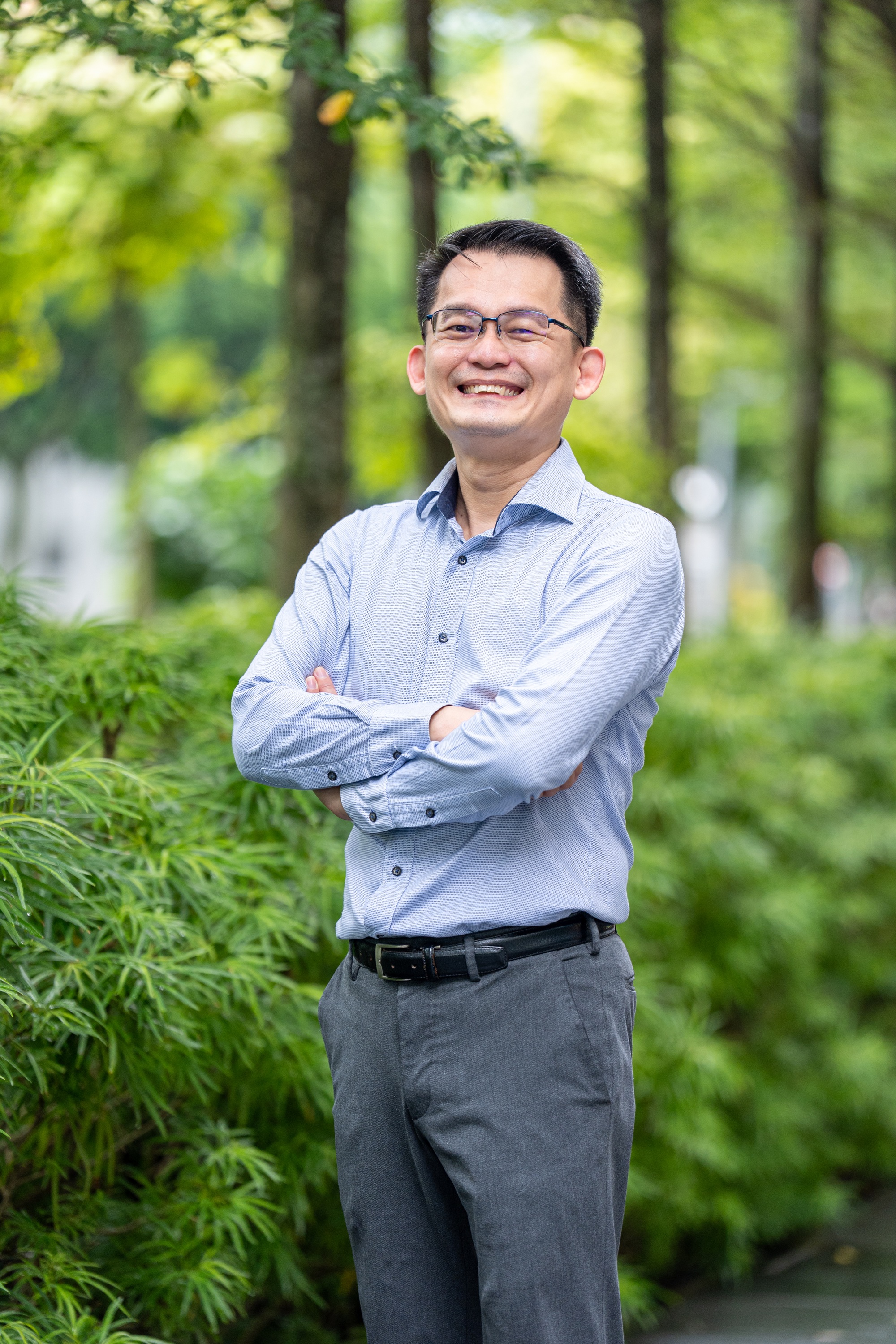
Robin Yap, graduate of NTU PACE (SCTP) Advanced Professional Certificate in Software Engineering
For Robin, learning has always been more than a professional requirement. It is the lens through which he makes sense of the world and the compass that has serendipitously guided each stage of his career - from classrooms to research labs and now in a start-up working at the intersection of AI and the gemstone industry. Each step reflected a continuous drive to understand, improve, and apply knowledge in new, innovative and unique ways.
Trained as a mechanical engineer, Robin began his career teaching physics and mathematics in a Singaporean secondary school. It was a role that honed his ability to explain complex ideas clearly, but over time, he found himself drawn back to the practical side of engineering beyond the classroom. When the opportunity came to join A*STAR as a research engineer, he saw it as a chance to reconnect with the problem-solving side of his discipline. The projects at A*STAR undertook combined mechanical engineering with emerging AI applications, and it was in this environment that his interest in intelligent systems began to take shape and develop.
Driven by a continued fascination with emerging technologies, Robin later returned to engineering and pursued further studies in knowledge engineering and robotics for his Masters, laying the foundation for his eventual transition into the field of robotics and AI for his PhD.
Global Perspectives and Academic Pursuits in Japan
Robin’s curiosity about robotics and automation eventually motivated him to pursue a PhD in Japan, a move that marked a significant turning point in his career and personal life. Together with his wife, who moved with him and provided vital support throughout his doctoral studies, Robin immersed himself in a new culture and research environment that valued precision and discipline. He joined the Tokyo Institute of Technology, where he earned his Doctor of Engineering, focusing on robotics and artificial intelligence.
While balancing research and publication demands, he continued studying Japanese in his own time, progressing from beginner to advanced proficiency through tenacious self-directed learning. The experience not only strengthened his technical expertise but also broadened his perspective on how culture shapes engineering practices and innovation. Immersed in Japan’s spirit of craftsmanship and attention to detail, he gained a deeper appreciation for the relationship between discipline, creativity, and technological progress.
After several years abroad, Robin returned to Singapore during the COVID-19 pandemic, prioritising family and stability while carrying forward the lessons of his international experience.
A Mid-Career Transition into Software Engineering
Upon his return to Singapore, Robin began exploring how he could apply his research skills in an industrial setting. He joined the finance sector as a machine learning engineer but quickly realised that he needed to strengthen his foundation in software development to perform at the level he aspired to. Rather than seeing this as a setback, he viewed it as an opportunity to reassess and upskill.
He enrolled in the Software Engineering SkillsFuture Career Transition Programme, supported by SkillsFuture mid-career training credits. The programme not only helped him bridge technical gaps but also gave him the experience of working on collaborative projects. Managing team schedules and deliverables proved to be just as valuable as coding itself. Coordinating with peers who had full-time jobs pushed him to develop stronger communication and organisational habits — skills that would soon prove crucial in his next role.
Advancing AI Applications in the Gems Industry
Today, Robin is an AI and computer vision engineer at a three-year-old start-up, Porolis Technologies within the gemstone and jewellery industry. The work is highly specialised and still evolving very rapidly. His team invented a proprietary photomicrography device KROMA(TM) that produces the images/videos for AI and uses image processing and machine learning models to capture minute details in gemstones. This step verifies their authenticity and grades their quality based on factors like colour and clarity against grading standards. The goal is to help jewellers and traders access reliable, high-quality images that support transparency and trust in the trade.
The work presents a unique set of challenges. Unlike sectors with well-defined industrial benchmarks, gemstone grading lacks universally accepted benchmarks. Progress often depends on collaboration with domain experts in Sri Lanka and careful review of academic research to align their models with the best available knowledge. Within this dynamic environment, Robin has learnt to navigate ambiguity, balance technical experimentation with real-world validation, and adapt AI tools to meet industry needs.
A typical day involves software validation for the start-up’s hardware systems, capturing gemstone images, testing AI models for accuracy, and refining results through comparisons with expert assessments. The team is also exploring patent opportunities for both the hardware and the software components of their system.
Five months into the role, Robin has come to appreciate the importance of communication within a small team. Regular progress updates, open discussion of technical issues, and shared problem-solving are essential to sustaining momentum. These lessons, he reflects, are as vital as any technical breakthroughs.
Balancing Professional Growth and Mentorship
Looking back on his career, Robin recognises that his learning path was not always linear. Teaching, research, and industry each shaped different parts of his perspective. The classroom taught him how to break down complexity and guide others through unfamiliar concepts. Research environments sharpened his analytical thinking and his willingness to explore new ideas with rigour. Working in industry introduced him to the realities of applied technology, where timelines and user needs drive innovation. These experiences also made him more aware of the guidance he wished he had earlier. If he could offer advice to his younger self, it would be to find a mentor early on — someone with the experience to help translate academic training into practical career direction. Without such guidance, he found it difficult at times to position himself clearly in front of hiring managers.
Practical career workshops and mentorship during his programme with NTU PACE later helped Robin refine how he presented his skills, aligning his values and aspirations more closely with the roles he pursued. That clarity has carried into his current work, where he sees the potential of AI and computer vision to transform a traditional trade. Beyond his role, Robin also contributes to the wider learning community. Today, he continues to share this perspective with others, advocating for lifelong learning and the importance of seeking mentorship early in one’s career. He has been a featured speaker at events such as SG60 and SkillsUnion, where he shares insights from his own journey to encourage others to stay curious, keep learning, and embrace growth through change.
For Robin, the thread connecting every stage of his journey is a deep belief in continuous learning. Each new challenge, whether mastering a language, adapting research to industry, or working with new technology, has expanded his understanding of what it means to grow. His career stands as a testament to how curiosity, adaptability, and a commitment to learning can continually redefine what’s possible in technology and one’s life.