Inaugural PACE Forward Series
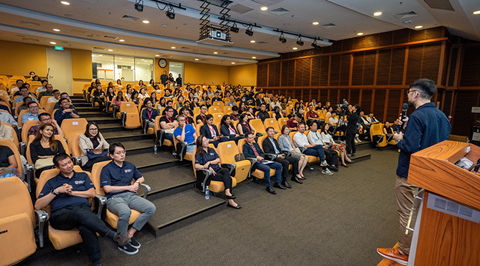
As part of SkillsFuture Festival, NTU Academy for Professional and Continuing Education (NTU PACE) and NTU Office of Alumni Engagement co-hosted the inaugural PACE Forward event at Lifelong Learning SG. Key highlights of the event included an interactive panel discussion on how enterprises are strategically deploying AI for enhanced productivity without sacrificing the human element and the evolving future of work.
Delivering the opening address, Professor Boh Wai Fong, Vice President (Lifelong Learning & Alumni Engagement), highlighted a 40% increase in adult learner enrolments from 2020 to 2025 for upskilling at institutes of higher learning (IHLs). She also reaffirmed NTU PACE’s commitment towards developing world-class learning solutions in consultation with key industry players for immediate and future relevancy among our alumni and working professionals. NTU PACE continues to launch new programmes that directly address key focus areas such as the Executive Certificate in AI-Led Enterprise Transformation and the Advanced Professional Certificate in AI and Urban Intelligence for Future Cities. These programmes provide adult learners with actionable insights, practical tools and key strategic levers to drive transformation with AI.
Panel discussion: How enterprises are embracing AI and innovation to drive competitive advantage
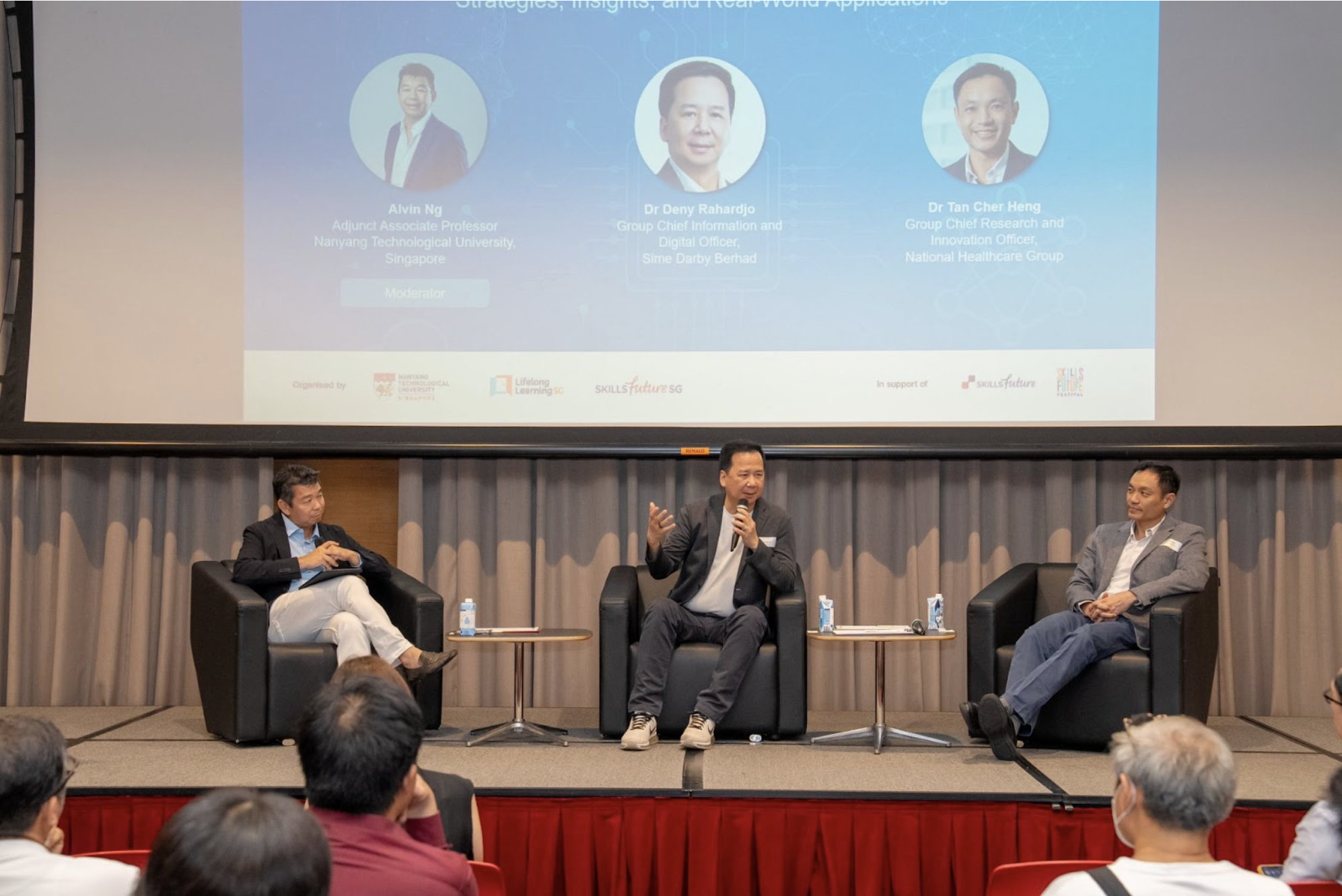
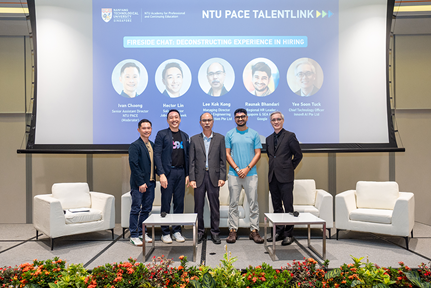
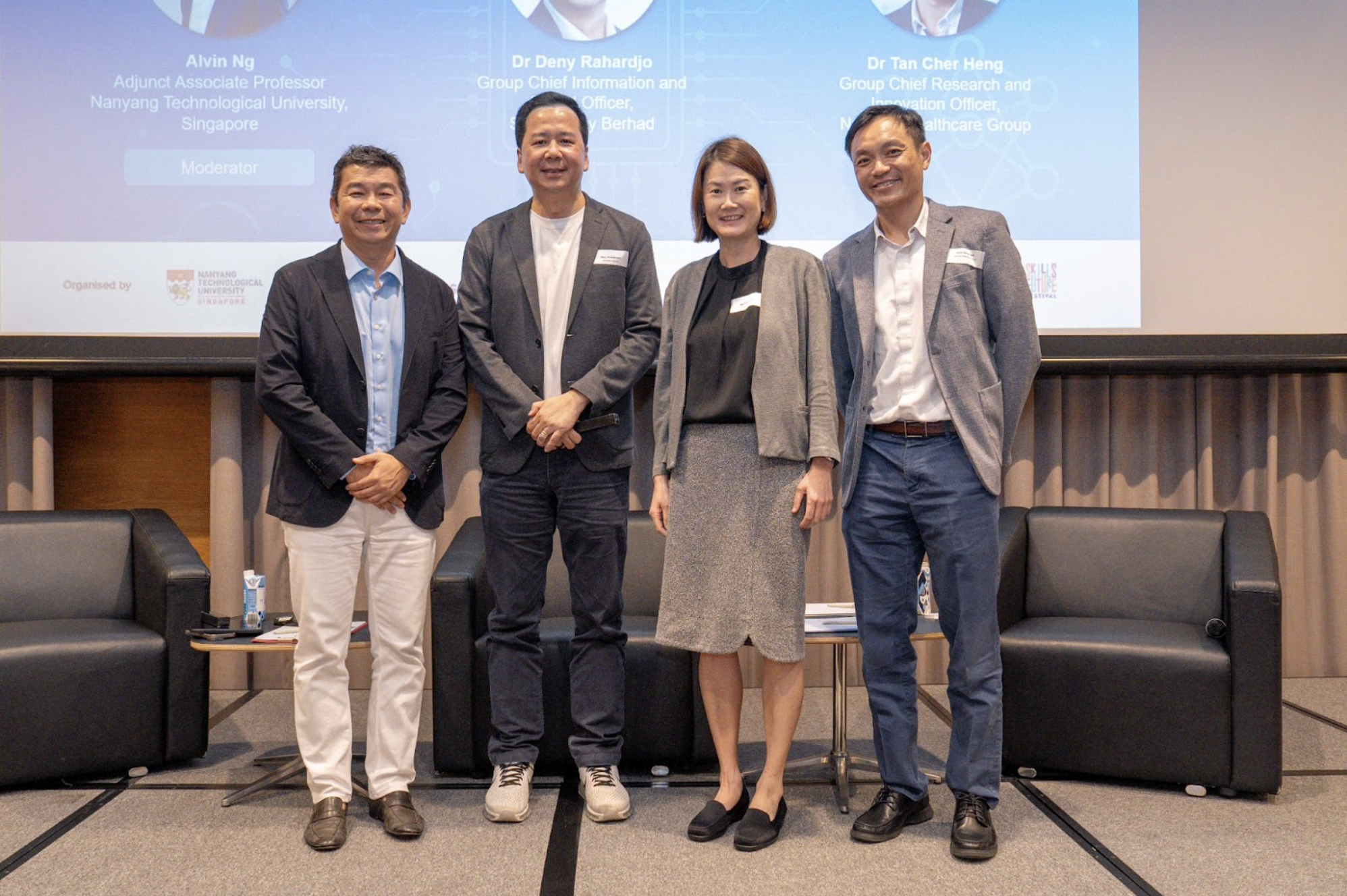
(From left) Panellists consisting of Assoc. Prof. Alvin Ng, Dr. Deny Rahardjo and Dr. Tan Cher Heng.
- Alvin Ng, Adjunct Associate Professor, Nanyang Technological University (moderator)
- Dr. Deny Rahardjo, Group Chief Information and Digital Officer, Sime Darby Berhad
- Dr. Tan Cher Heng, Group Chief Research and Innovation Officer, National Healthcare Group
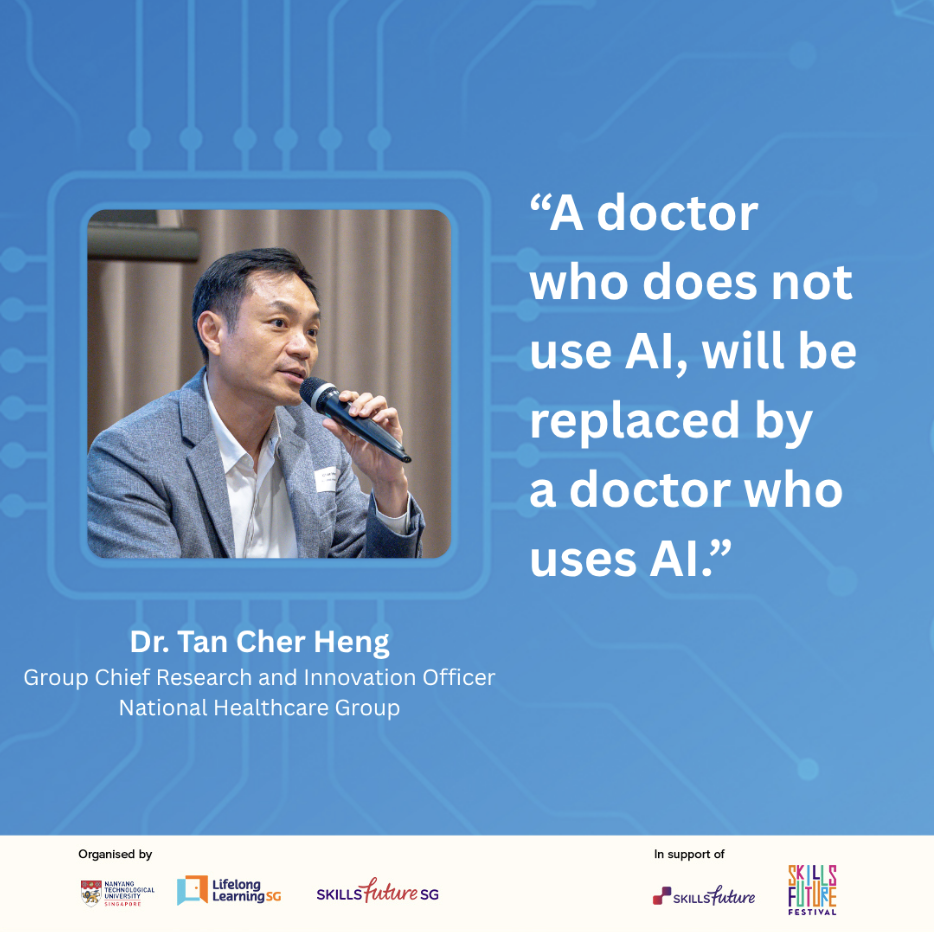
The event featured a thought-provoking panel discussion on how senior industry leaders are driving AI adoption within their organisations. Dr. Tan Cher Heng highlighted how AI holds great promise in addressing manpower shortages in the healthcare sector. The National Healthcare Group is a public healthcare provider in Singapore known for its commitment towards healthy living through preventative care and person-centred programmes tailored to people in different life stages. He shared that the National Healthcare Group is currently piloting the use of AI at Geylang Polyclinic to identify patterns in X-ray images of patients with pneumonia — a move that has significantly shortened diagnostic times and enhanced overall productivity in illness identification. While some initial resistance to changing workflows was observed, Dr. Tan noted that AI has become so seamlessly integrated into daily operations that many users may not even realise how frequently they rely on it. He emphasised the importance of embedding AI meaningfully into existing systems to promote and encourage sustained usage.
A trusted partner of over 60 leading automotive and industrial equipment brands, Sime Darby has a presence spanning 18 countries and territories. With international operations, there exists a huge opportunity for AI applications to manage complexities. Dr. Deny shared how AI is transforming operations at the enterprise level in Sime Darby Berhad — streamlining time-consuming tasks through automation and enabling deeper insights into customer profiles. This in turn, allows for more targeted and personalised messaging.
One of the challenges identified was cold calling of potential customers as it was a task with high volumes yet low returns. This presents an opportunity for Agentic AI, autonomous agents that are able to perform tasks and make decisions within unstructured environments. In China, agentic AI has been successfully deployed to engage potential car buyers via calls and guide them to make showroom purchases. The possibilities of what AI can achieve are virtually limitless.
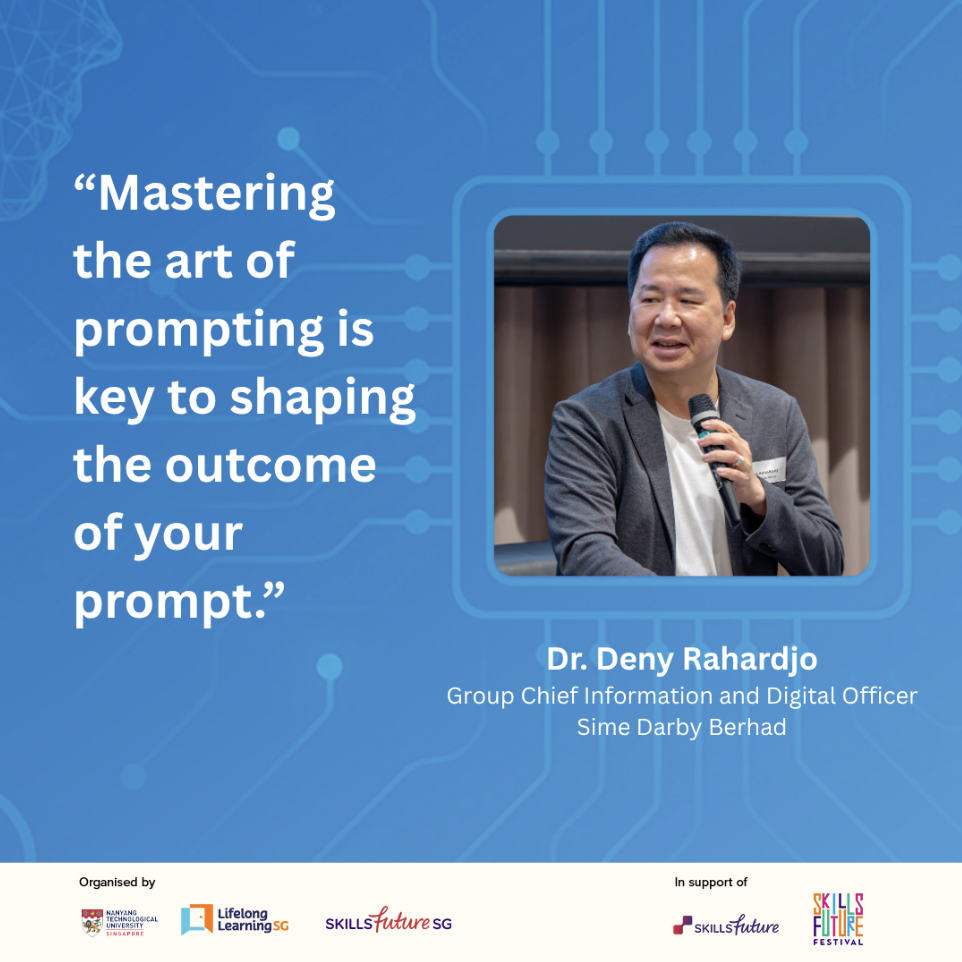
A key message from Dr. Deny was to recognise that generative AI is not the same as Google. The key difference is that generative AI is a rapidly evolving, rather than static tool, that provides differing outputs based on the prompts provided by the end user. Structuring prompts becomes even more important in determining the type of output. There exists a learning opportunity for everyone to structure the prompts for meaningful outputs.
AI isn’t just a buzzword — it’s a transformative force that’s here to stay. While the panellists acknowledged the many benefits of integrating AI into enterprise systems, they emphasised the importance of establishing robust internal safeguards via keeping Human-in-the-Loop (HITL) as a key aspect of effective risk management. Recognising AI’s limitations and potential biases is essential, as HITL remains critical. AI must be deployed responsibly and ethically to build and maintain trust with stakeholders.
Future of work
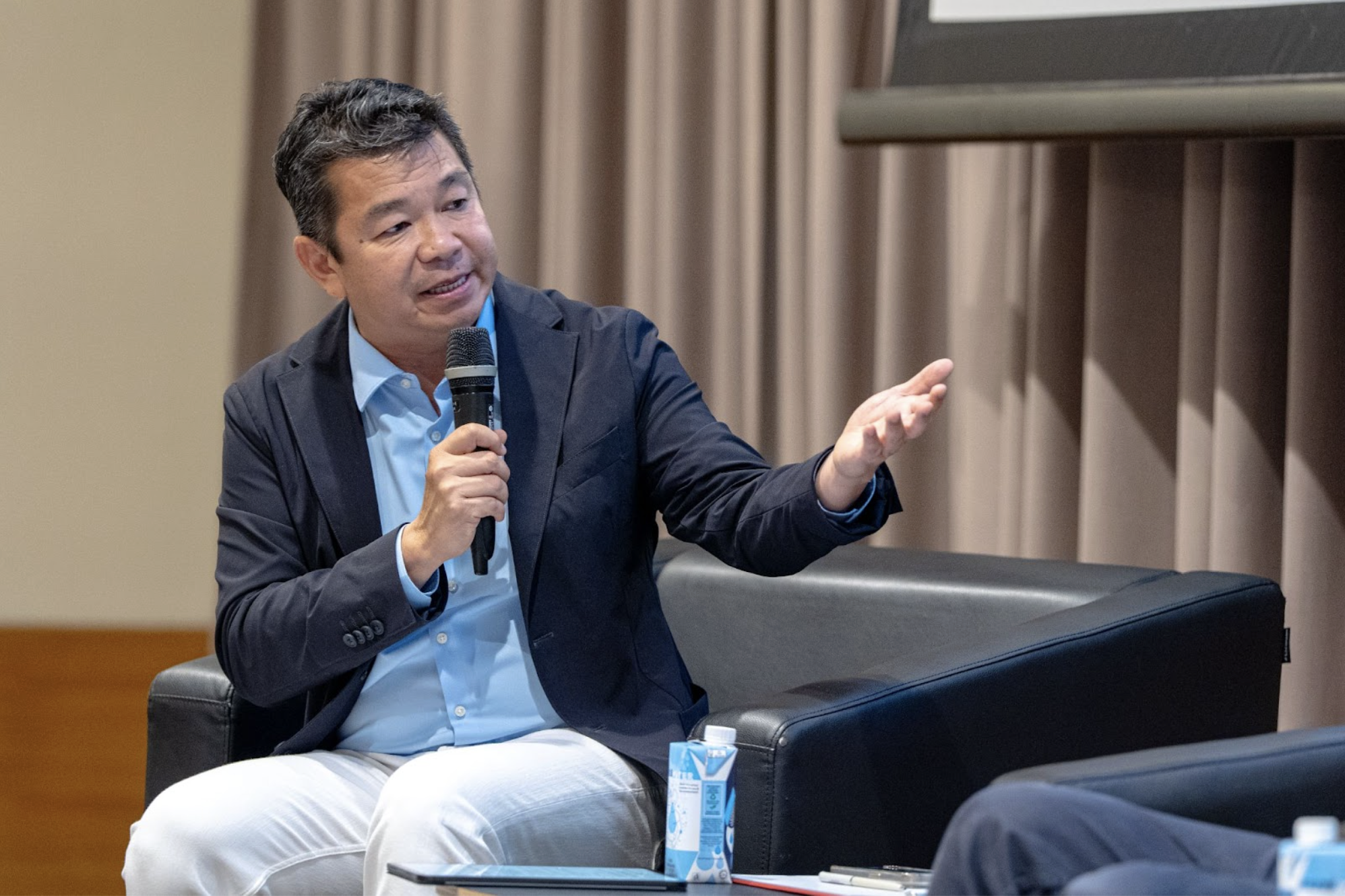
NTU Adjunct Associate Professor Alvin Ng brought the audience on a compelling journey to explore how AI is reshaping careers, skillsets and lifelong employability. He shared how AI is driving transformation across diverse domains that directly influence our everyday lives — from finance and healthcare to hunger, equality, accessibility, the environment and infrastructure.
One example is Be My Eyes, a Danish app that connects visually-impaired users with volunteers and companies around the world through live video and AI. For too long, the quality of life for people with disabilities has been limited by inequitable access to support and resources. Advances in AI are now helping to bridge that gap, offering greater independence and autonomy to those navigating the world with visual impairments.
Agentic AI tools are transforming the way we work, live and connect with the world. Take Visa, for example — by tapping into the power of Agentic AI, they're revolutionising e-commerce, unlocking smarter, faster and more personalised experiences. Transactions can soon be made securely and seamlessly with a simple query input into the Large Language Model (LLM) by the end user. This would mean that planning for a holiday won’t require the end user to toggle between booking sites for flights, accommodations and food options.
The basis of AI systems are about learning from available data and making predictions about the future. Humans, on the other hand, bring imagination and intuition — envisioning possibilities beyond existing data and thinking about concepts that don’t yet fully exist. HITL remains paramount as constant reiteration of AI models are necessary to ensure that this innovative technology remains relevant in the long run. 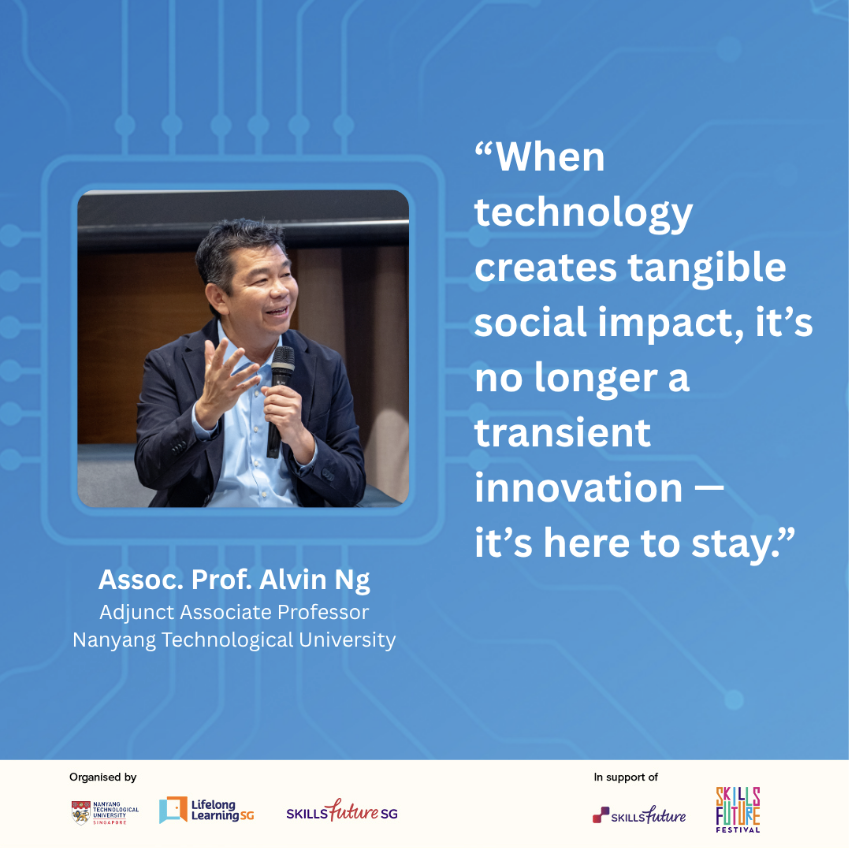
First look at new executive programmes in AI, sustainability and transformation
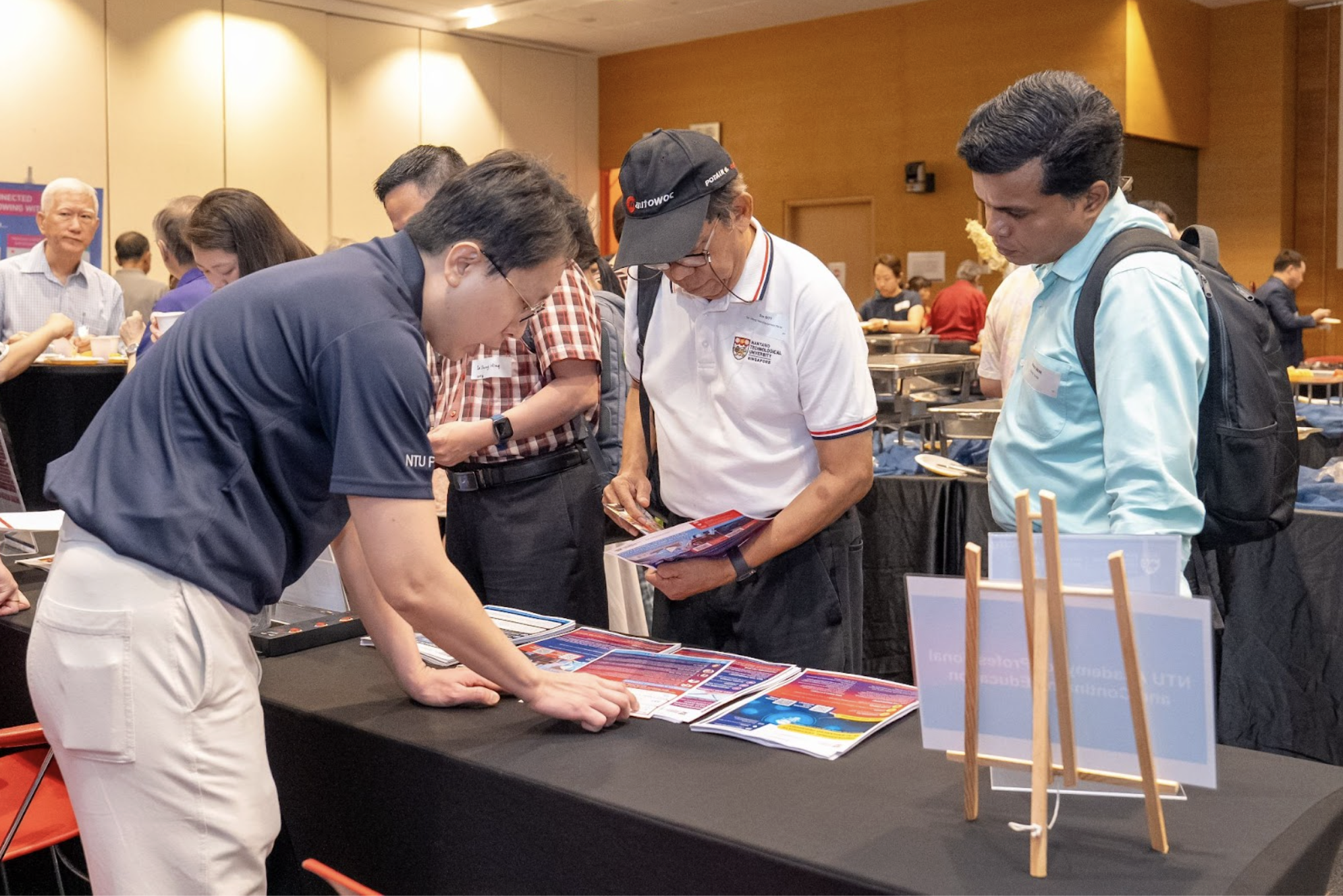
In line with the emerging demands for digital transformation capabilities, NTU PACE has launched new courses designed to support professionals at every stage of growth.
- Executive Certificate in AI-Led Enterprise Transformation
- Includes options to undertake Enterprise Transformation Projects with NTU PACE, supported by the Mentorship Support Grant (MSG) from the Skills & Workforce Development Agency (SWDA).
- Advanced Professional Certificate in Sustainable Urban Environments
- Advanced Professional Certificate in AI and Urban Intelligence for Future Cities
For every upskilling need, courses are designed to bridge theory with practical applications empowering working professionals with industry relevant skillsets to tackle current and future opportunities. Accelerate your growth and visit NTU PACE for more information on the other AI and transformation courses available.