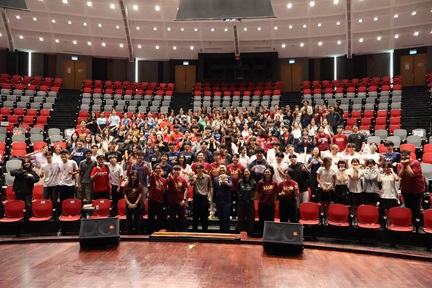
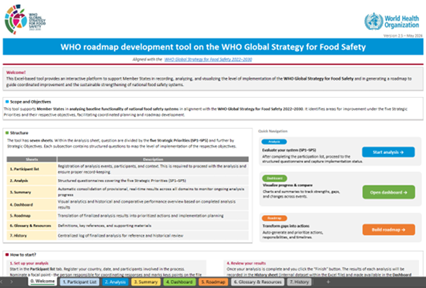
The 2nd APRU Food Security and Agritech Conference 2026
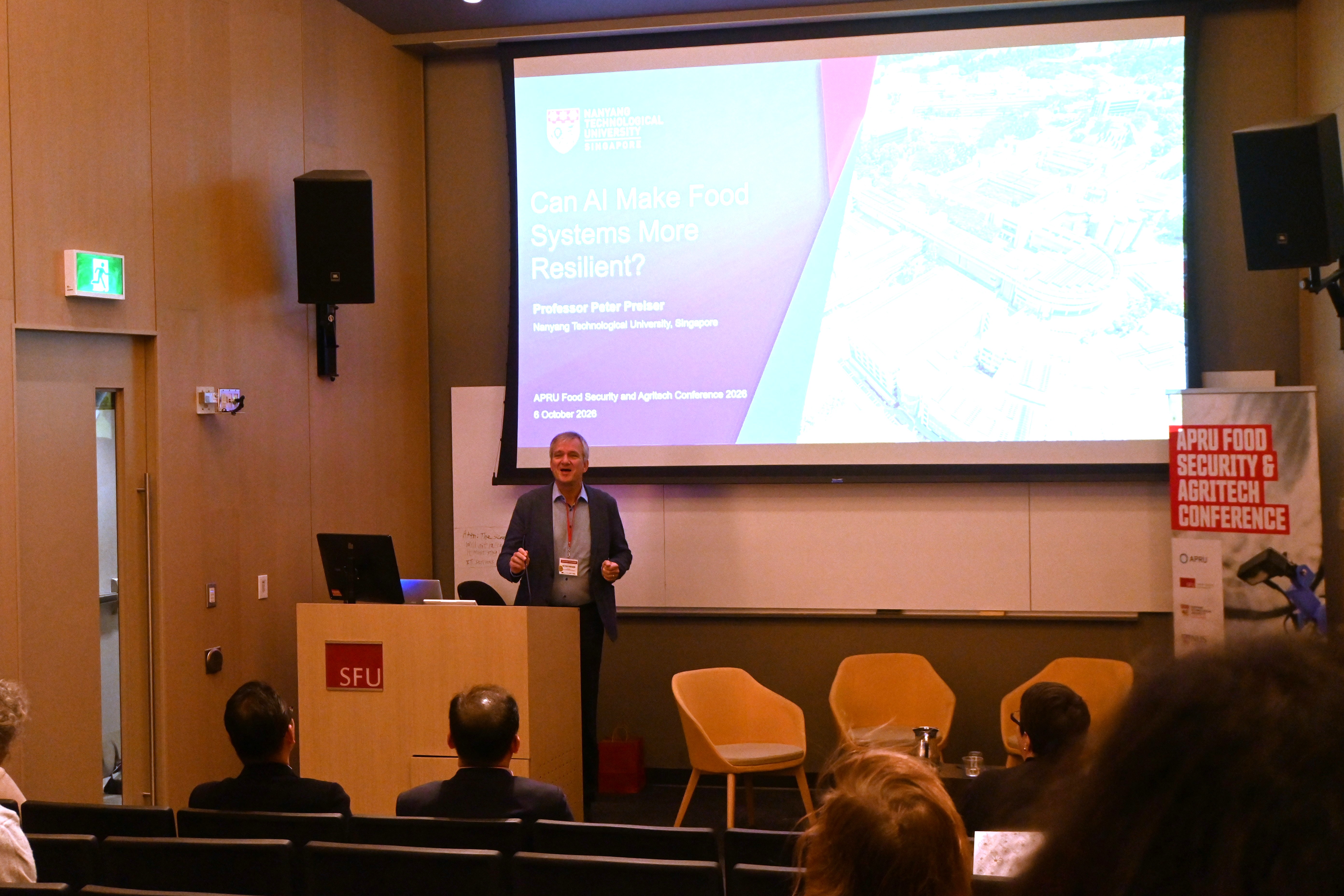
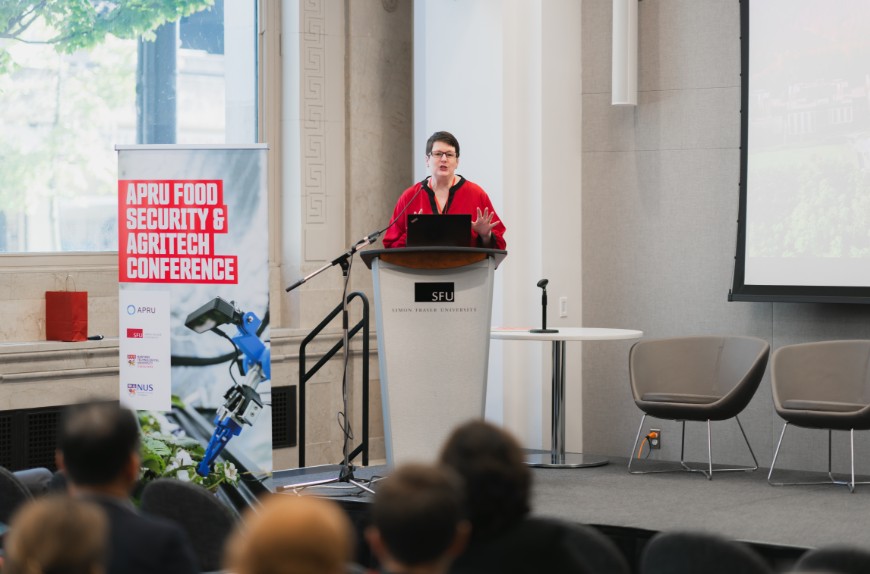
Prof Peter Preiser (top) and Anne Lochoff (bottom) at the APRU Food Security and Agritech Conference in Vancouver.
The haze affecting Southeast Asia is a visible reminder of a much larger challenge hidden beneath our feet. While public attention focuses on smoke-filled skies, the long-term solution lies in how we manage the region's soils and peatlands, which represent one of the world's largest natural carbon reservoirs. Southeast Asia's soils are a critical asset for climate stability, food security, biodiversity, and sustainable economic development. Yet degradation, land-use change, and peatland disturbance are increasing greenhouse gas emissions and reducing ecosystem resilience. Decisions taken over the next decade will determine whether these soils become a growing source of emissions or a cornerstone of regional decarbonization and climate resilience.
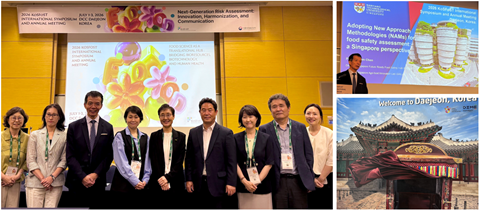
Recognising this opportunity, NTU Singapore, represented by Anne Lochoff, Co-Director of the APRU Food Security and Agritech Programme, and Professor Peter Preiser, Lead of NTU Food Research Systems, presented the white paper "Developing a Soil Decision Support System for Southeast Asia" at the APRU Food Security and Agritech Conference in Vancouver (4-8 October 2026). The proposal received strong support from conference participants across academia, government, and industry, reflecting growing recognition that soil intelligence must become a regional priority.
During a featured panel discussion, Professor Preiser challenged the question of whether AI can make food systems more resilient, reframing the discussion around how AI can enable better decision-making for resilience strategies. The presentation highlighted NTU's Food Systems Data Hub, an emerging platform integrating data, modelling, and AI to support evidence-based sustainability solutions.
Aligned with Singapore's RIE2030 vision and the National Research Foundation's significant investment in decarbonization research, the initiative represents a regional call to action.
NTU invites governments, research institutions, industry partners, investors, and international organisations to join in building the soil intelligence infrastructure needed for a more resilient, sustainable, and low-carbon future.
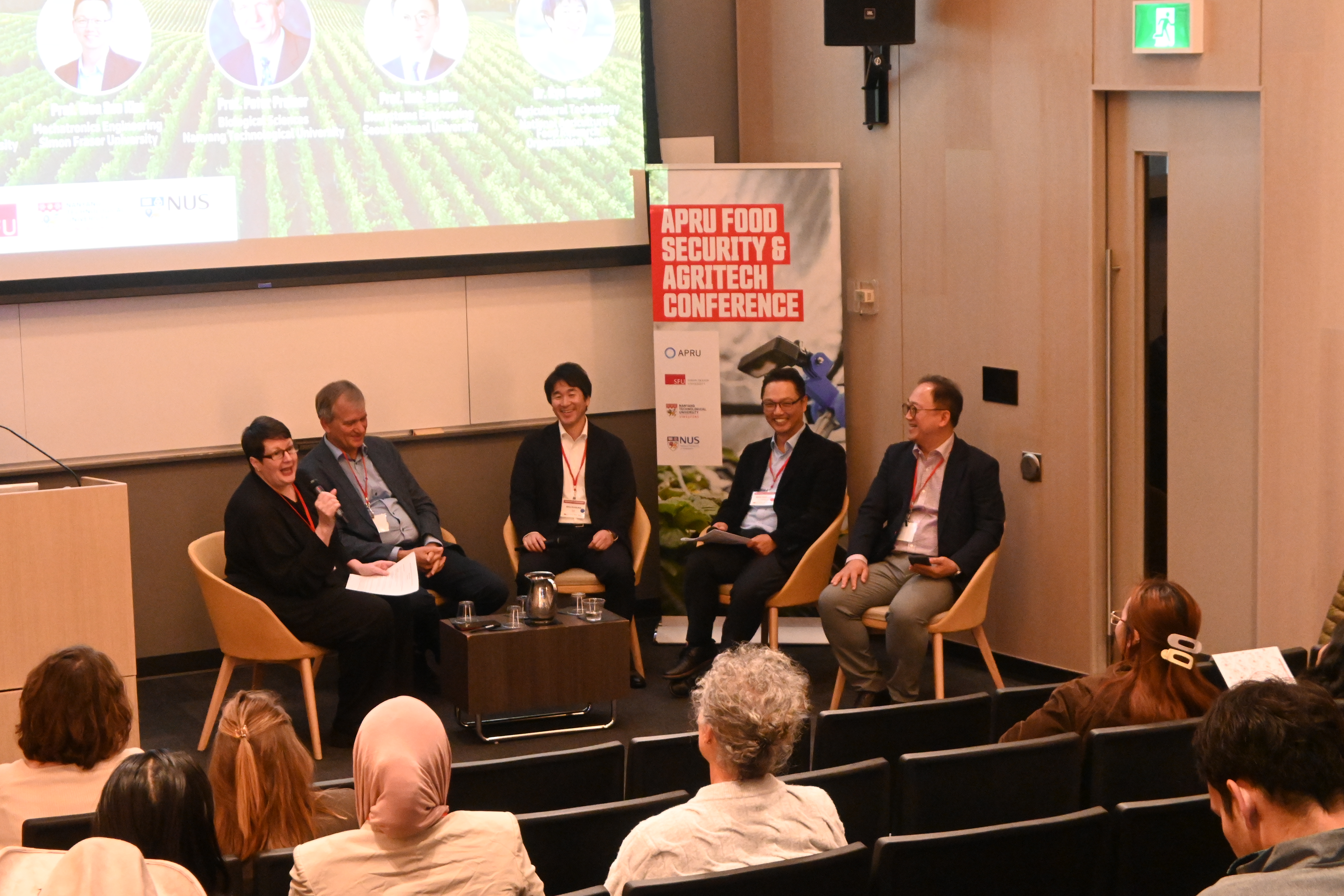
Prof Peter Preiser (second from left) and Anne Lochoff (far left) during Panel 2, "Can AI Make Food Systems More Resilient?"